
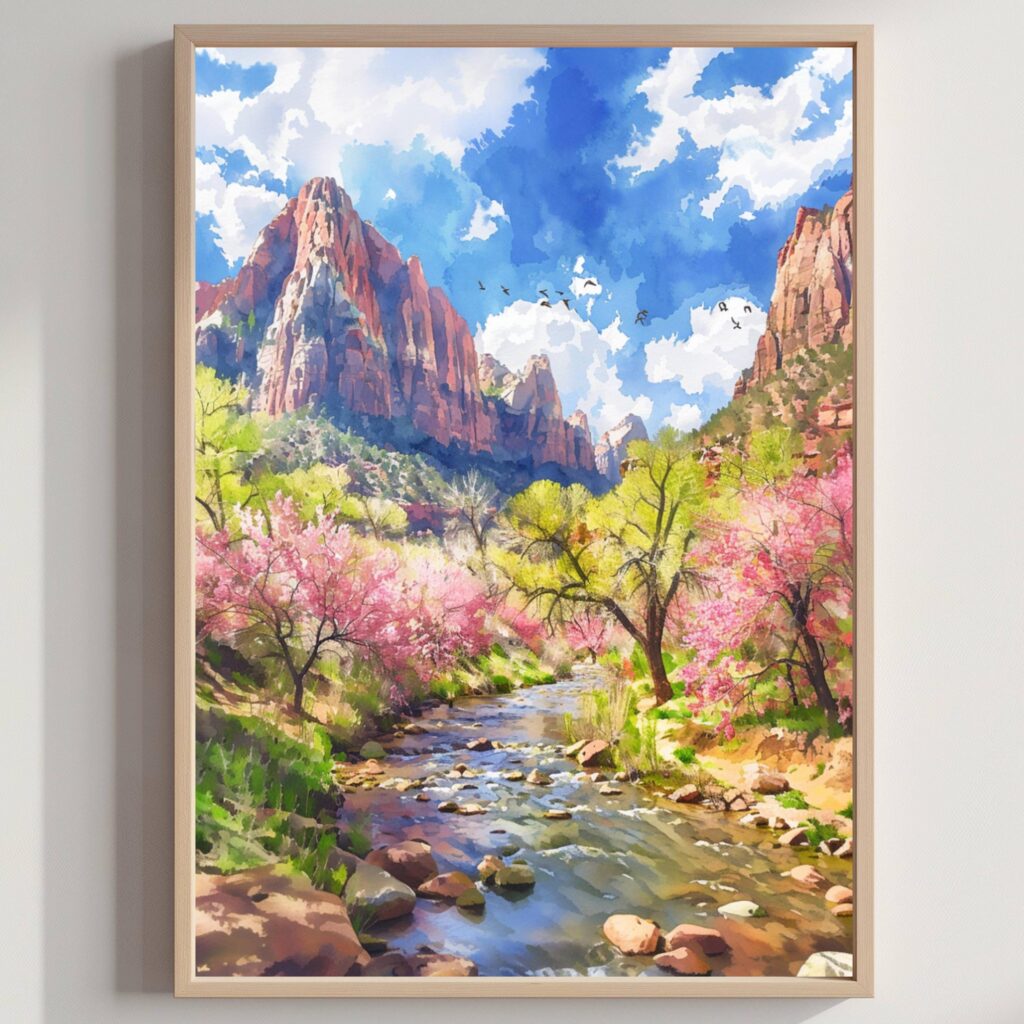
Zion Canyon was carved by the Virgin River over roughly 13 million years, a comparatively small, unremarkable-looking waterway that has nonetheless cut nearly 800 metres down through layered Navajo sandstone, moving fast enough during flash floods to shift boulders and continue widening the canyon today. That ongoing erosion is what makes Zion’s narrowest sections, particularly the Narrows, where the canyon walls close to just a few metres apart, genuinely dangerous during storms, flash floods can arrive with little warning even when skies overhead appear clear.
The park’s sandstone, formed from ancient desert sand dunes roughly 200 million years ago, displays visible cross-bedding patterns, diagonal striping that records the exact angle of long-vanished dunes, a geological record of an environment that looked more like the Sahara than the lush canyon visitors see today.
A Landscape the Paiute Understood Long Before National Park Status
The Southern Paiute people lived in and around Zion Canyon for centuries before European American settlers arrived, and many of the park’s rock formations carry both Paiute and later Mormon settler names, Angels Landing among the most famous, a dramatic sandstone fin accessed via a narrow, chain-assisted trail with sheer drops on both sides that has become one of the most sought-after, and most regulated, hikes in the American national park system.
Zion became Utah’s first national park in 1919, and its combination of towering sandstone cliffs, narrow slot canyons, and a genuine desert-to-riverside ecosystem within a single park makes it one of the most geologically varied protected landscapes in the American Southwest.
Painting Sandstone in Shifting Light
Zion’s towering red and cream sandstone cliffs, changing colour through the day, give a watercolourist extraordinary natural texture and light to work with. We’ve captured that shifting glow in our own Zion National Park Watercolor Print, painted first by hand and printed to order on archival paper, a small piece of Utah for a wall at home.
Carved slowly by a river still actively at work, Zion Canyon remains a landscape that hasn’t finished being shaped, even after 13 million years of trying.