
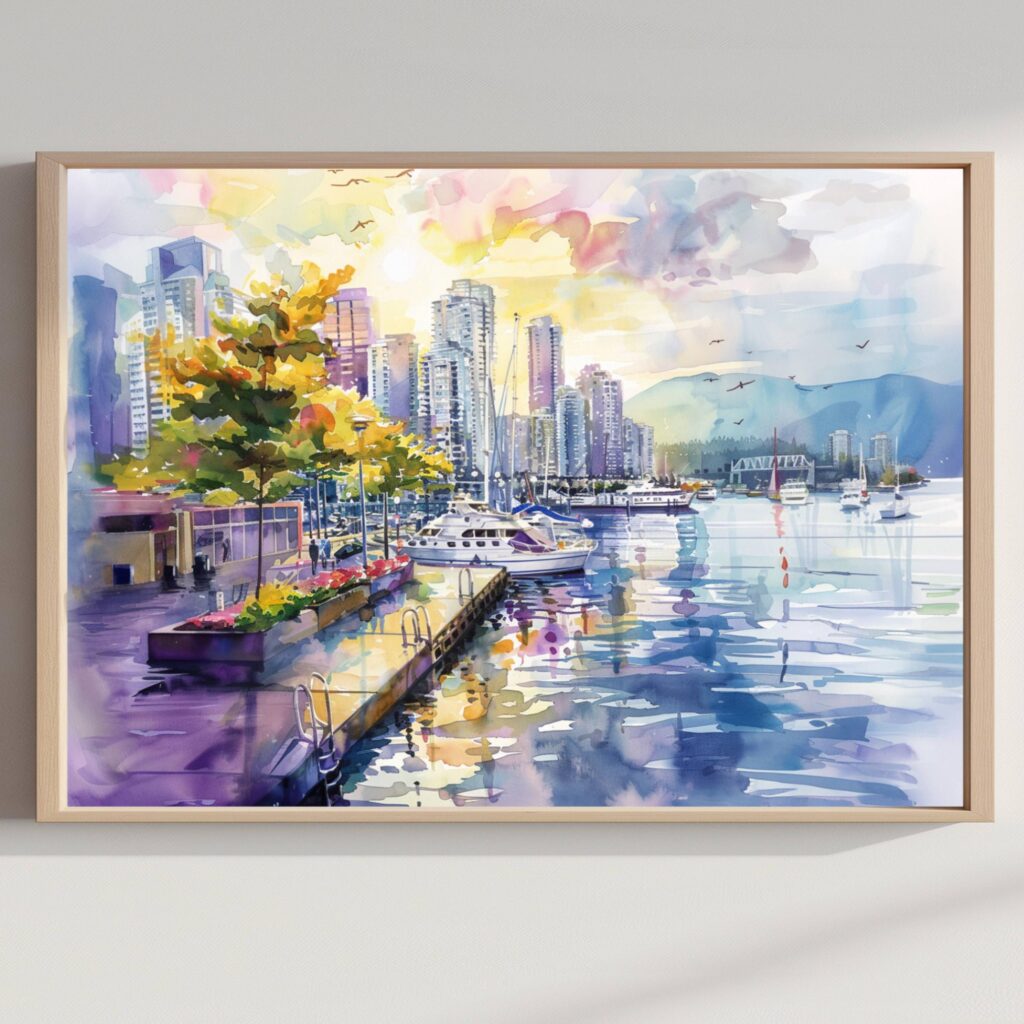
Vancouver’s setting, dense downtown towers wedged between the Coast Mountains and the Pacific, isn’t accidental, the city’s development has been shaped for decades by “view corridors,” planning regulations that legally protect sightlines to the North Shore mountains from key vantage points downtown, preventing new construction from blocking the views that define the city’s identity. That combination of ocean, mountain, and rainforest within city limits is rare enough globally that Vancouver is regularly ranked among the most livable cities in the world, despite, or perhaps partly because of, its notoriously high cost of living.
Stanley Park, the enormous urban forest bordering downtown, is larger than New York’s Central Park and contains old-growth trees that predate European settlement entirely, protected as parkland since 1888, one of the earliest and largest urban conservation decisions in North America.
A City Shaped by the Pacific Rim
Vancouver’s position on Canada’s west coast has made it a major gateway for trade and immigration from across the Pacific, and the city’s Chinatown, one of the largest historic Chinese communities in North America, reflects waves of immigration dating back to the 19th-century gold rush and railway construction era. That Pacific-facing identity continues to shape the city today, drawing significant investment, culture, and cuisine from across East and Southeast Asia.
Vancouver hosted the 2010 Winter Olympics, a moment that accelerated significant infrastructure investment and international visibility for a city that, prior to that, was often better known within Canada than beyond it.
Painting Glass Towers Against Snow-Capped Peaks
The contrast between Vancouver’s glass skyline and the snow-dusted mountains behind it gives a watercolourist a genuinely striking sense of scale to work with. We’ve captured that contrast in our own Vancouver Watercolor Print, painted first by hand and printed to order on archival paper, a small piece of British Columbia for a wall at home.
Planned deliberately to keep its mountains in view, Vancouver remains one of the few major cities where the skyline was designed to lose, gracefully, to the landscape around it.