
Tuscany’s Renaissance flowering, centred substantially on Florence from the 14th to 16th centuries, was funded to a significant degree by the region’s wool trade and banking industry, powerful families including the Medici building fortunes first through commerce and finance before channelling that wealth into the patronage of artists including Michelangelo, Botticelli, and Leonardo da Vinci. This commercial foundation is easy to overlook amid the artistic legacy it produced, but without Tuscany’s medieval trading wealth, the concentration of artistic patronage that defined the Renaissance would likely have looked considerably different.
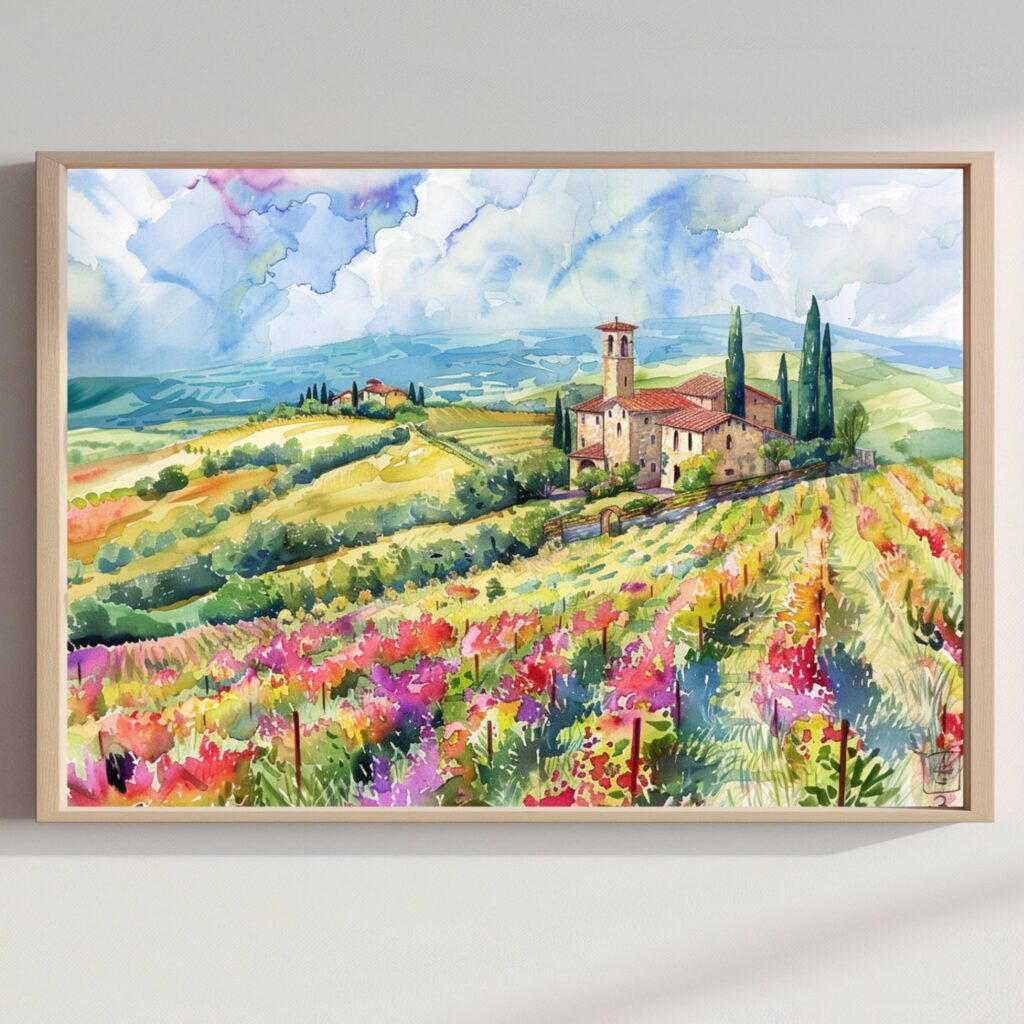
The Tuscan landscape itself, with its rolling hills, cypress-lined roads, and geometric vineyards, is substantially a human-made agricultural landscape rather than an untouched natural one, shaped over centuries by a specific farming system known as mezzadria, a sharecropping arrangement that organised much of the region’s rural land use from the medieval period well into the 20th century.
A Region Built Around Independent City-States
Tuscany was historically divided among fiercely independent, often rival city-states, including Florence, Siena, Pisa, and Lucca, each developing distinct artistic and architectural traditions before gradually being unified under Medici rule and eventually the broader Italian state in the 19th century. Siena’s Palio, a bareback horse race run twice yearly around the city’s central shell-shaped piazza since the medieval period, remains a living continuation of this old rivalry-driven civic culture, contested fiercely between the city’s historic districts.
Tuscan wine production, particularly in the Chianti region, has roots stretching back to Etruscan times, predating Roman civilisation in the area by centuries, though the specific Chianti wine-making traditions recognisable today developed substantially later, formalised in the 18th century.
Painting Rolling Hills and Cypress Rows
Tuscany’s rolling golden hills lined with cypress trees give a watercolourist warm, sweeping colour and gentle natural rhythm to work with. We’ve captured that character in our own Tuscany Watercolor Print, painted first by hand and printed to order on archival paper, a small piece of Italy for a wall at home.
Funded first by wool and banking and remembered now for art, Tuscany remains a region whose most famous legacy was always built on rather more practical foundations.