
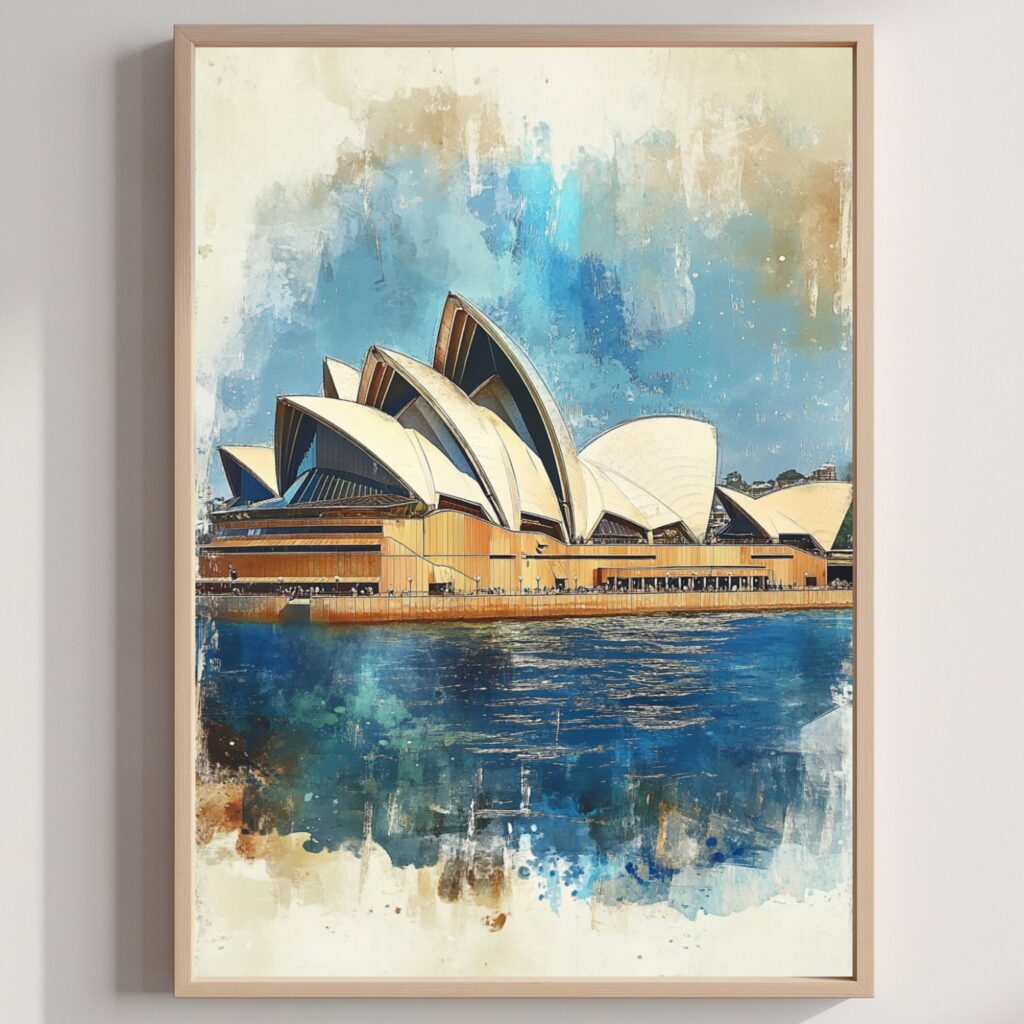
Danish architect Jorn Utzon’s winning design for the Sydney Opera House was pulled from the reject pile. In the 1956 international competition, judge Eero Saarinen arrived late, reviewed the discarded entries, and insisted Utzon’s sail-like sketches be reconsidered, a decision that gave the world one of its most recognisable buildings. What followed was a construction saga almost as dramatic as the design itself: originally budgeted at 3.5 million pounds and scheduled for four years, it ultimately took fourteen years and cost over 100 million pounds, funded in large part by a dedicated state lottery.
The now-iconic shells posed an engineering problem nobody could initially solve, Utzon’s original freeform curves were, at the time, essentially unbuildable. It took years of collaboration with engineering firm Arup to realise that if every shell were sliced from the same imaginary sphere, the geometry would become consistent enough to construct. That single insight is what allowed the building to exist at all.
More Than One Building, Under One Roof
Despite its name, the Opera House contains multiple performance venues, not one, the Concert Hall, the Joan Sutherland Theatre, and several smaller stages host everything from opera and ballet to contemporary music, hosting well over 1,800 performances a year. Utzon himself resigned from the project in 1966 amid disputes over cost and design changes, and never saw the finished building in person; he died in 2008 without ever returning to Sydney.
The building was granted UNESCO World Heritage status in 2007, a rare honour for a structure built within living memory, and a testament to how quickly it became inseparable from Sydney’s identity.
Painting Sails Against the Harbour
The interplay of white shells, blue harbour water, and shifting Sydney light makes the Opera House a natural subject for watercolour. We’ve captured that harbour-side drama in our own Sydney Opera House Watercolor Print, painted first by hand and printed to order on archival paper, a small piece of Sydney for a wall at home.
Nearly discarded, then nearly unbuildable, the Sydney Opera House has spent fifty years since its 1973 opening proving that both those “nearlys” were worth pushing through.