
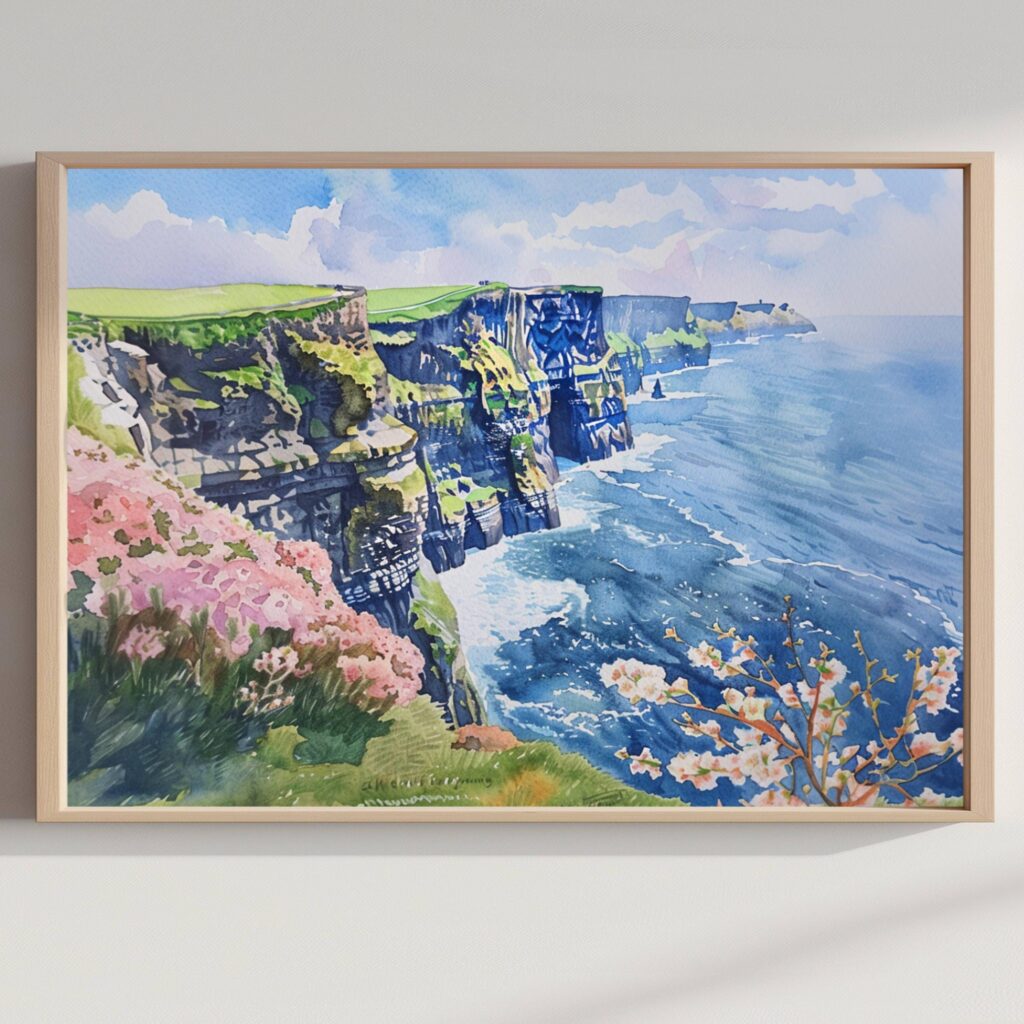
The Cliffs of Moher rise up to 214 metres above the Atlantic along Ireland’s west coast, formed from layers of shale and sandstone laid down roughly 320 million years ago, long before the Atlantic Ocean that now batters them even existed. Stretching for 14 kilometres, the cliffs have been shaped continuously by wave erosion, a process still actively reshaping them today, sections occasionally collapse into the sea, a reminder that the coastline visitors see is never quite finished.
O’Brien’s Tower, perched near the cliffs’ highest point, was built in 1835 by Sir Cornellius O’Brien, a local landowner, specifically as a viewing point for the Victorian tourists already visiting in growing numbers, an early piece of purpose-built tourism infrastructure long before mass travel made the site globally famous.
A Refuge for Puffins and Storm Petrels
The cliffs host one of Ireland’s most significant seabird colonies, with an estimated 30,000 birds nesting there each breeding season, including Atlantic puffins, guillemots, and razorbills, drawn to ledges the Atlantic’s relentless erosion has carved into ideal, predator-resistant nesting sites. The site was designated a UNESCO Global Geopark in recognition of both its geological significance and this thriving, cliff-dependent ecosystem.
The Cliffs of Moher have appeared in several major films, including scenes representing the Cliffs of Insanity in The Princess Bride, and portions of the Harry Potter series, their dramatic, wind-battered scale requiring little embellishment for the camera.
Painting a Coastline in Motion
The sheer scale of the cliffs against Atlantic spray and shifting Irish weather gives a watercolourist dramatic texture and atmosphere to capture. We’ve painted that wild coastline in our own Cliffs of Moher Watercolor Print, printed to order on archival paper, a small piece of Ireland’s west coast for a wall at home.
Still being carved by the same ocean that made them, the Cliffs of Moher remain one of the rare landmarks that are, quite literally, a work in progress.