
Long before you see it, you hear it. A brass band strikes up somewhere behind Buckingham Palace’s railings, drums roll, and the crowd along The Mall shifts forward on tiptoe. For over three hundred years, the Changing of the Guard has drawn Londoners and travellers alike to watch one of the most recognisable pieces of pageantry in the world — a ceremony that has barely changed since it was first formalised in 1660, even as the city around it has transformed completely.
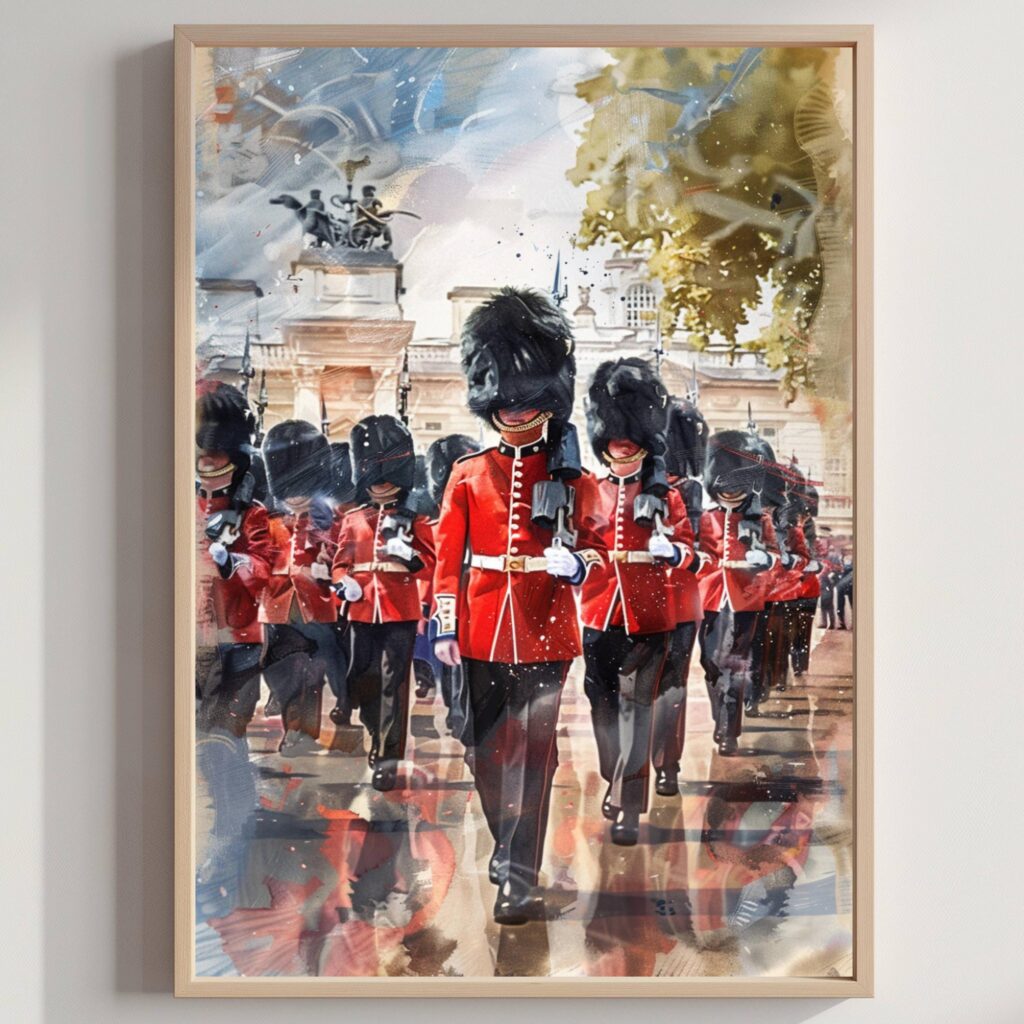
The ceremony itself is a handover: the New Guard, in scarlet tunics and towering bearskin caps, marches in from Wellington Barracks to relieve the Old Guard on duty at Buckingham Palace and St James’s Palace. It typically runs for around forty-five minutes, usually at 11am on select days, and is accompanied throughout by a Guards band playing anything from traditional military marches to, on occasion, film scores and pop songs — a small, knowing wink from a very old institution to the modern city it guards.
More Than a Photo Opportunity
It’s easy to see the Changing of the Guard as simply a tourist spectacle, but it is, at its core, a genuine operational handover of the King’s Guard — the soldiers on duty are not actors, and the ceremony carries on in something close to its historic form regardless of who is watching. That tension between living tradition and living theatre is part of what makes it so compelling to witness: the bearskin caps and scarlet wool are exactly as they were centuries ago, framed today by tour buses and camera phones.
The best vantage points are along the Buckingham Palace railings and around the Victoria Memorial, though arriving early is essential — this is one of London’s most reliably crowded free attractions, and for good reason. Afterwards, St James’s Park sits just moments away, a green and unhurried contrast to the ceremony’s crisp formality, perfect for the walk back into the rest of the city.
Painting the Pageantry
There’s a natural drama to the scene — scarlet against grey London stone, the geometry of marching ranks, the palace’s pale façade as a backdrop — that lends itself beautifully to watercolour. We’ve captured that moment in our own Changing of the Guard London Watercolor Print, painted first by hand and printed to order on archival paper — a small piece of London ceremony for a wall at home.
Whether you’ve stood at the railings yourself on a cold London morning or simply know the ceremony from a hundred photographs, the Changing of the Guard remains one of the city’s most enduring rituals — pageantry, precision, and history, all playing out on schedule outside a palace gate.