
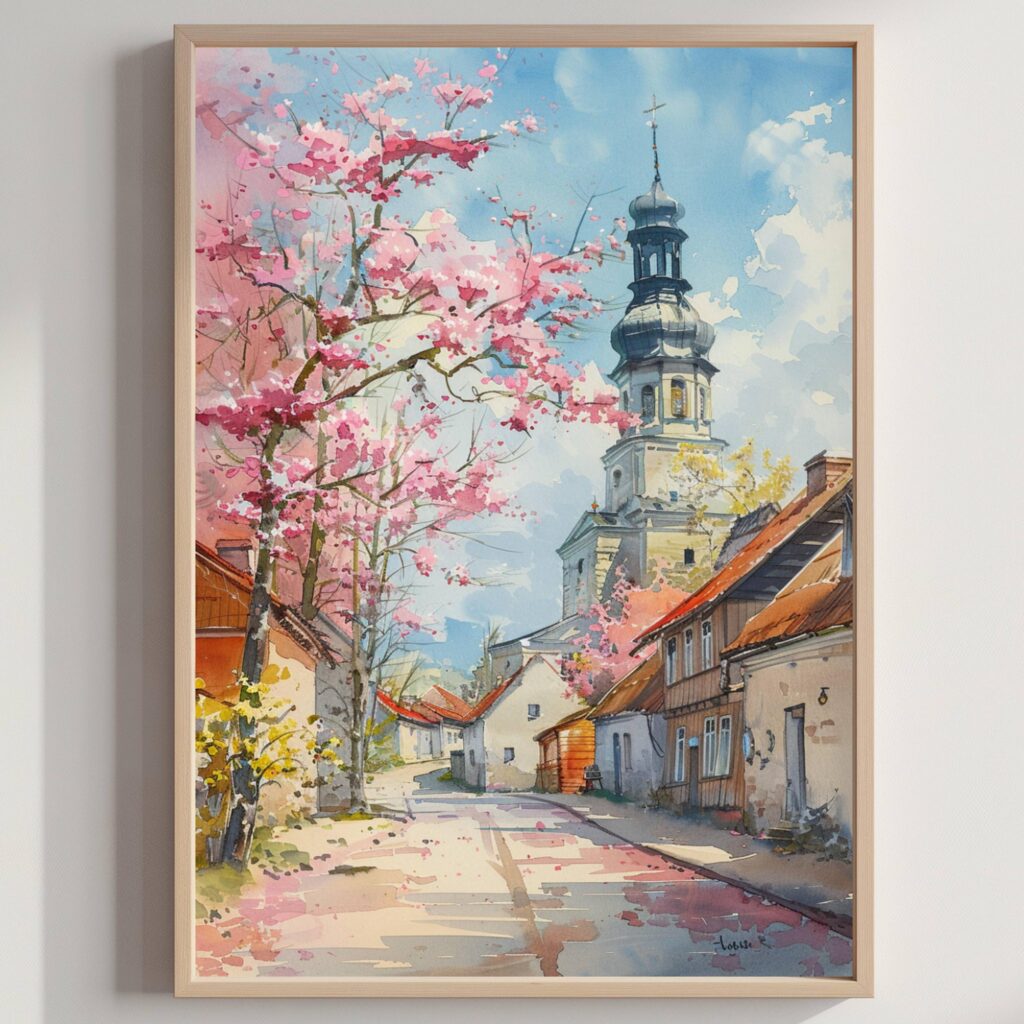
Tallinn’s Old Town is one of the best-preserved medieval city centres in Northern Europe, its Hanseatic League-era merchant houses, city walls, and cobbled lanes surviving largely intact despite Estonia’s turbulent 20th century, occupied successively by Soviet and Nazi forces before decades of Soviet rule followed the Second World War. That preservation earned the district UNESCO World Heritage status in 1997, just six years after Estonia regained independence, a remarkably fast recognition for a country still rebuilding its national institutions from scratch.
Toompea Hill, overlooking the lower Old Town, has served as a seat of power for successive rulers, Danish, German, Swedish, Russian, and now Estonian, since the 13th century, its Alexander Nevsky Cathedral, built during the Russian imperial era, standing in visible, sometimes contested contrast to the medieval Lutheran and Gothic architecture surrounding it.
A Small Country That Became a Digital Pioneer
Estonia has positioned itself as one of the most digitally advanced nations in the world, pioneering e-residency programs and near-universal digital government services, a striking contrast to Tallinn’s determinedly analogue medieval streets, a country simultaneously among the oldest-looking and most technologically forward-thinking in Europe. Skype was founded by Estonian developers in Tallinn in 2003, an early signal of the country’s outsized tech ambitions relative to its small population.
Tallinn’s medieval city walls, largely intact with numerous surviving watchtowers, once formed one of the most extensive defensive fortifications in the Baltic region, several sections still walkable today, offering visitors a genuinely rare, continuous medieval perimeter rather than isolated fragments.
Painting Turrets and Cobbled Lanes
Tallinn’s spired towers and narrow medieval streets give a watercolourist rich historic detail to work with. We’ve captured that old-world character in our own Tallinn Watercolor Print, painted first by hand and printed to order on archival paper, a small piece of Estonia for a wall at home.
Ruled by half a dozen foreign powers and now among the most digitally advanced nations on Earth, Tallinn remains a city whose medieval streets never quite reflect how forward-looking the country around them actually is.