
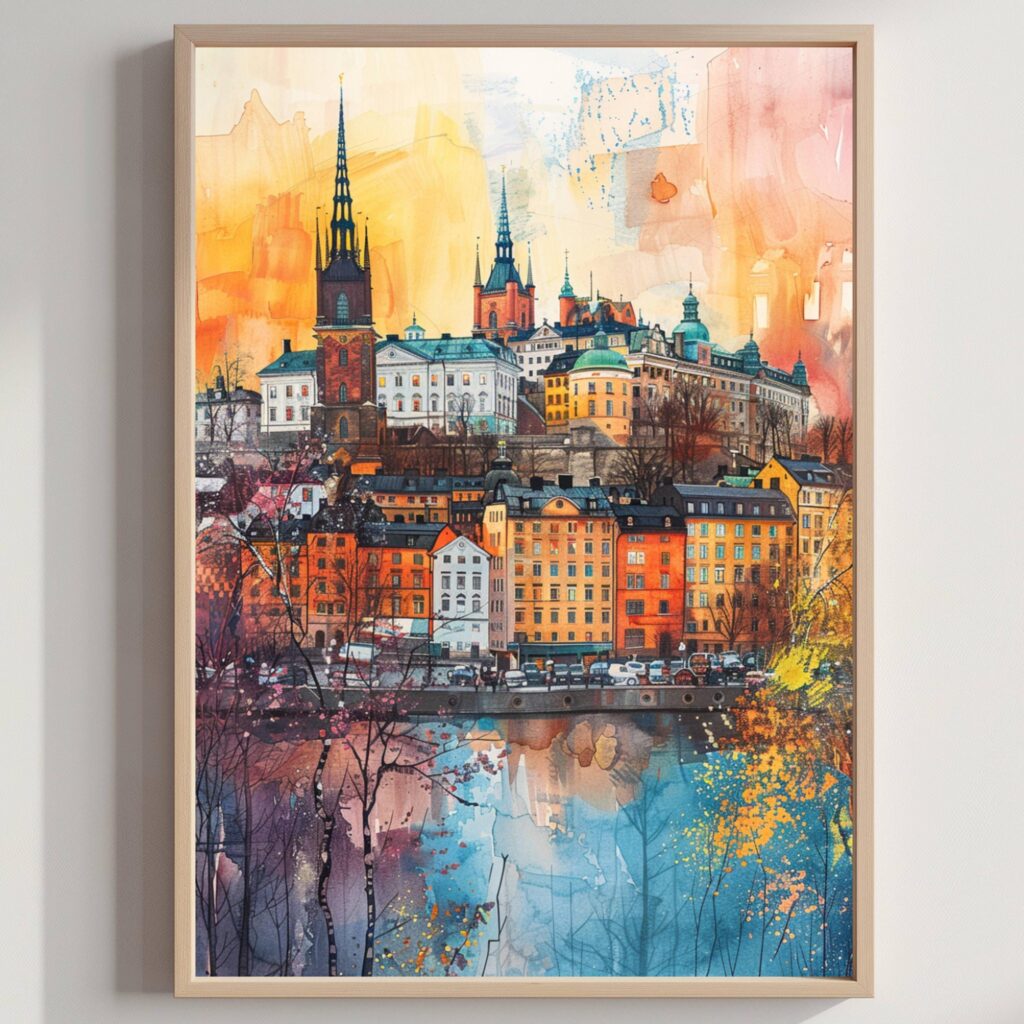
Stockholm is built across fourteen islands connected by roughly 57 bridges, its position where Lake Malaren meets the Baltic Sea giving the city a genuinely waterborne character, water makes up about a third of the central city’s total area. Gamla Stan, Stockholm’s medieval old town, occupies its own small island and has remained remarkably intact since the 13th century, its narrow cobbled streets and ochre-coloured buildings largely spared the aggressive modernisation that reshaped much of the rest of the city during the 20th century.
That preservation stands in deliberate contrast to areas like Norrmalm, where large sections of older architecture were controversially demolished in the 1950s and 60s in favour of modernist redevelopment, a period Swedes now often refer to critically as the era when the country tore down more of its own heritage than it needed to.
A City That Invented Flat-Pack Furniture and Environmental Ambition
Stockholm has positioned itself as one of the world’s leading environmentally sustainable capitals, aiming for fossil fuel independence years ahead of most comparable cities, an ambition reflected in extensive public transport investment and строгие building efficiency standards. The city’s Vasa Museum houses an almost fully intact 17th-century warship that sank on its maiden voyage in 1628, just minutes after leaving harbour, and was recovered remarkably preserved from Stockholm’s cold, low-salinity waters over 300 years later, now displayed nearly complete rather than as fragments.
Stockholm’s archipelago, extending east into the Baltic, includes an estimated 30,000 islands and skerries, ranking among the largest archipelagos in the world, a vast, largely undeveloped natural extension of the capital most visitors never fully explore.
Painting a City Built on Water
Stockholm’s waterside architecture reflected across its many channels gives a watercolourist naturally layered composition to work with. We’ve captured that reflective calm in our own Stockholm Watercolor Print, painted first by hand and printed to order on archival paper, a small piece of Sweden for a wall at home.
Spread across fourteen islands and tens of thousands more just offshore, Stockholm remains a capital that never really chose between being a city and being an archipelago.