
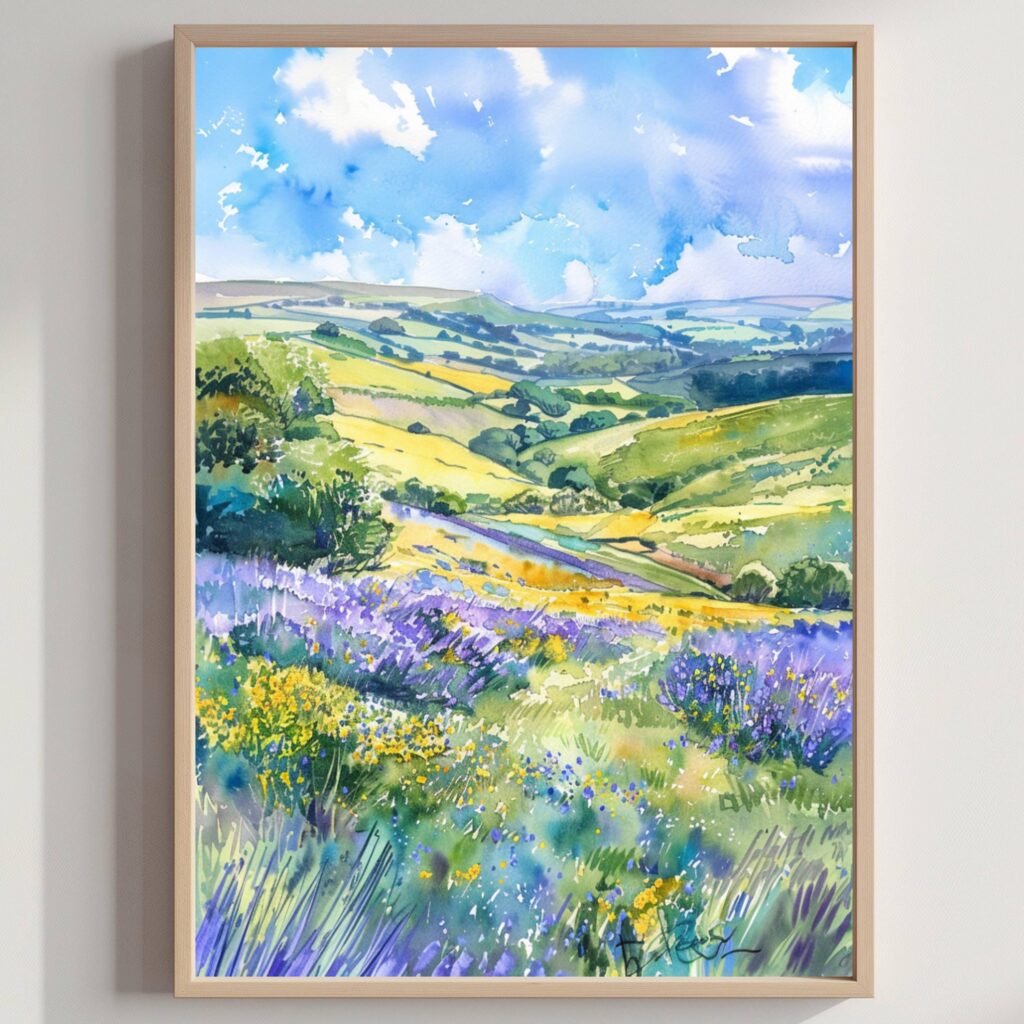
South Downs National Park, covering rolling chalk hills across Hampshire, West Sussex, and East Sussex in southern England, was only formally designated in 2010, making it one of the newest national parks in Britain despite the landscape itself having been proposed for protection as far back as the 1940s, when the country’s original National Parks legislation was first drafted. Repeated delays, driven partly by the region’s dense population and complex land ownership compared to Britain’s more remote upland parks, meant the South Downs waited longer than any other currently protected landscape in England for formal recognition.
The park’s defining chalk grassland habitat, maintained historically through centuries of sheep grazing, supports some of the richest wildflower diversity in Britain, a single square metre of well-managed downland turf capable of containing more plant species than an equivalent area of tropical rainforest.
A Landscape Shaped by Iron Age Farmers
The South Downs bear extensive evidence of Iron Age and earlier settlement, including hillforts, burial mounds, and ancient field systems still visible in the landscape today, evidence that these chalk hills have been actively farmed and shaped by human hands for well over two thousand years rather than remaining wild upland. The South Downs Way, a 100-mile long-distance trail running the length of the park, follows routes used by travellers and traders across many centuries of this long agricultural history.
Beachy Head, at the park’s eastern edge, forms part of the dramatic chalk cliffs facing the English Channel, among the highest chalk sea cliffs in Britain, a striking coastal counterpoint to the rolling inland downland that makes up most of the park.
Painting Chalk Downland in Soft English Light
The South Downs’ rolling green hills and chalk grassland give a watercolourist gentle, sweeping colour and soft natural light to work with. We’ve captured that character in our own South Downs Watercolor Print, painted first by hand and printed to order on archival paper, a small piece of England for a wall at home.
Proposed for protection decades before it finally received it, the South Downs remain a reminder that even long-cherished landscapes sometimes have to wait their turn.