
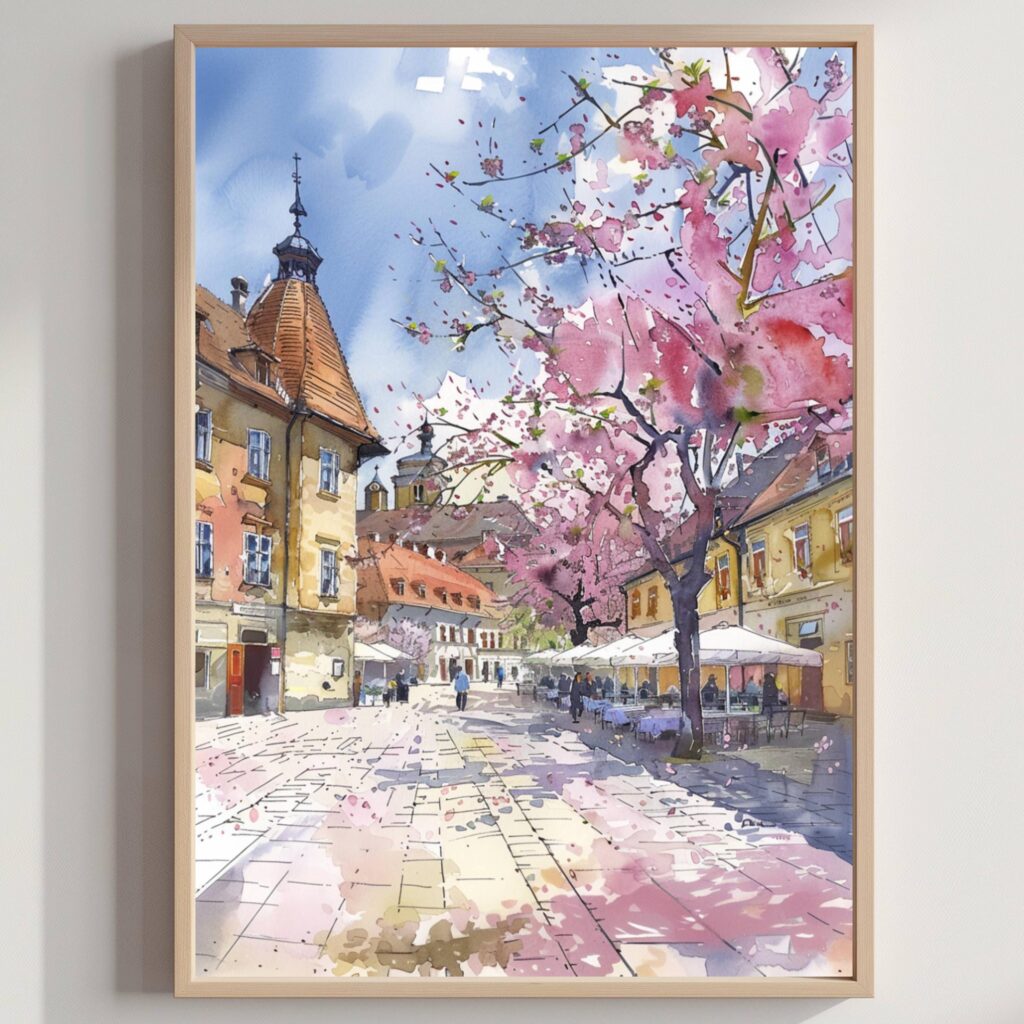
Sighisoara’s fortified old town, built by Transylvanian Saxon settlers beginning in the 12th century, is widely cited as the last inhabited medieval citadel still standing in Europe, its nine surviving watchtowers, cobbled streets, and colourful burgher houses still functioning as a genuine, lived-in town centre rather than a preserved museum piece. UNESCO recognised the citadel as a World Heritage Site in 1999, citing it as an exceptionally well-preserved example of a small, fortified medieval trading town built by Germanic craftsmen and merchants.
The town is also widely, if somewhat uncertainly, associated with Vlad III, better known as Vlad the Impaler, the 15th-century Wallachian ruler whose brutal reputation later inspired Bram Stoker’s Dracula. A house near the citadel’s clock tower, believed to be close to his birthplace, remains one of Sighisoara’s most visited sites, though direct documentary evidence tying him precisely to that building is thinner than the tourist trade around it suggests.
A Citadel Built and Defended by Trade Guilds
Sighisoara’s nine surviving towers, out of an original fourteen, were each built, maintained, and defended by a specific craft guild, tower names like the Tinsmiths’ Tower, the Tailors’ Tower, and the Shoemakers’ Tower still reflecting this system centuries later. The clock tower at the citadel’s entrance, first built around 1280 and rebuilt after fires in the 17th century, remains the town’s defining landmark, its mechanical figures still marking the hours as they have for generations.
The citadel’s covered wooden staircase, built in 1642 to give schoolchildren and churchgoers weatherproof access up the hill to the fortified church above, still climbs nearly 300 steps, a rare surviving piece of practical medieval town infrastructure still in daily use today.
Painting a Citadel That Time Genuinely Passed By
Sighisoara’s steeply pitched, brightly coloured roofs and stone watchtowers give a watercolourist rich medieval texture and colour to work with. We’ve captured that character in our own Sighisoara Watercolor Print, painted first by hand and printed to order on archival paper, a small piece of Romania for a wall at home.
Still genuinely lived in nine centuries after its founding, Sighisoara remains a rare case of a medieval town that survived not by being frozen, but simply by staying in use.