
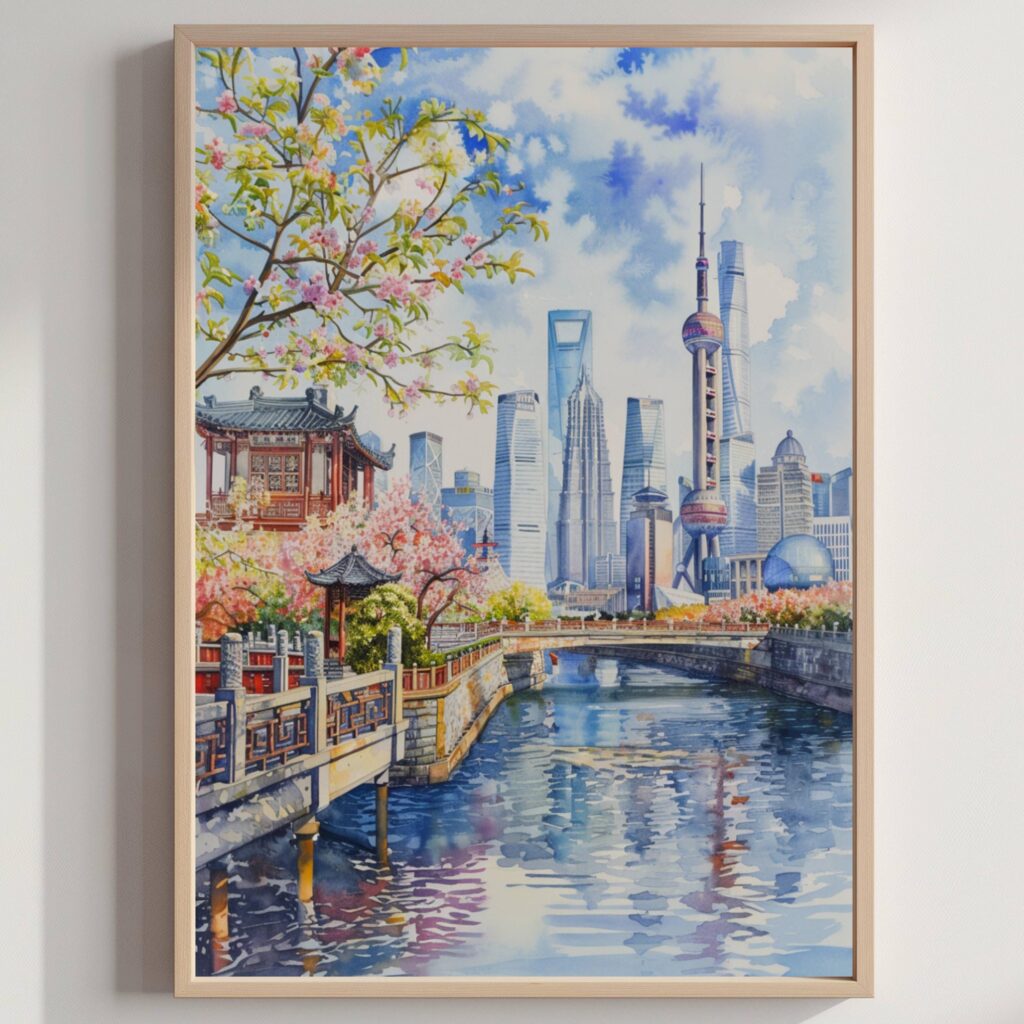
Shanghai was a modest fishing and textile town for much of its early history, and its transformation into one of the world’s great financial capitals happened almost entirely within the last 150 years, accelerated dramatically since economic reforms began in the 1990s. The Bund, its famous riverside strip of early 20th-century colonial-era buildings, once housed the banks and trading houses of foreign powers who controlled Shanghai’s international concessions, a period of foreign influence still visible in the architecture even as the skyline around it has become unmistakably Chinese and modern.
Directly across the Huangpu River from those century-old buildings sits Pudong, a financial district that was largely farmland until the early 1990s and now bristles with some of the tallest skyscrapers on Earth, the two riverbanks facing each other as a kind of accidental timeline of Shanghai’s own transformation.
A City Rebuilt at Extraordinary Speed
The Shanghai Tower, completed in 2015, twists 128 storeys into the sky and remains one of the tallest buildings in the world, its double-skin facade designed specifically to reduce wind load in a design informed by centuries-old Chinese architectural philosophy around balance and flow. Shanghai’s metro system, meanwhile, didn’t exist at all until 1993, and has since grown into the longest network by track length anywhere in the world, a scale of infrastructure expansion with few precedents globally.
Despite the ultra-modern skyline, traditional lane housing, longtang, still survives in pockets throughout the city, narrow alleyways of early 20th-century homes standing in direct, deliberate contrast to the glass towers rising around them.
Painting Old Bund and New Skyline
The contrast between the Bund’s colonial stonework and Pudong’s futuristic towers across the water gives a watercolourist a genuinely striking sense of two eras side by side. We’ve captured that contrast in our own Shanghai Watercolor Print, painted first by hand and printed to order on archival paper, a small piece of China for a wall at home.
Built from a fishing village into a financial capital within a single century, Shanghai remains one of the clearest examples anywhere of just how fast a skyline can change.