
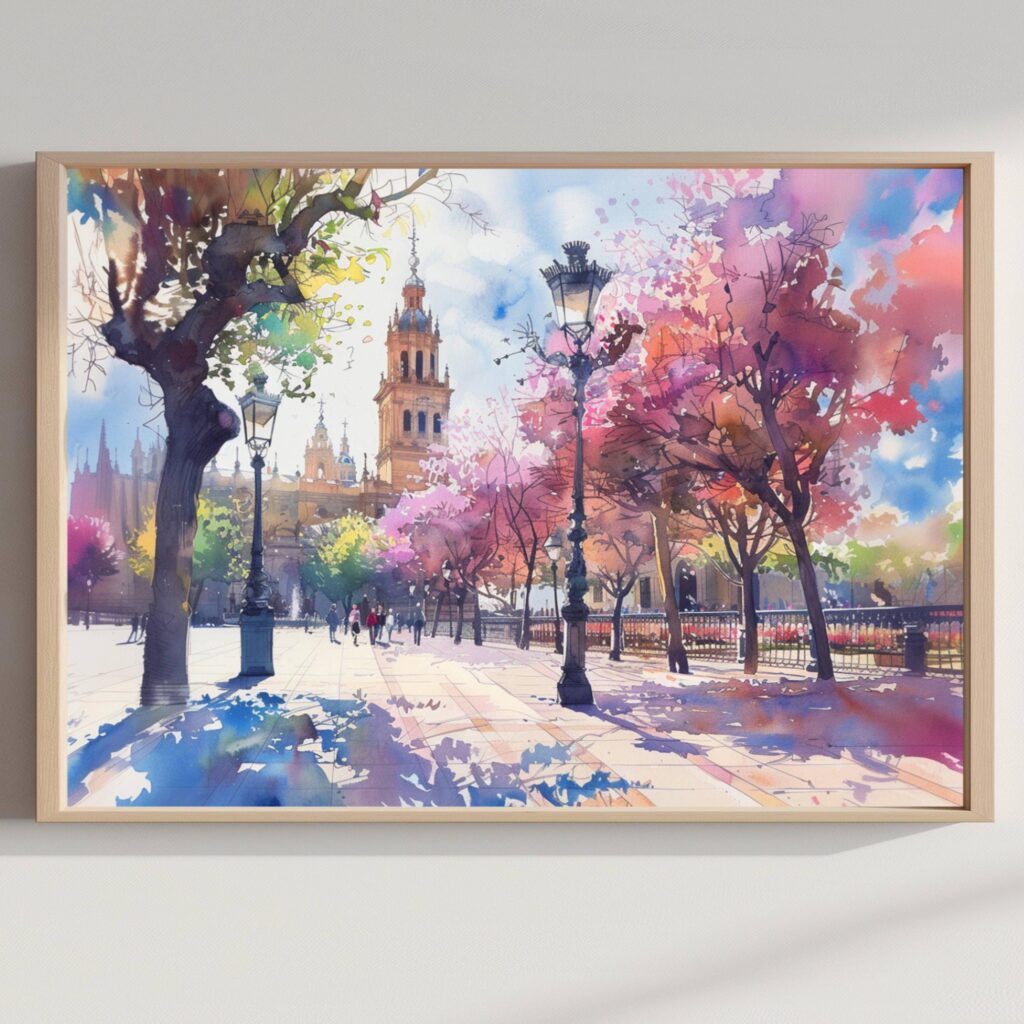
For nearly two centuries after Columbus’s voyages, Seville held an official Spanish crown monopoly on trade with the Americas, every ship carrying New World gold, silver, and goods back to Spain was legally required to pass through the city’s port on the Guadalquivir River, transforming Seville into one of the wealthiest and most cosmopolitan cities in Europe during Spain’s Golden Age. That monopoly funded much of the city’s most extraordinary architecture, including Seville Cathedral, the largest Gothic cathedral in the world, built explicitly, according to its 15th-century chapter, to be so grand that “those who see it built will think we were mad.”
The cathedral’s bell tower, the Giralda, began life as a 12th-century minaret built during the city’s earlier period of Moorish rule, its Islamic architectural core still visible beneath later Christian additions, a physical record of Seville’s shifting religious and political history layered directly into a single structure.
A City of Moorish Palaces and Flamenco Streets
The Real Alcazar, Seville’s royal palace, remains in active use by the Spanish royal family today, making it the oldest royal palace still in use in Europe, its intricate Mudejar architecture, built by Christian rulers employing Moorish craftsmen after the Reconquista, blending two traditions rather than replacing one with another. Flamenco, though its exact origins are debated, is deeply associated with Seville and the wider Andalusia region, still performed in small, intimate tablaos throughout the old Jewish quarter, Santa Cruz.
Seville’s orange trees, planted throughout the city centre, produce fruit too bitter to eat fresh, ironically, much of it is exported to Britain specifically for marmalade production, a small, ongoing trade link between two countries with a long and complicated shared history.
Painting Moorish Stone in Andalusian Light
Seville’s warm stone architecture and orange-lined streets under Andalusian sun give a watercolourist rich, golden colour to work with. We’ve captured that warmth in our own Seville Watercolor Print, painted first by hand and printed to order on archival paper, a small piece of Andalusia for a wall at home.
Once the sole gateway between Spain and an entire new world, Seville remains a city whose golden age is still written into nearly every building at its centre.