
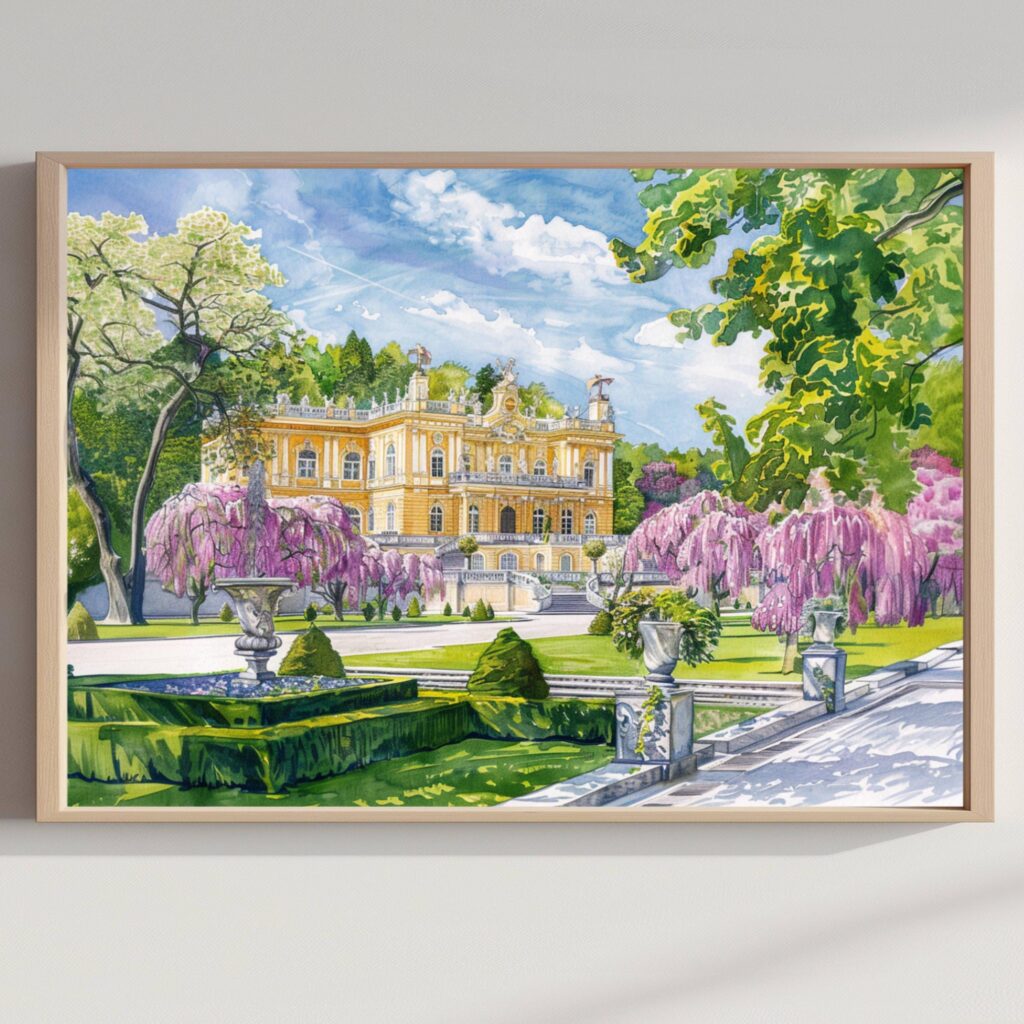
Schönbrunn Palace was conceived, according to popular but disputed legend, as the Habsburg dynasty’s answer to Versailles, an attempt to build something grand enough to rival French royal ambition, though the palace’s final, more restrained form came about largely because financial constraints forced architect Johann Bernhard Fischer von Erlach to scale back his original, even more ambitious plans. What was completed regardless became one of the most important Baroque palace complexes in Europe, serving as the Habsburgs’ summer residence for well over 200 years.
The palace contains 1,441 rooms, and its Great Gallery, used for state receptions and formal balls, remains one of the most opulent surviving Rococo interiors in Europe, its mirrored walls and elaborate ceiling frescoes designed specifically to project imperial grandeur to visiting foreign dignitaries.
A Garden That Once Housed the World’s Oldest Zoo
Schönbrunn’s grounds include Tiergarten Schönbrunn, established in 1752 and recognised as the oldest continuously operating zoo in the world, originally built for the private enjoyment of the imperial family before eventually opening to the public in the 18th century, well ahead of most European zoos that followed. The palace gardens also feature the Gloriette, a monumental structure built specifically as a scenic viewpoint rather than for any residential purpose, positioned to offer sweeping views back across the palace and gardens toward Vienna’s skyline.
UNESCO designated Schönbrunn a World Heritage Site in 1996, and the palace remains, alongside Vienna’s Hofburg, one of the most complete surviving symbols of Habsburg imperial power, a dynasty that ruled substantial portions of Europe for nearly 650 years.
Painting Imperial Yellow Against Formal Gardens
Schönbrunn’s distinctive pale yellow facade against its precisely manicured gardens gives a watercolourist elegant symmetry and rich colour to work with. We’ve captured that grandeur in our own Schönbrunn Palace Watercolor Print, painted first by hand and printed to order on archival paper, a small piece of Vienna for a wall at home.
Built as an answer to Versailles that its own architect never fully got to finish, Schönbrunn remains one of Europe’s grandest palaces, even in the more modest form circumstance eventually settled for.