
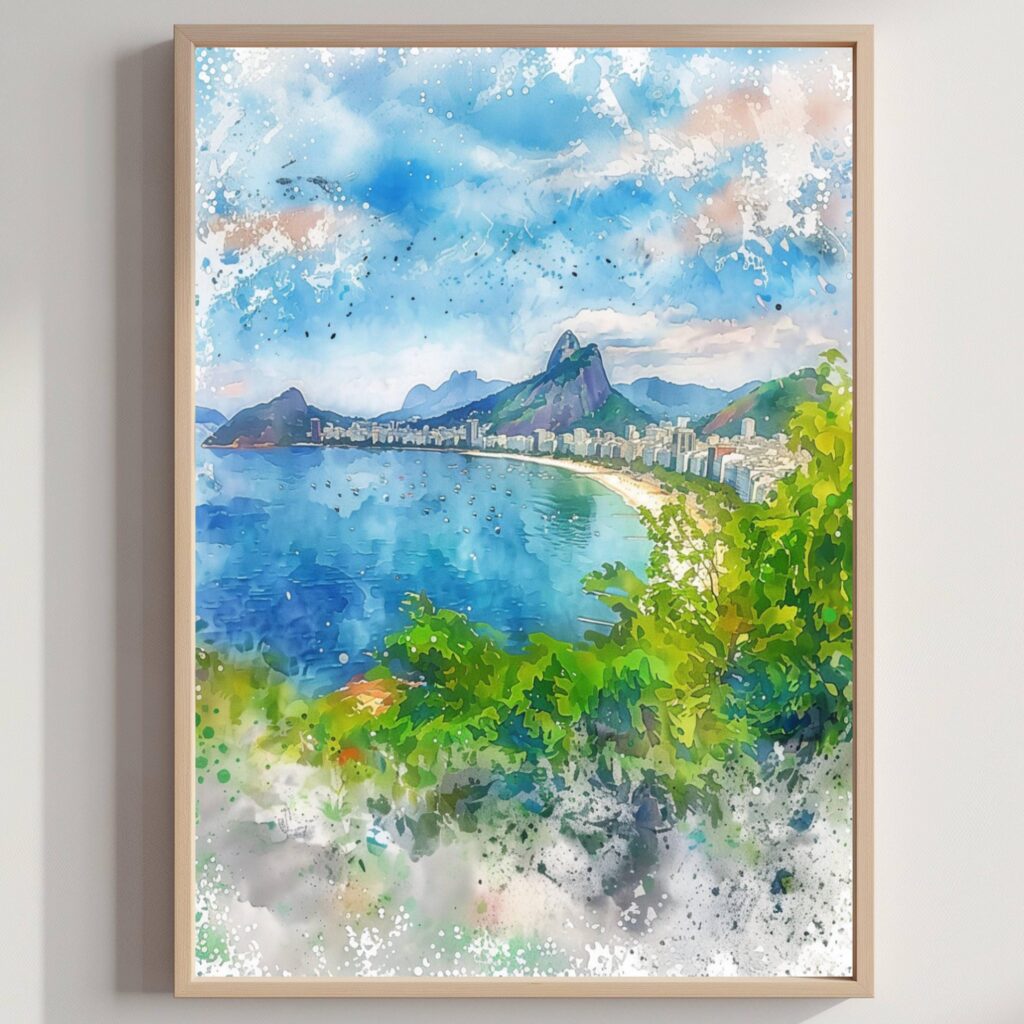
Rio de Janeiro’s dramatic geography, granite peaks rising directly from the coastline, forced the city to grow in narrow, densely packed strips between mountain and ocean rather than sprawling outward the way most major cities do. That constrained geography is part of what gives Rio its instantly recognisable silhouette, Sugarloaf Mountain and Corcovado, crowned by Christ the Redeemer, both visible from most of the city at once, mountain and metropolis genuinely inseparable.
Copacabana and Ipanema, Rio’s most famous beaches, sit along a coastline shaped by that same tight geography, their black-and-white wave-patterned promenade, designed by Brazilian landscape architect Roberto Burle Marx, has become as iconic globally as the beaches themselves.
A City Built Around Carnival
Rio’s Carnival, held annually before Lent, is the largest carnival celebration in the world, drawing millions of participants and spectators to watch samba schools, each representing a specific neighbourhood, compete in enormous, elaborately costumed parades through the purpose-built Sambadrome stadium. Preparation for the following year’s Carnival often begins almost immediately after the current one ends, samba schools function as genuine year-round community institutions rather than seasonal event organisers.
Rio’s favelas, informal hillside settlements that developed largely without formal urban planning, house a significant portion of the city’s population and have produced much of Brazil’s most influential music and culture, even as they’ve also historically faced serious social and infrastructure challenges the city continues working to address.
Painting Mountains That Frame a City
Rio’s dramatic peaks rising above curved beaches and dense city blocks give a watercolourist extraordinary scale and colour to work with. We’ve captured that setting in our own Rio de Janeiro Watercolor Print, painted first by hand and printed to order on archival paper, a small piece of Brazil for a wall at home.
Squeezed into one of the most dramatic settings any city has ever grown into, Rio de Janeiro remains a place where geography and culture never really developed separately.