
Reykjavik takes its name, roughly translated as “Smoky Bay,” from the geothermal steam early Norse settlers saw rising from the ground when they arrived around 874 CE, mistaking it for smoke long before anyone understood the volcanic geology beneath their feet. That same geothermal activity now heats almost the entire city, over 90% of Icelandic homes are warmed by geothermal energy piped directly from underground, making Reykjavik one of the cleanest-heated capitals on Earth.
As the world’s northernmost capital of a sovereign state, Reykjavik experiences dramatic seasonal light swings, near-endless summer daylight balanced by only a few hours of winter sun, conditions that shape daily life and have made the city, somewhat unexpectedly, a genuine hub for late-night culture and creativity.
A City Built on Volcanic Ground
Iceland sits directly on the Mid-Atlantic Ridge, where the North American and Eurasian tectonic plates are slowly pulling apart, a geological fact visible just outside Reykjavik at Thingvellir, where you can literally walk between two continents. The country’s frequent volcanic activity, rather than being purely a hazard, has become part of its identity and tourism draw, along with the aurora borealis, visible above the city on clear winter nights.
Hallgrimskirkja, Reykjavik’s largest church, took 41 years to build and was deliberately designed to echo the basalt columns found throughout Iceland’s volcanic landscape, architecture drawn directly from the geology surrounding it.
Painting Ice, Steam, and Northern Light
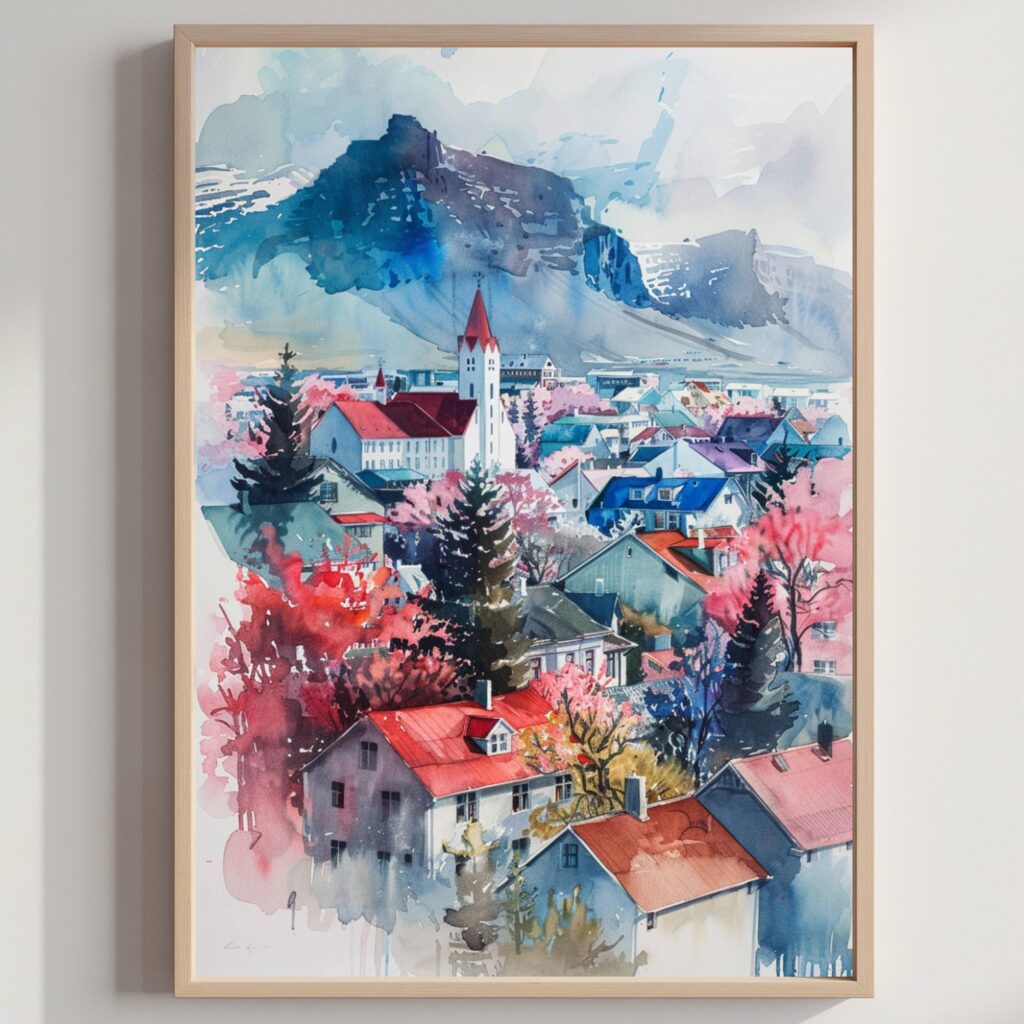
Reykjavik’s colourful rooftops against dramatic Icelandic sky give a watercolourist a striking, almost otherworldly light to work with. We’ve captured that northern atmosphere in our own Reykjavik Watercolor Print, painted first by hand and printed to order on archival paper, a small piece of Iceland for a wall at home.
Named for steam its first settlers misread as smoke, Reykjavik has spent over a thousand years being warmed, quite literally, from the ground up.