
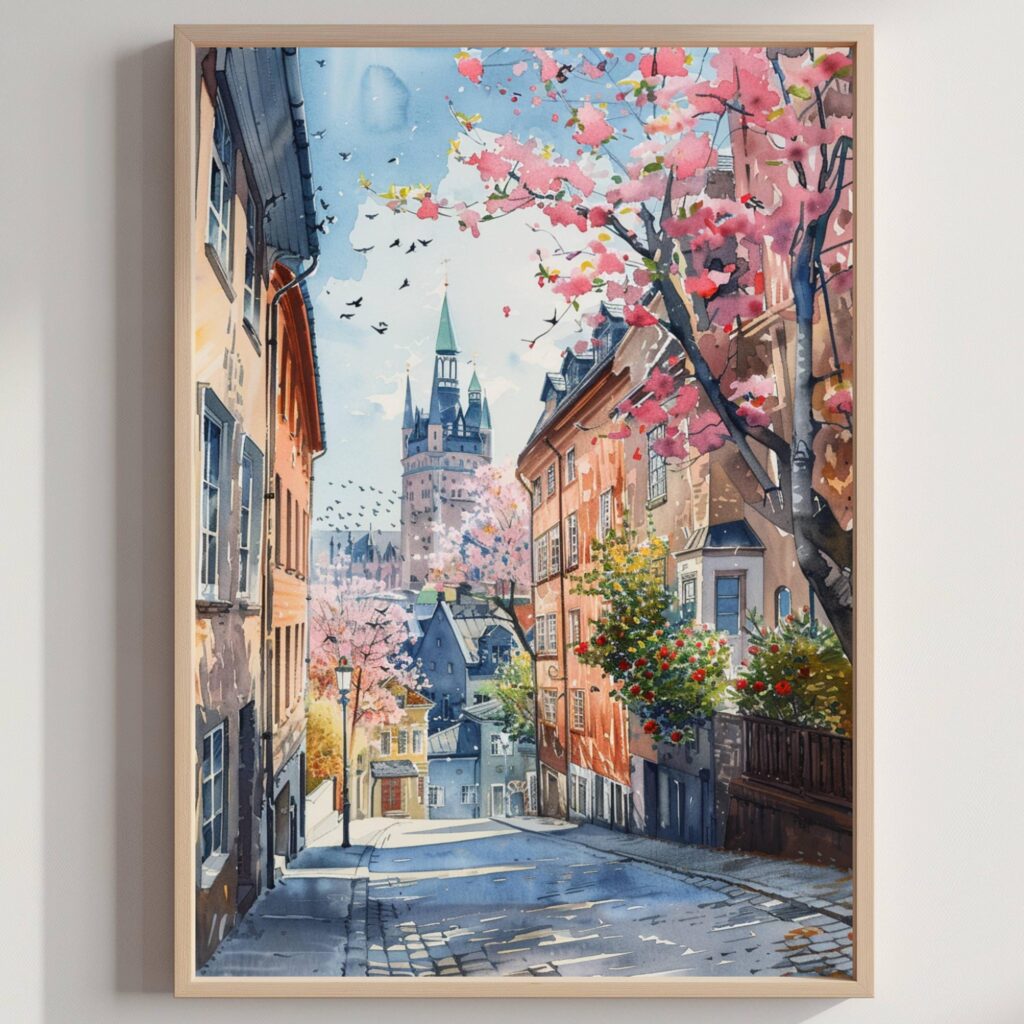
Oslo was known as Christiania, later Kristiania, for nearly 300 years, renamed in 1624 by Danish-Norwegian King Christian IV after a devastating fire destroyed much of the original medieval city, the king rebuilding it closer to Akershus Fortress and naming it after himself, a name the city carried through Norway’s long period of union with Denmark and later Sweden. Norway only restored the city’s original name, Oslo, in 1925, decades after gaining full independence in 1905, a symbolic reassertion of Norwegian identity separate from centuries of Danish and Swedish administrative rule.
Akershus Fortress, begun around 1300, still stands on Oslo’s waterfront, having successfully withstood numerous sieges over the centuries and later serving, more grimly, as a execution site for Norwegian resistance members during the Nazi occupation of Norway in World War II, a period commemorated at a museum now located within the fortress grounds.
A City That Prizes Design and Green Space in Equal Measure
Oslo has invested heavily in striking modern architecture in recent decades, the Oslo Opera House, completed in 2008, was deliberately designed with a sloping roof that visitors can walk directly up, blurring the line between building and public plaza, an architectural approach that won international awards and has become one of the city’s defining modern landmarks. Despite that architectural ambition, roughly two-thirds of the greater Oslo municipality’s area remains protected forest and open space, the city bordered directly by the Nordmarka wilderness, giving Oslo residents genuine access to hiking and cross-country skiing within a short transit ride of the city centre.
The Vigeland sculpture park, containing over 200 bronze and granite figures by Norwegian sculptor Gustav Vigeland, was developed over several decades in the early 20th century and remains one of the largest sculpture parks in the world created by a single artist.
Painting a Fjord Capital Between Water and Forest
Oslo’s waterfront architecture set against forested hills gives a watercolourist a striking balance of modern colour and natural green to work with. We’ve captured that setting in our own Oslo Watercolor Print, painted first by hand and printed to order on archival paper, a small piece of Norway for a wall at home.
Renamed once for a king and again for itself, Oslo remains a capital whose identity has always been closely tied to both its water and the wilderness pressing right up against it.