
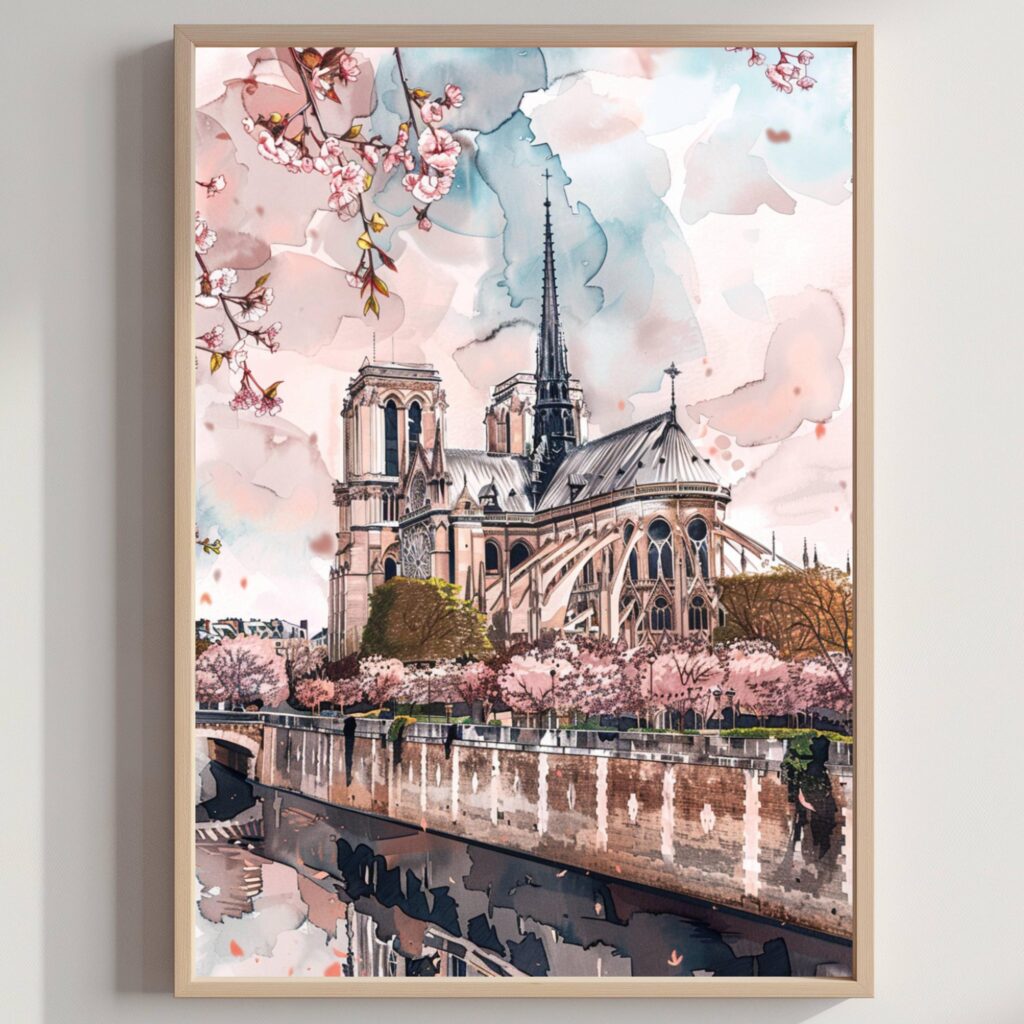
Notre-Dame de Paris took nearly two centuries to build, construction began in 1163 and wasn’t fully complete until around 1345, spanning the working lives of generations of masons who never lived to see the finished cathedral. That patience is part of what made the fire of April 2019 so shocking, watching centuries of accumulated craftsmanship burn in a single evening, broadcast live around the world.
The cathedral had already survived plenty before that: revolutionaries damaged and looted it during the French Revolution, its statues beheaded after being mistaken for French kings, and by the 1830s it had fallen into such disrepair that demolition was seriously debated. It was Victor Hugo’s 1831 novel, The Hunchback of Notre-Dame, that reignited public affection for the building and helped launch the major restoration that saved it.
Rebuilt, Stone by Stone, Once Again
The 2019 fire destroyed the cathedral’s spire and much of its wooden roof structure, known as “the forest” for the sheer density of medieval oak beams it contained, some cut from trees felled in the 12th century. The restoration that followed became a five-year, France-wide effort involving thousands of craftspeople, carpenters, stonemasons, and stained-glass restorers relearning and applying techniques their medieval predecessors would have recognised.
Notre-Dame reopened to the public in December 2024, its stone brightened by cleaning, its spire rebuilt to Eugene Viollet-le-Duc’s 19th-century design, a cathedral that has now been built, nearly destroyed, and rebuilt not once but twice in its long history.
Painting Stone That Refused to Fall
The soaring Gothic towers and rose windows of Notre-Dame, set against the Seine, give a watercolourist centuries of texture and light to work with. We’ve captured that resilience in our own Notre-Dame Paris Watercolor Print, painted first by hand and printed to order on archival paper, a small piece of Paris for a wall at home.
Nearly lost to fire, saved once before by a novel and once again by an entire nation’s craftspeople, Notre-Dame remains proof that some buildings simply refuse to stay gone.