
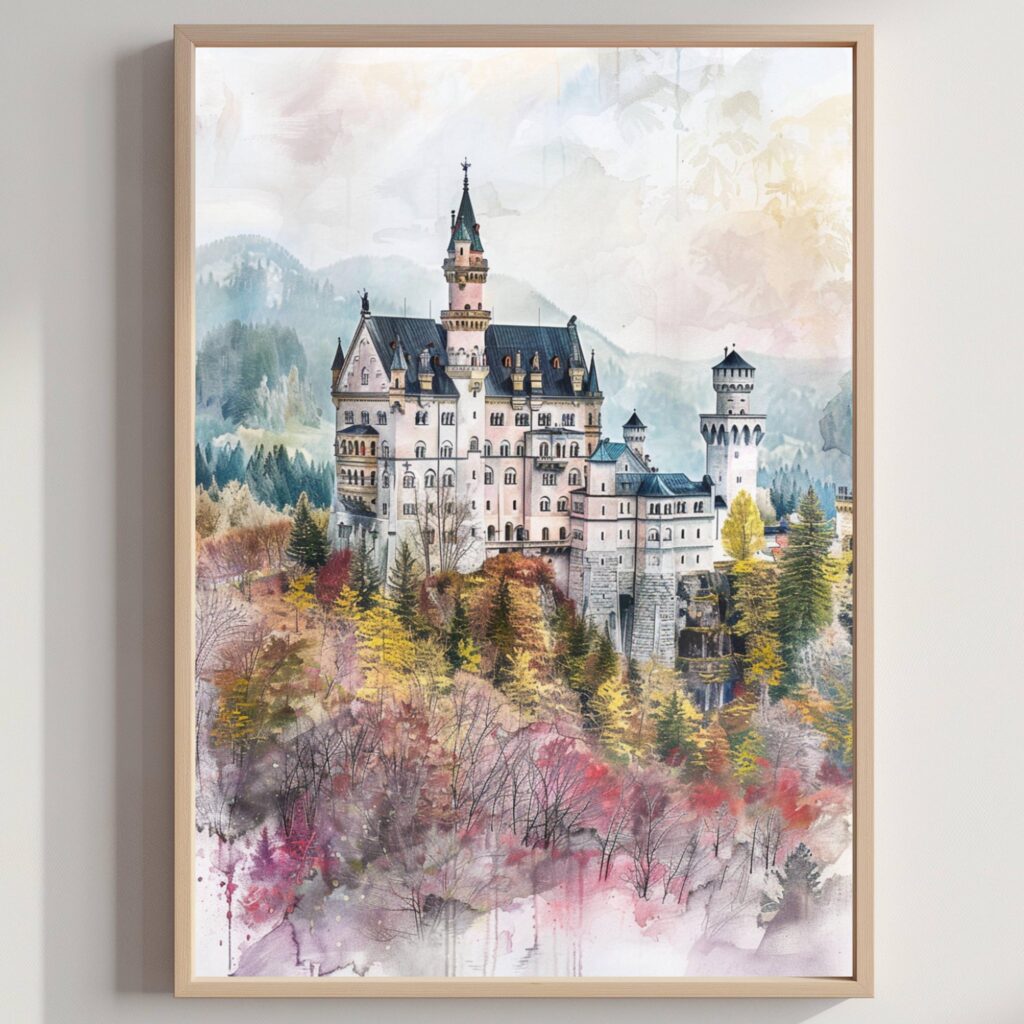
Neuschwanstein Castle was never meant to be seen by the public. King Ludwig II of Bavaria commissioned it in 1869 as a private retreat, explicitly designed, in his own words, to be built “in the true style of the old German knights’ castles,” a romantic, deliberately anachronistic fantasy at a time when most European monarchies were modernising rather than retreating into medieval imagery. Ludwig funded construction almost entirely from his personal fortune rather than the Bavarian state treasury, determined to keep it his own.
He got his wish for privacy in the most unfortunate way possible: Ludwig died under still-disputed circumstances in 1886, drowned in Lake Starnberg just days after being declared mentally unfit to rule, having lived in the unfinished castle for less than six months. Within weeks of his death, the Bavarian government opened Neuschwanstein to paying visitors, turning the king’s most private project into one of Europe’s most visited tourist sites almost immediately.
The Castle That Inspired a Castle
Neuschwanstein’s turrets and fairy tale silhouette famously inspired Walt Disney’s Sleeping Beauty Castle, cementing an already-romantic building into global pop culture imagery most people now associate with fiction rather than 19th-century Bavarian history. Despite its medieval appearance, the castle was thoroughly modern for its time inside, featuring central heating, running water on every floor, and one of the first telephone lines installed in a private residence anywhere in the region.
The castle remains unfinished even today, only about a third of Ludwig’s original planned rooms were ever completed before his death halted construction for good.
Painting a Fantasy in the Alps
Set against the forested Bavarian hills, Neuschwanstein’s pale stone towers against deep alpine green make for an almost impossibly picturesque watercolour subject. We’ve captured that fairy tale drama in our own Neuschwanstein Castle Watercolor Print, painted first by hand and printed to order on archival paper, a small piece of Bavaria for a wall at home.
Built for an audience of one and opened to millions instead, Neuschwanstein remains one of history’s more poignant ironies, a private fantasy that became everyone’s idea of a fairy tale.