
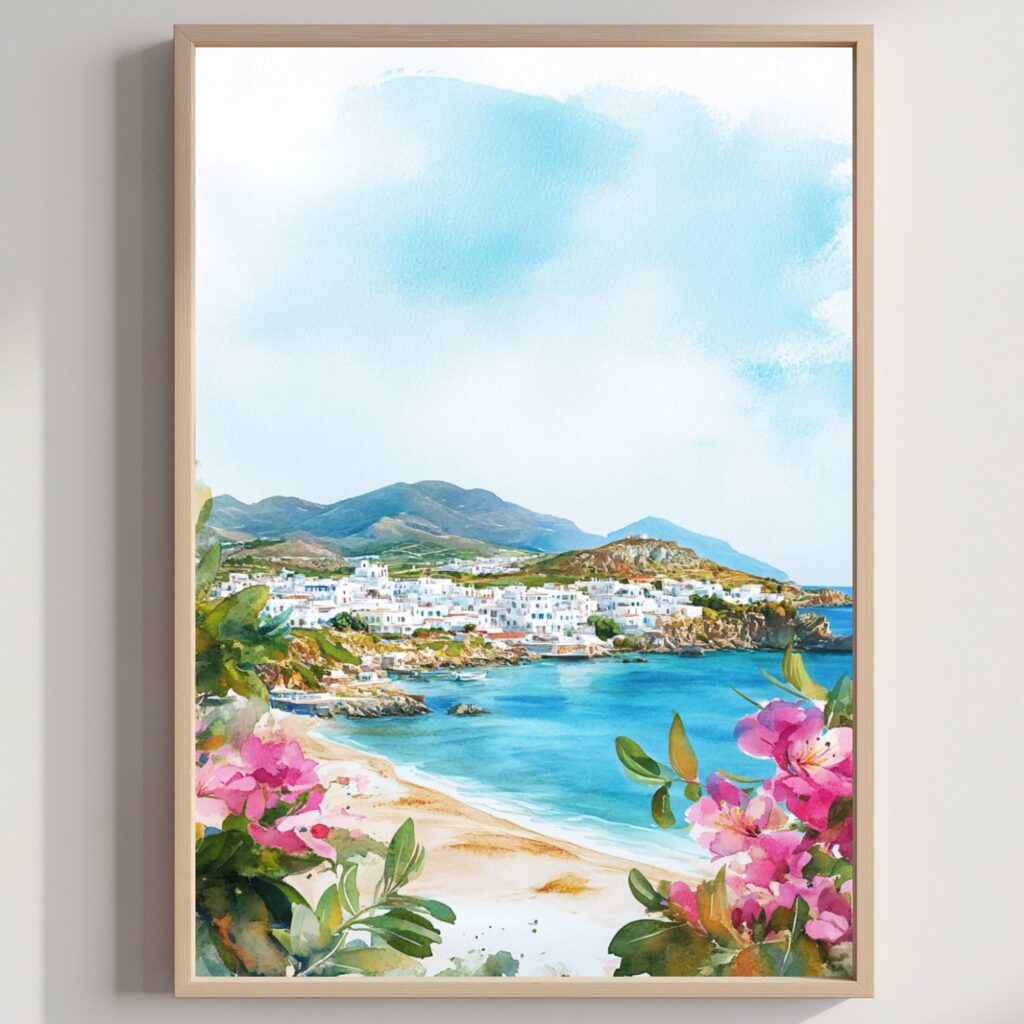
Naxos is the largest of the Cycladic islands, and unlike many of its more famous neighbours, it developed a genuinely self-sufficient agricultural economy, fertile valleys producing citrus, potatoes, and wine that historically allowed Naxos to feed itself rather than depend entirely on trade, a rarity among the generally arid, rocky Cyclades. That agricultural independence gave the island a more grounded, less tourism-dependent character for much of its history compared to islands like Mykonos or Santorini.
The Portara, a massive marble doorway standing alone on an islet just off Naxos’s main harbour, is the surviving entrance of a temple dedicated to Apollo, begun around 530 BCE but never completed, its unfinished state, rather than diminishing its significance, has made it one of the most photographed landmarks in the Cyclades, an enormous stone frame standing open against the sea and sky.
An Island Mythology Claims Belonged to Dionysus
Greek mythology holds that Naxos is where Theseus abandoned Ariadne after she helped him escape the Minotaur’s labyrinth on Crete, and where the god Dionysus subsequently found and married her, a story that made the island sacred to Dionysus in ancient times, wine god’s association reflected today in Naxos’s continued reputation for quality local wine production. The island’s mountainous interior, dominated by Mount Zas, the highest peak in the Cyclades, contains traditional villages largely untouched by mass tourism, stone houses and Byzantine churches scattered across terrain still farmed much as it has been for centuries.
Naxos also has a significant marble quarrying history dating back to antiquity, its stone used in numerous ancient Greek sculptures and architectural projects, a material legacy still visible in the unfinished kouroi, giant abandoned marble statues, left lying in ancient quarries across the island.
Painting Marble Against Aegean Blue
The Portara’s massive marble frame against the Aegean’s deep blue gives a watercolourist a striking, almost sculptural subject to work with. We’ve captured that ancient doorway in our own Naxos Watercolor Print, painted first by hand and printed to order on archival paper, a small piece of the Cyclades for a wall at home.
Home to a temple gateway that never got its temple and a myth about a god who stayed, Naxos remains an island whose most famous landmark has always been defined by what it never quite finished becoming.