
Montevideo is home to roughly a third of Uruguay’s entire population, an unusually high concentration for a national capital, reflecting Uruguay’s status as one of the smallest and most urbanised countries in South America, a country whose national identity is disproportionately shaped by a single city’s culture, politics, and daily rhythms. That concentration has made Montevideo a genuinely dominant force in Uruguayan life, its decisions on culture, economy, and governance carrying outsized weight relative to the rest of the country.
Uruguay has built an international reputation for progressive social policy well beyond its small size would typically suggest, the country legalised same-sex marriage, cannabis, and abortion earlier than most of its regional neighbours, policies substantially shaped by Montevideo’s relatively secular, socially liberal political culture.
A City Built Around Football and a Genuine World Cup Legacy
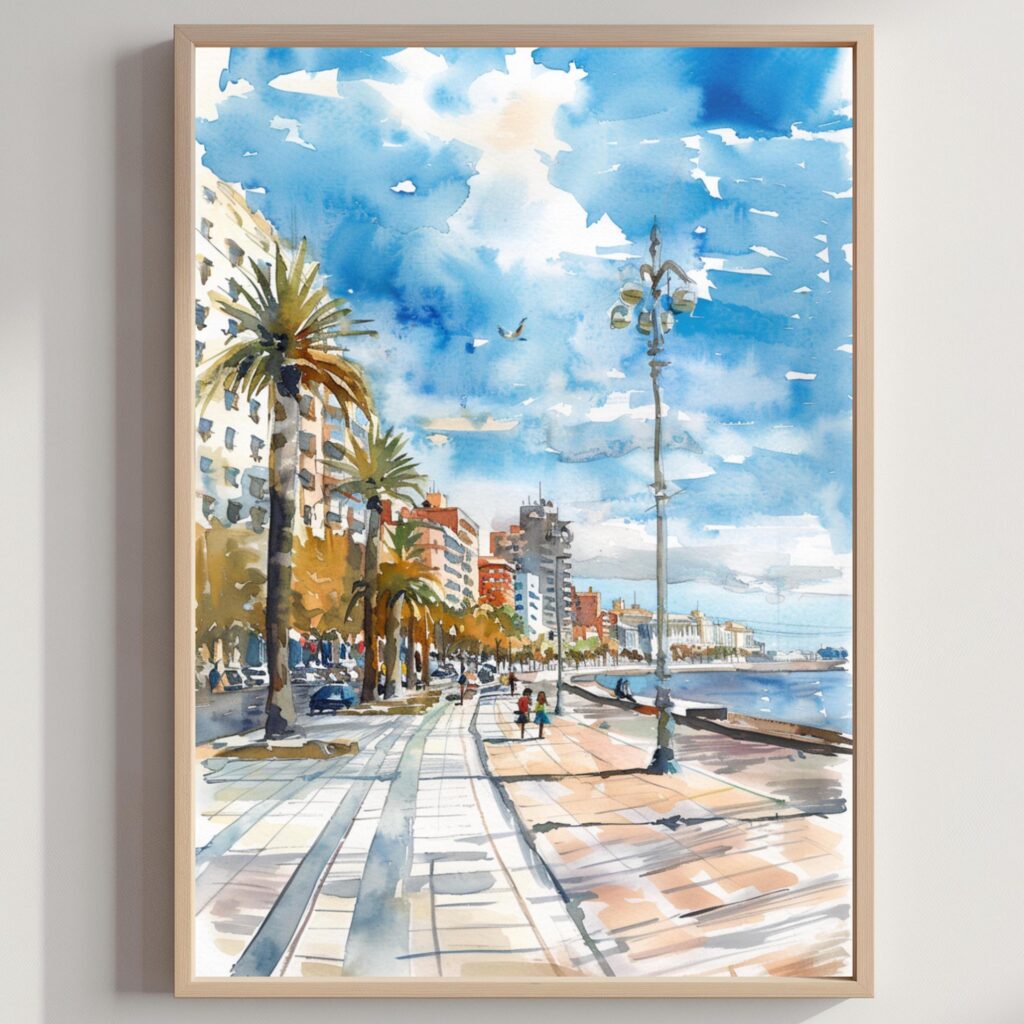
Montevideo’s Estadio Centenario, built in 1930, hosted the very first FIFA World Cup, and Uruguay’s victory in that inaugural tournament, on home soil, remains a defining source of national pride, football culture running deep enough in Montevideo that the stadium is officially recognised by FIFA as a historical monument of the sport, one of only a handful of stadiums worldwide to hold that designation. That football legacy sits alongside the Rambla, Montevideo’s continuous waterfront promenade stretching roughly 22 kilometres along the Rio de la Plata, one of the longest continuous sidewalks in the world, used daily by joggers, cyclists, and mate-drinking locals.
Montevideo’s Ciudad Vieja, the historic old town, retains significant 19th and early 20th-century architecture, a legacy of the substantial European immigration, particularly Spanish and Italian, that shaped much of Uruguay’s cultural identity during that period.
Painting a Waterfront Capital’s Quiet Grandeur
Montevideo’s historic architecture along its long Rio de la Plata waterfront gives a watercolourist elegant colonial detail and open coastal light to work with. We’ve captured that setting in our own Montevideo Watercolor Print, painted first by hand and printed to order on archival paper, a small piece of Uruguay for a wall at home.
Home to a third of its own country and host to football’s very first World Cup, Montevideo remains a capital whose modest size has never quite matched its outsized cultural weight.