
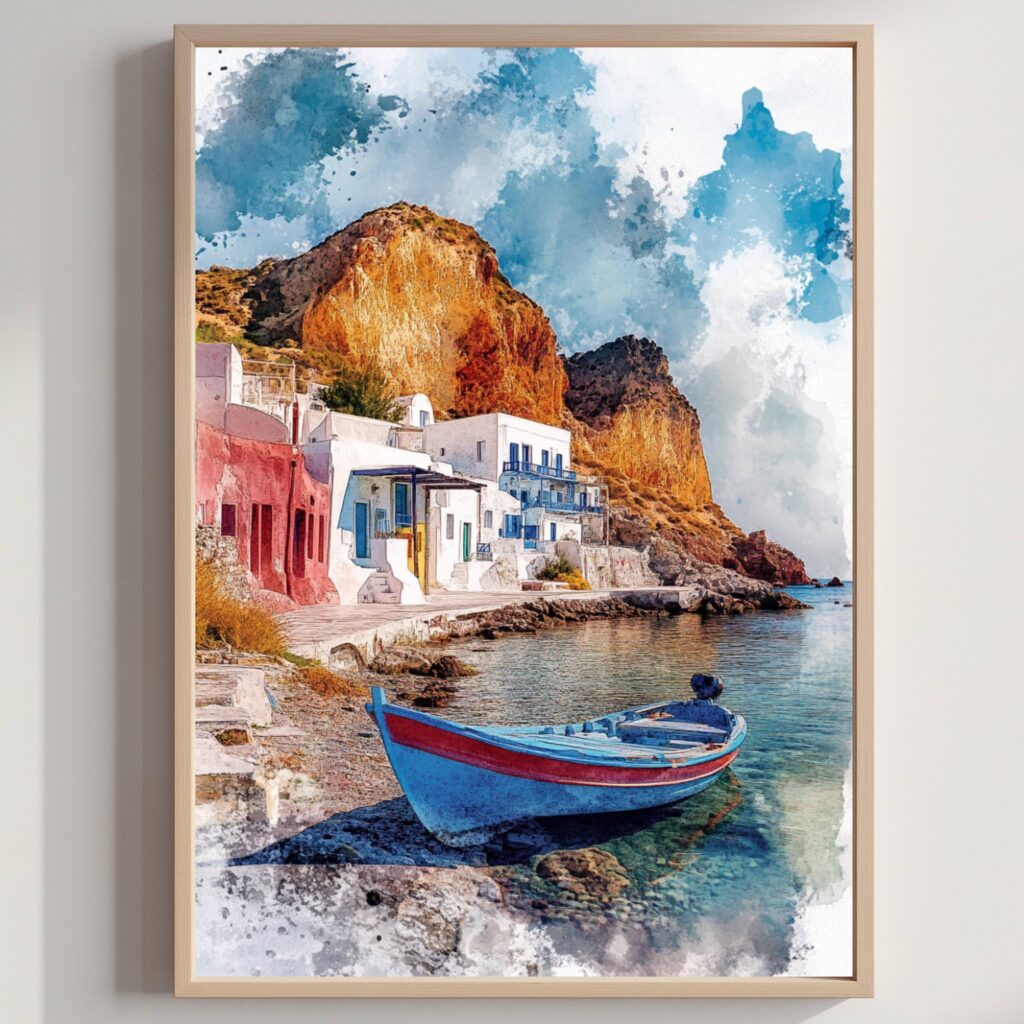
Milos is a genuinely volcanic island, its dramatic, otherworldly coastline of white and multicoloured rock formations, most famously at Sarakiniko beach, resulting from centuries of volcanic activity and mineral-rich erosion that has given the island an appearance strikingly different from the typical whitewashed Cycladic image most visitors expect, closer in places to a lunar landscape than a Greek beach. That volcanic geology also made Milos one of the most significant mining sites in the ancient Mediterranean, its obsidian, a naturally occurring volcanic glass prized for producing extremely sharp cutting tools, was traded across the Aegean as early as the Neolithic period, thousands of years before written history began.
The island is world-famous, somewhat ironically, for a statue that no longer resides there at all, the Venus de Milo, discovered by a farmer on Milos in 1820 and now displayed in the Louvre in Paris, remains one of the most recognised sculptures in the history of Western art, despite the island itself receiving little direct benefit or ongoing connection to its most famous export.
A Coastline of Genuinely Unusual Colour
Milos’s mineral wealth continues to shape its modern economy, the island remains a significant source of bentonite, perlite, and other industrial minerals, mining operations that coexist, sometimes uneasily, alongside its growing tourism industry. Kleftiko, a series of dramatic white rock formations and sea caves accessible primarily by boat, takes its name from Greek pirates, “kleftes,” who reportedly used the hidden coves to shelter stolen goods and evade capture, the same isolated, striking geography that now draws tourists once served a considerably less legal purpose.
The island’s Catacombs of Milos, among the largest in Greece, date to the early Christian era and remain one of the most significant such sites outside Rome, a further layer of history embedded within the same volcanic rock that shapes the island’s coastline above.
Painting Volcanic Stone in Unusual Colour
Milos’s striking white and mineral-streaked coastline gives a watercolourist an unusually varied, almost otherworldly palette to work with. We’ve captured that colour in our own Milos Watercolor Print, painted first by hand and printed to order on archival paper, a small piece of Greece for a wall at home.
Famous worldwide for a statue it no longer holds, Milos remains an island whose own volcanic landscape is arguably just as remarkable as anything ever carved from it.