
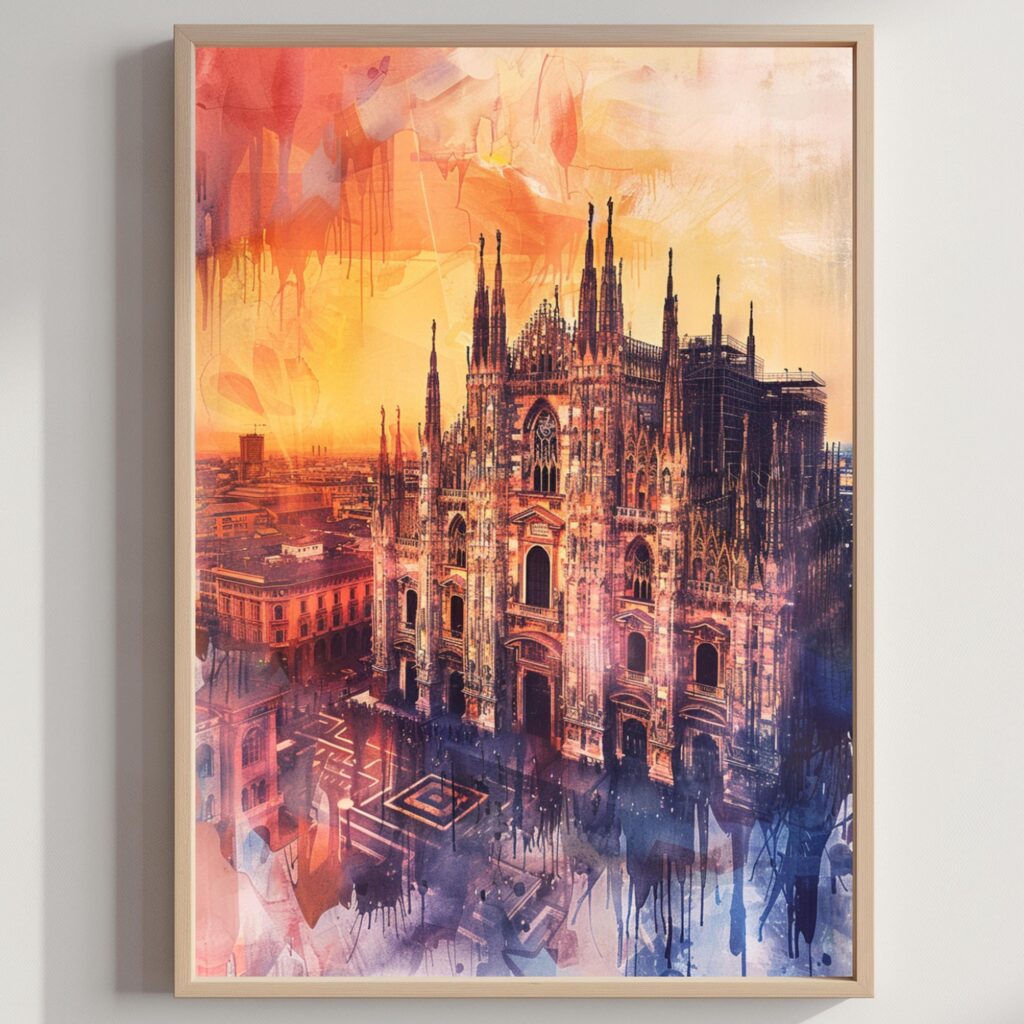
Construction on Milan’s Duomo began in 1386 and wasn’t formally declared complete until 1965, nearly 600 years later, making it one of the longest cathedral construction projects in history, its final touches, ironically, ordered personally by Napoleon in the early 1800s so he could be crowned King of Italy inside a finished building. That extended timeline means the cathedral blends an unusual mix of architectural styles, its core Gothic structure layered with later Renaissance and Neoclassical additions as tastes, and technology, shifted across the centuries.
The cathedral is topped by 135 spires and decorated with over 3,400 statues, more than any other building in the world, carved from pink-veined Candoglia marble specifically quarried and transported via a dedicated canal system built solely to supply the project.
A Roof Meant to Be Walked
Unlike most great cathedrals, the Duomo’s roof is designed to be walked on, and visitors climbing to the top find themselves navigating a genuine forest of spires and statues at close range, with views extending, on clear days, to the Alps themselves. A small gilded statue of the Madonna, the Madonnina, sits atop the tallest spire, and for decades an unofficial rule held that no building in Milan should rise higher than her, a tradition eventually broken by the city’s modern skyscrapers, though a small replica Madonnina was symbolically placed atop the tallest of them in tribute.
Beneath the cathedral, archaeological remains of an earlier basilica and a 4th-century baptistery, where Saint Augustine is believed to have been baptised, remain accessible to visitors, a layer of history hidden directly under the marble floor above.
Painting Marble Spires Against City Sky
The Duomo’s intricate forest of spires against Milan’s modern skyline gives a watercolourist extraordinary detail and contrast to work with. We’ve captured that layered grandeur in our own Milan Duomo Watercolor Print, painted first by hand and printed to order on archival paper, a small piece of Italy for a wall at home.
Six centuries in the making and finished, in the end, on an emperor’s orders, Milan’s Duomo remains proof that some buildings simply take as long as they take.