
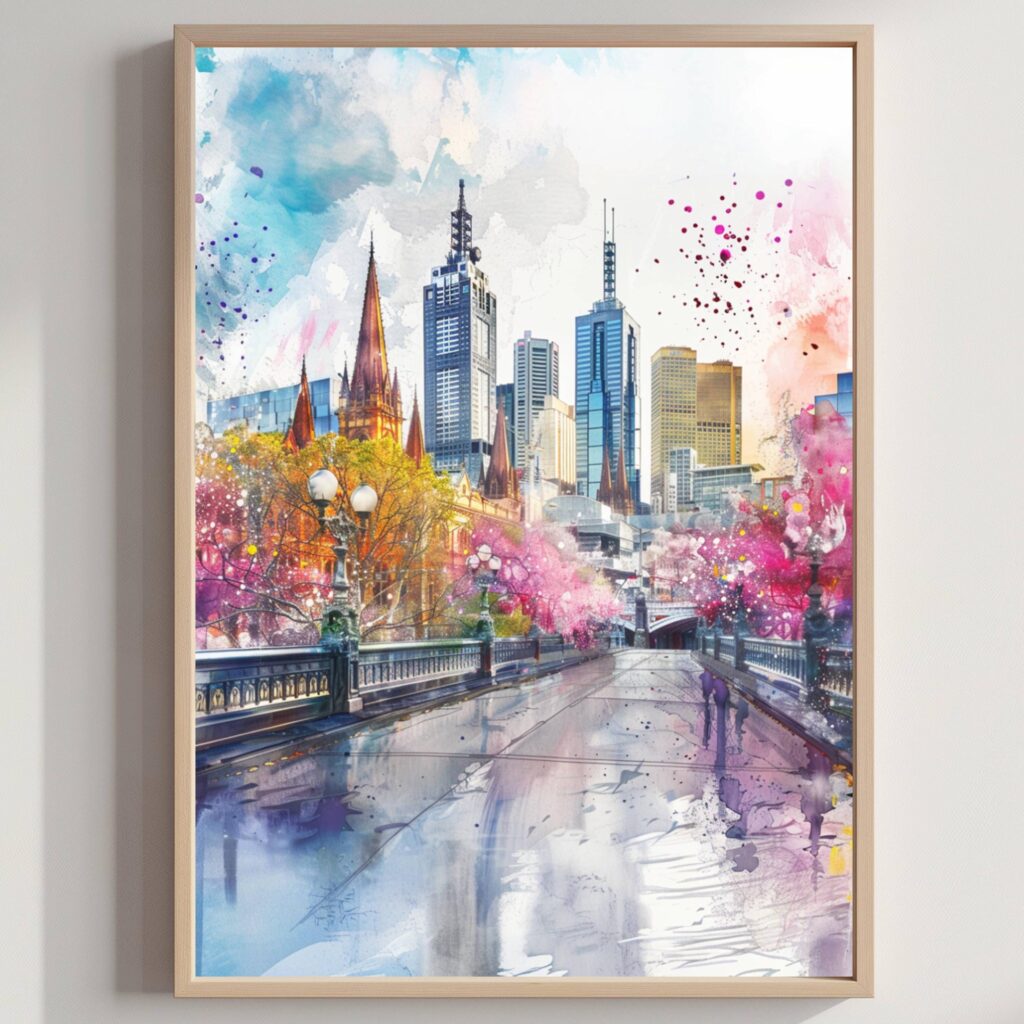
Melbourne’s grand Victorian-era architecture, still visible throughout its city centre, was largely funded by the Victorian gold rush of the 1850s, a discovery that made the city, for a period, one of the wealthiest in the world, wealthier per capita than London itself at the boom’s height. That sudden wealth funded ambitious public buildings, wide boulevards, and expansive parkland, an urban legacy still shaping the city’s character well over a century and a half later.
Unlike many gold rush boomtowns that later declined, Melbourne successfully diversified its economy, and its distinctive laneway culture, narrow service alleys behind main streets now filled with cafes, bars, and street art, has become one of the city’s most celebrated modern features, an organic transformation of once-utilitarian infrastructure into genuine cultural identity.
A Self-Declared Sporting and Cultural Capital
Melbourne considers itself, with some statistical backing, Australia’s sporting capital, home to the Melbourne Cricket Ground, one of the largest stadiums in the world, and host of the Australian Open tennis, the Melbourne Cup horse race, and Australian Rules Football’s grand final, a sport that originated in the city in the 1850s and remains fiercely, distinctly local. The city has also topped global liveability rankings repeatedly over the past two decades, credited variously to its cultural diversity, public transport, and coffee culture, the last of which Melburnians take with an intensity that has become something of a local institution.
Federation Square, the city’s modern civic centre completed in 2002, was initially controversial for its deliberately fragmented, geometric design, a sharp departure from Melbourne’s Victorian architectural heritage that has since become one of the city’s most recognisable gathering spaces.
Painting Laneways and Victorian Grandeur
Melbourne’s mix of ornate Victorian facades and colourful laneway art gives a watercolourist a genuinely layered urban palette to work with. We’ve captured that contrast in our own Melbourne Watercolor Print, painted first by hand and printed to order on archival paper, a small piece of Australia for a wall at home.
Built rich on gold and kept relevant through reinvention, Melbourne remains a city that has never really stopped capitalising on a lucky discovery made nearly two centuries ago.