
Palma Cathedral, the towering Gothic structure that dominates Mallorca’s capital skyline, took nearly 400 years to complete, construction beginning around 1229 after King James I of Aragon conquered the island from its Moorish rulers and continuing in stages until the early 17th century. The cathedral was built directly beside the sea specifically so it would be the first sight greeting ships arriving into Palma’s harbour, a deliberate statement of the new Christian kingdom’s presence on an island that had spent over three centuries under Muslim rule.
Architect Antoni Gaudi, better known for his work in Barcelona, was brought in to renovate the cathedral’s interior between 1904 and 1914, adding a striking wrought-iron canopy over the altar, though his relationship with the project ended in dispute before his full vision was completed.
An Island That Moved From Almonds to Package Holidays
For much of the 20th century, Mallorca’s economy rested substantially on agriculture, particularly almonds, whose blossom still draws visitors to the island’s interior each February, a tradition considerably older than the mass tourism that later transformed the island’s coastline. Beginning in the 1950s and 1960s, Mallorca became one of the first Mediterranean destinations to develop for European package holidays, a shift that reshaped much of the island’s economy within a few decades and remains its defining industry today.
Away from the resort towns, Mallorca’s Tramuntana mountain range, a UNESCO World Heritage Site since 2011, preserves a network of dry-stone terraces and irrigation channels built over centuries, evidence of the older agricultural island that still exists alongside the newer tourist one.
Painting Gothic Stone Against Mediterranean Light
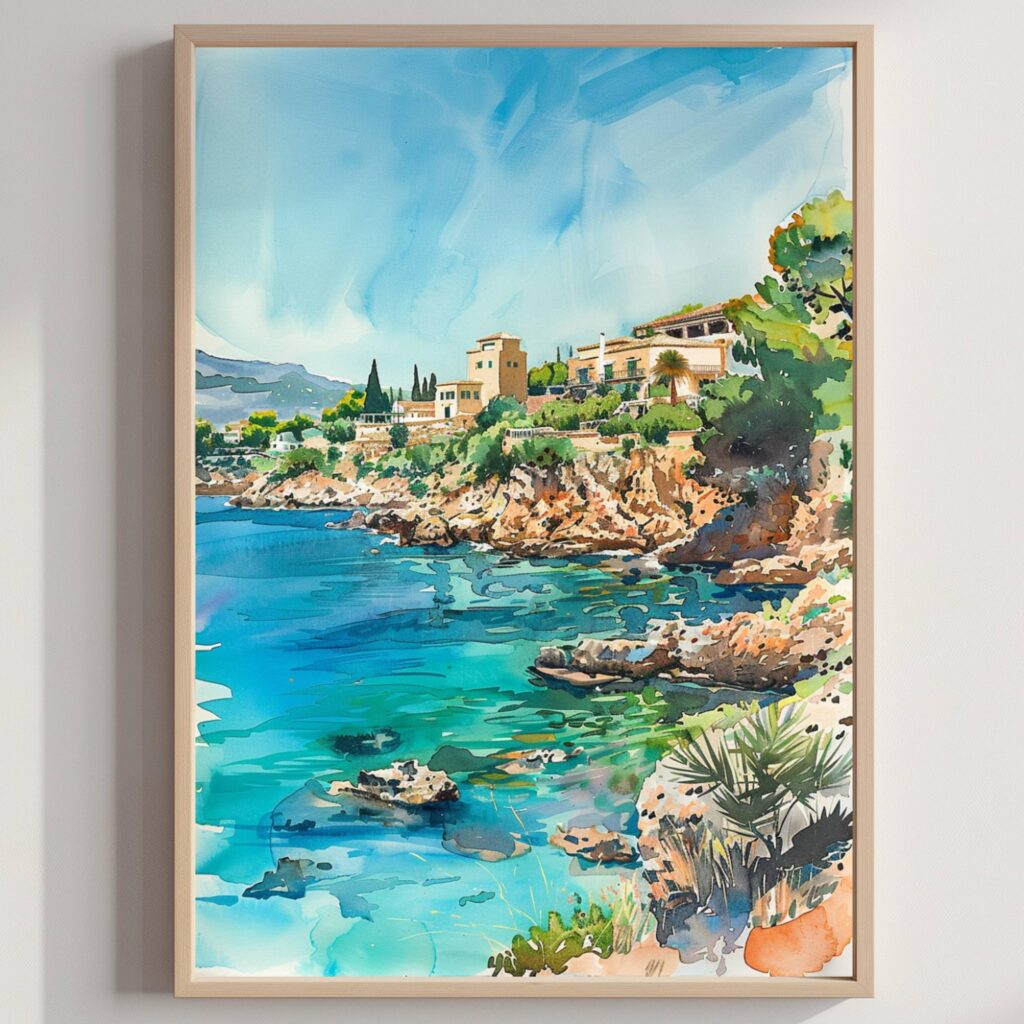
Palma Cathedral’s soaring Gothic stonework against the deep blue of the Mediterranean gives a watercolourist dramatic scale and vivid coastal colour to work with. We’ve captured that setting in our own Mallorca Watercolor Print, painted first by hand and printed to order on archival paper, a small piece of Spain for a wall at home.
Built around a cathedral meant to be seen from the sea and later reshaped by visitors arriving from it in far greater numbers, Mallorca remains an island whose skyline and economy alike were set by what approaches from the water.