
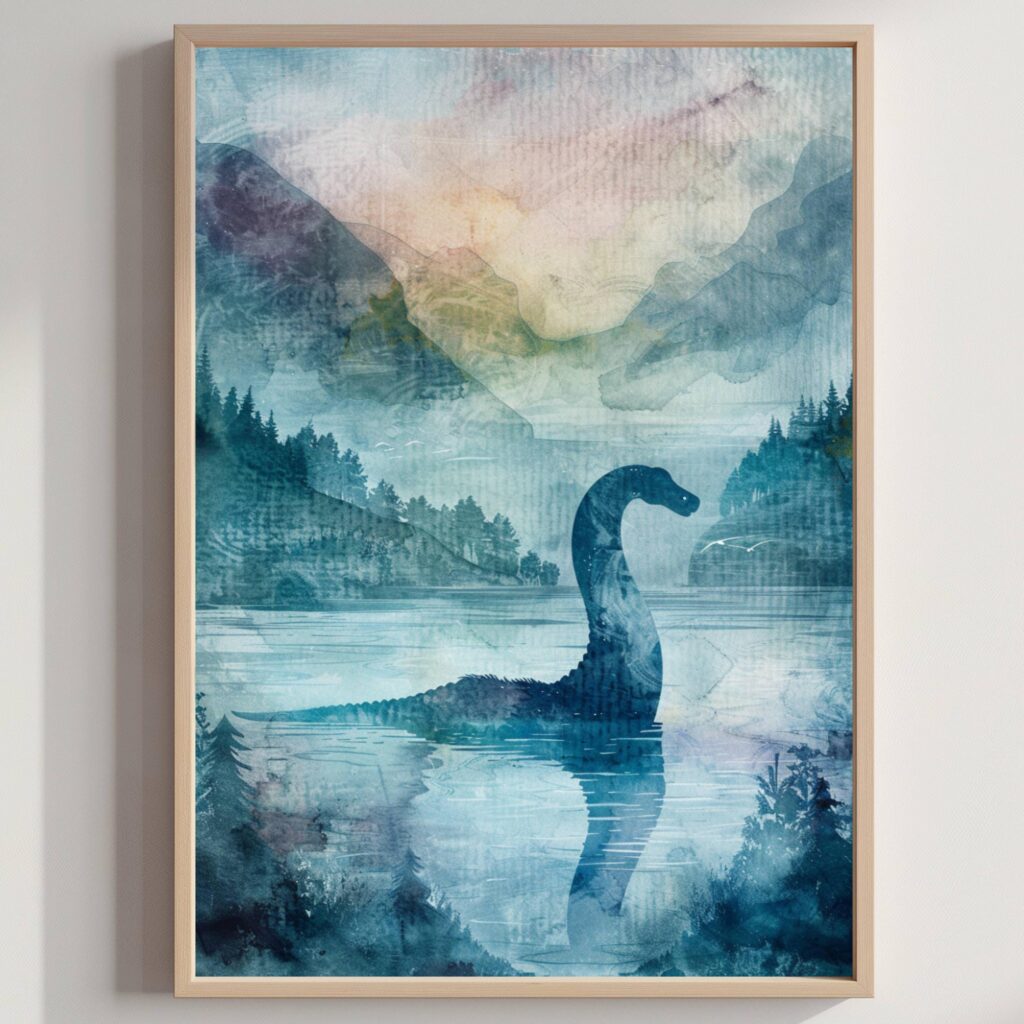
Loch Ness holds more fresh water than every lake in England and Wales combined, its extreme depth, up to 230 metres in places, and famously murky, peat-stained water are the practical explanation behind centuries of monster sightings, visibility drops to almost nothing just a few metres down, giving imagination plenty of room to work. The loch stretches 37 kilometres along the Great Glen, a geological fault line slicing diagonally across the Scottish Highlands.
The modern Nessie legend traces largely to a 1933 newspaper report and the famous, later-debunked “Surgeon’s Photograph” of 1934, which its own creator eventually admitted decades afterward was a staged hoax using a toy submarine. Yet the legend itself predates any of this considerably, stories of a creature in the loch appear in accounts as far back as the 6th century, associated with Saint Columba.
A Legend That Built an Economy
Despite decades of sonar surveys, DNA sampling of the loch’s water, and dedicated scientific expeditions finding no credible evidence of any large unknown creature, Nessie tourism remains a serious economic force in the Highlands, drawing visitors to Drumnadrochit’s Loch Ness Centre and the ruins of Urquhart Castle on the loch’s shore regardless of the science. A major 2018 environmental DNA study, testing water for genetic traces of any species present, found nothing to support a monster, though it did detect surprising quantities of eel DNA, fuelling a more modest, more plausible theory.
Whatever swims beneath its surface or doesn’t, Loch Ness remains ecologically significant in its own right, an important habitat within the Caledonian Canal system connecting Scotland’s east and west coasts.
Painting Dark Water and Highland Light
The loch’s deep, peat-dark water against dramatic Highland hills gives a watercolourist rich, moody atmosphere to work with. We’ve captured that quiet mystery in our own Loch Ness Watercolor Print, painted first by hand and printed to order on archival paper, a small piece of the Scottish Highlands for a wall at home.
Famous chiefly for something almost certainly not there, Loch Ness remains proof that a good story can outlast even its own debunking.