
The 1755 Lisbon earthquake, followed by a devastating tsunami and fires that burned for days, killed tens of thousands of people and destroyed most of the city, on All Saints’ Day, no less, when churches full of worshippers collapsed during morning mass. The disaster’s scale was so shocking across Europe that it directly influenced Enlightenment philosophy, Voltaire referenced it explicitly in challenging the idea that the world was governed by a benevolent, rational order, a rare case of a natural disaster reshaping intellectual history as much as a city’s skyline.
The Marquis of Pombal, the chief minister who led Lisbon’s reconstruction, rebuilt the city’s downtown, the Baixa district, using a strict grid layout and some of the earliest known earthquake-resistant building techniques anywhere in the world, timber lattice frameworks called “gaiola pombalina,” designed specifically to flex rather than collapse in future tremors.
A City That Climbs Its Own Hills
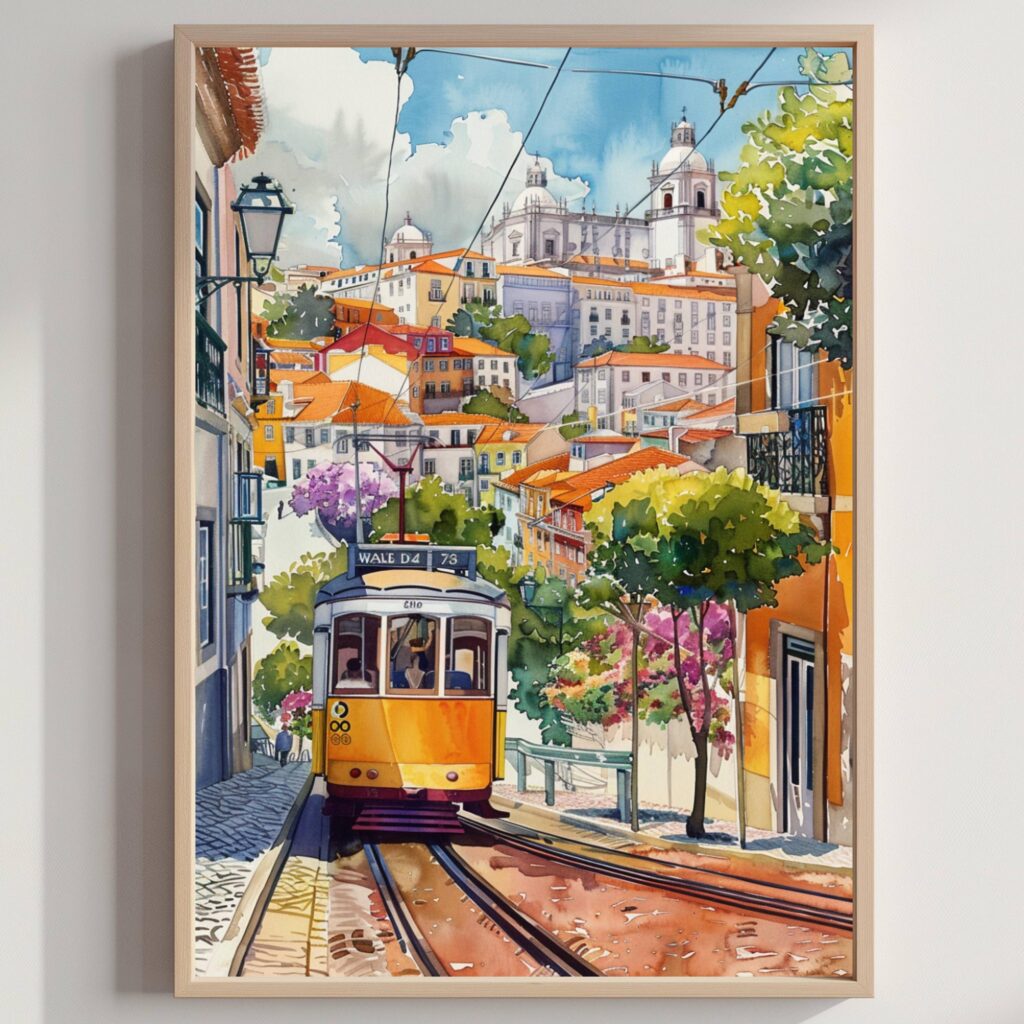
Lisbon is famously built across seven hills, and its historic yellow trams, particularly Tram 28, have navigated the city’s steep, narrow streets since the early 20th century, a practical necessity that has become one of the city’s most photographed features. The Alfama district, one of the few areas to partially survive the 1755 earthquake, retains a genuinely medieval street layout, narrow enough in places that its winding lanes predate any orderly urban planning entirely.
Fado, Portugal’s melancholic traditional music genre, is believed to have emerged from Lisbon’s working-class neighbourhoods in the early 19th century, and UNESCO recognised it as Intangible Cultural Heritage in 2011, still performed nightly in small clubs throughout the same hillside districts where it likely originated.
Painting Pastel Tiles Against the Tagus
Lisbon’s pastel-coloured buildings and traditional azulejo tilework against the Tagus River give a watercolourist warm, layered colour to work with. We’ve captured that light in our own Lisbon Watercolor Print, painted first by hand and printed to order on archival paper, a small piece of Portugal for a wall at home.
Rebuilt after a disaster that reshaped how Europe thought about catastrophe itself, Lisbon remains a city whose orderly grid still quietly reflects the earthquake that made it necessary.