
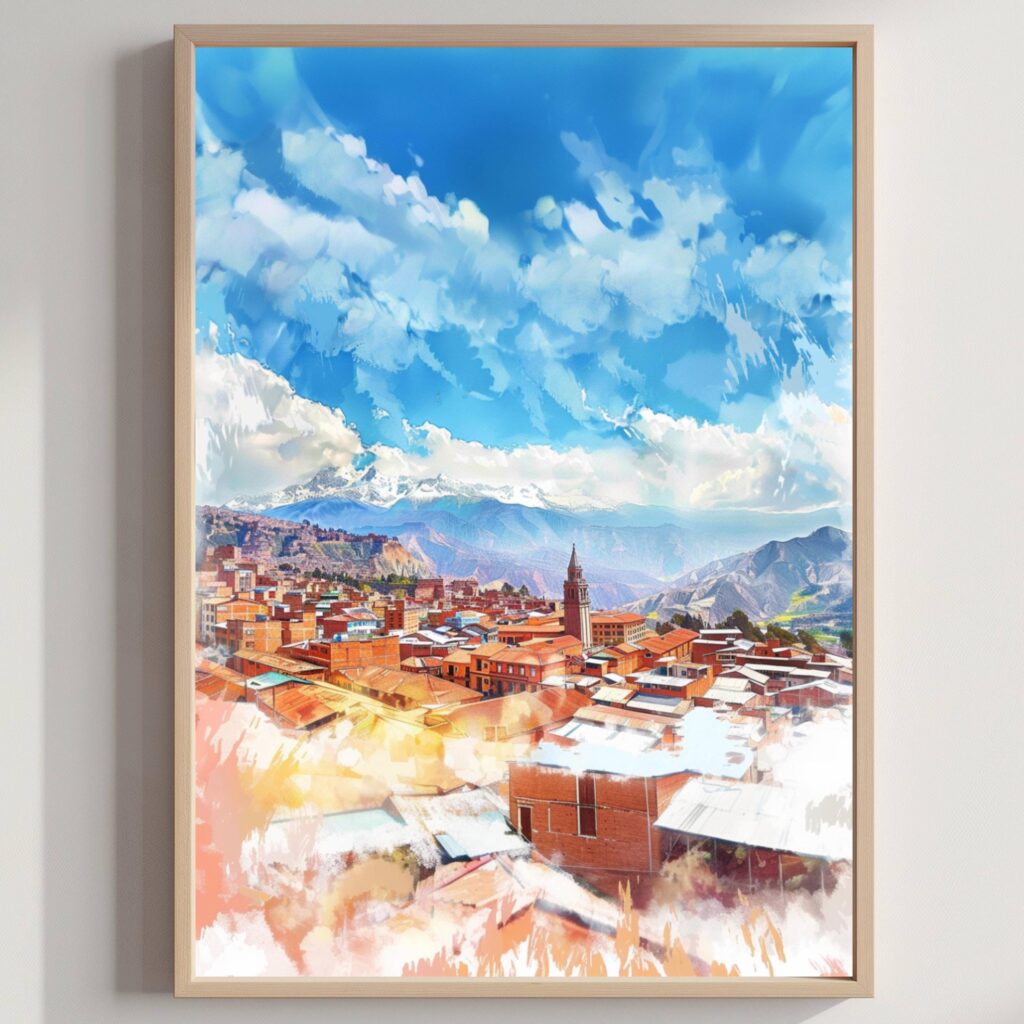
La Paz sits at an extraordinary elevation, its city centre around 3,650 metres above sea level, and its highest neighbourhoods climbing well over 4,000 metres, making it the highest de facto seat of government in the world, though Sucre remains Bolivia’s official constitutional capital. That extreme altitude produces a genuinely unusual urban geography, unlike most cities, La Paz’s wealth generally increases the lower one goes, the thin air and cold at higher elevations historically made those neighbourhoods less desirable, while the city’s affluent Zona Sur district sits in a warmer, lower valley.
El Alto, the sprawling city that has grown above La Paz on the surrounding plateau, is now nearly as populous as La Paz itself and represents one of the fastest-growing urban areas in South America, largely built by indigenous Aymara migrants, its skyline increasingly defined by elaborately decorated “cholets,” flamboyant Andean-influenced buildings combining commercial space below with lavish event halls above.
A City Connected by Cable Cars, Not Just Roads
La Paz’s extreme, uneven terrain made conventional public transport genuinely impractical in many areas, leading the city to build Mi Teleferico, an extensive urban cable car network launched in 2014, now one of the largest of its kind in the world, connecting La Paz and El Alto across valleys and cliffs that roads simply couldn’t efficiently navigate. The thin air at this altitude, roughly 40% less oxygen than at sea level, is significant enough that visitors are commonly advised to rest and drink coca tea, a traditional remedy, before attempting strenuous activity in their first days in the city.
The nearby Valle de la Luna, a dramatically eroded landscape of clay and mineral formations just outside the city, offers a stark, almost lunar contrast to La Paz’s dense, mountainside urban sprawl.
Painting a City Stacked Into a Canyon
La Paz’s dense buildings climbing steep canyon walls beneath snow-capped peaks give a watercolourist extraordinary vertical scale to work with. We’ve captured that dramatic setting in our own La Paz Watercolor Print, painted first by hand and printed to order on archival paper, a small piece of Bolivia for a wall at home.
Built higher than almost any other capital on Earth and connected by cable cars rather than roads alone, La Paz remains a city whose altitude shapes nearly everything about how it actually functions.