
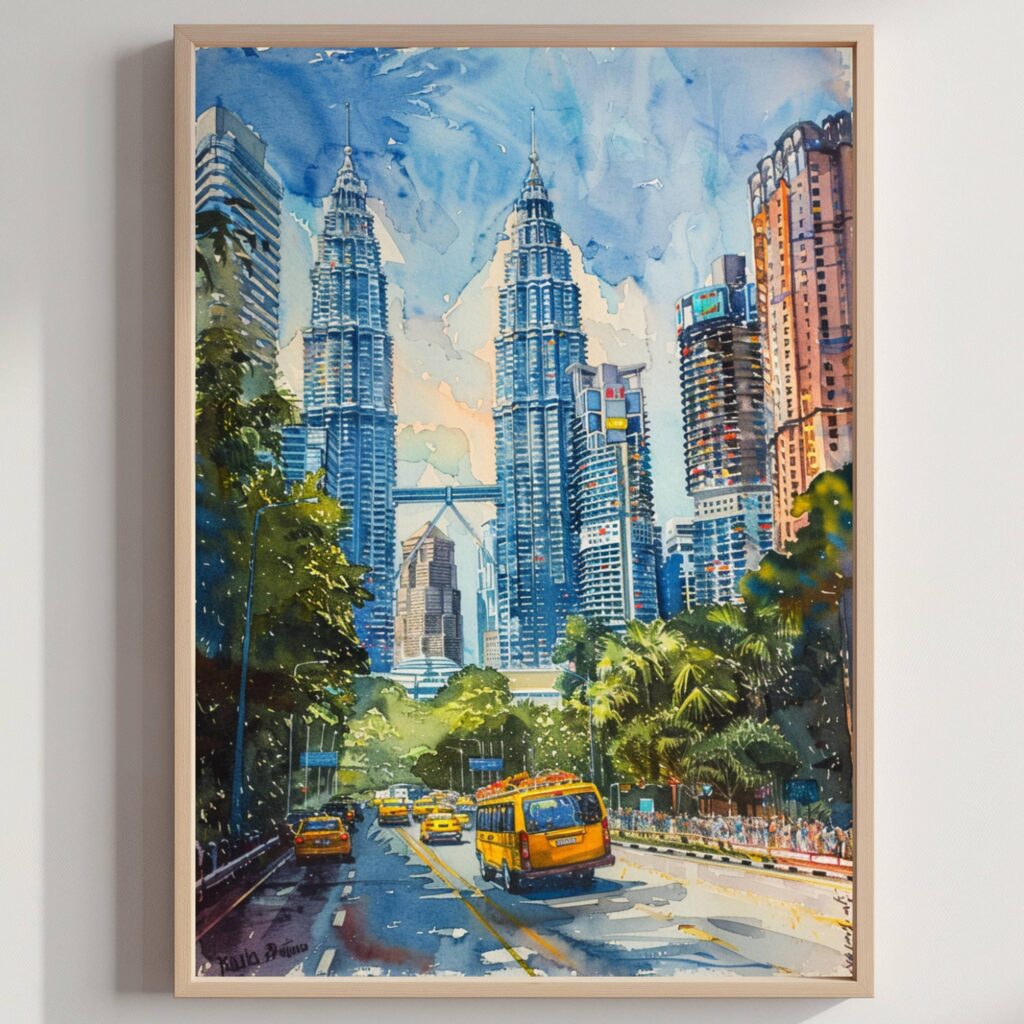
Kuala Lumpur’s name translates literally to “muddy confluence,” a reference to the meeting point of the Klang and Gombak rivers where Chinese tin prospectors established a trading settlement in 1857, a modest, practical beginning for a city that would grow into one of Southeast Asia’s most striking modern skylines within roughly a century and a half. That original tin-mining settlement grew rapidly enough that by the early 20th century, under British colonial administration, it had become the administrative centre of British Malaya.
The Petronas Towers, completed in 1998, held the title of the world’s tallest buildings until 2004, and remain the tallest twin towers in the world, their design deliberately incorporating Islamic geometric patterns into the floor plan, an eight-pointed star shape reflecting Malaysia’s Muslim-majority identity within an otherwise thoroughly modern engineering achievement.
A City Built From Genuine Cultural Overlap
Kuala Lumpur’s population reflects Malaysia’s broader multicultural makeup, substantial Malay, Chinese, and Indian communities living alongside one another, each maintaining distinct neighbourhoods, cuisines, and places of worship, visible directly in the city’s architecture, the Sri Mahamariamman Hindu temple, the Jamek Mosque near the original river confluence, and Chinatown’s shophouses all sitting within a short walk of each other. That layered diversity extends to food culture, Kuala Lumpur’s hawker centres and night markets are frequently cited among the best in Southeast Asia specifically because they draw so directly on genuinely distinct culinary traditions existing side by side.
The Batu Caves, a series of limestone caves and Hindu shrines just outside the city, are reached by climbing 272 colourful steps guarded by an enormous golden statue of Lord Murugan, one of the tallest statues of a Hindu deity in the world, drawing both religious pilgrims and visitors during the annual Thaipusam festival.
Painting Glass Towers and Tropical Light
The Petronas Towers’ geometric silhouette against Kuala Lumpur’s tropical sky gives a watercolourist bold, modern architectural form to work with. We’ve captured that skyline in our own Kuala Lumpur Watercolor Print, painted first by hand and printed to order on archival paper, a small piece of Malaysia for a wall at home.
Named for mud and grown into one of the world’s most recognisable skylines, Kuala Lumpur remains a city whose modest, practical beginnings gave very little hint of what it would eventually become.