
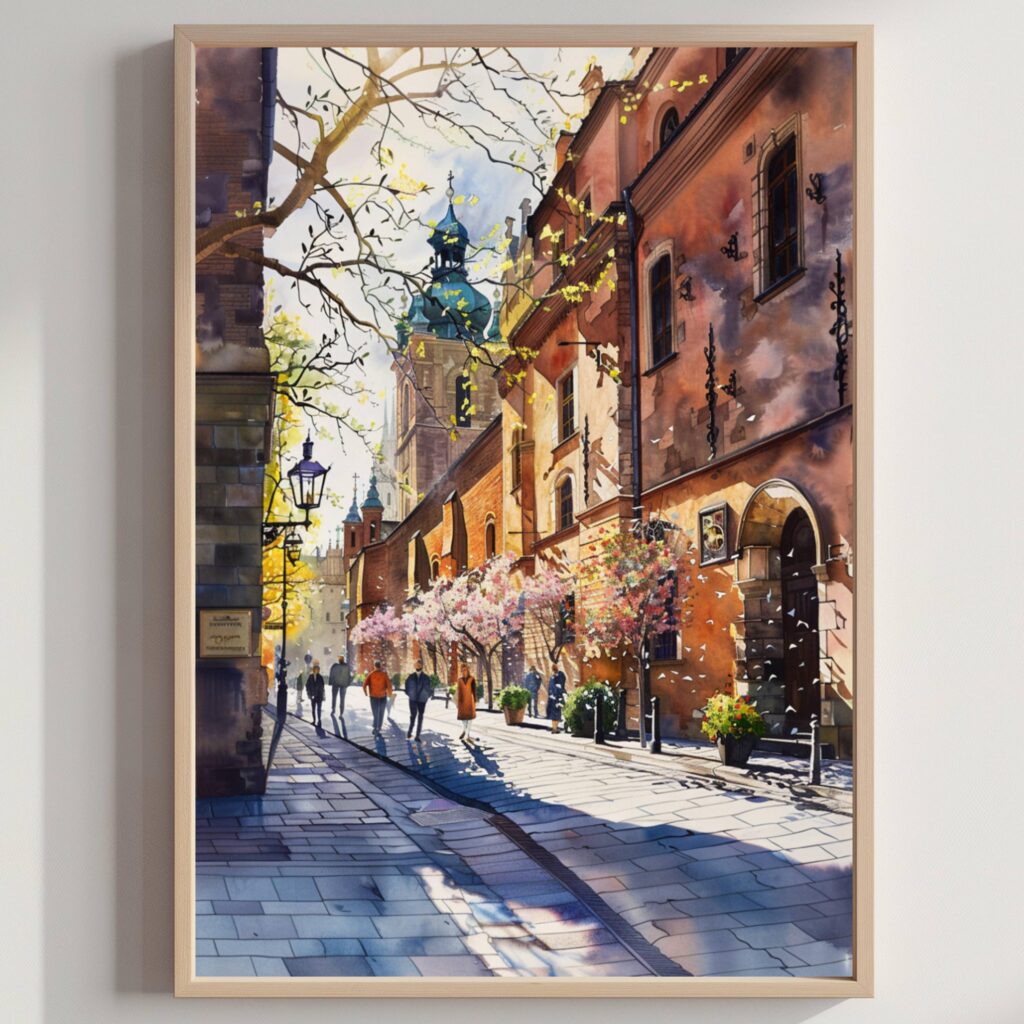
Krakow served as Poland’s capital for over 500 years before the seat of government moved to Warsaw in 1596, and unlike Warsaw, which was almost entirely destroyed during the Second World War, Krakow’s historic centre survived the war largely unscathed, its medieval layout and architecture intact enough to be designated one of UNESCO’s original twelve World Heritage Sites in 1978. Wawel Castle, overlooking the city from its hilltop position beside the Vistula River, remains one of the most complete surviving examples of Polish royal architecture spanning the Gothic, Renaissance, and Baroque periods.
The Rynek Glowny, Krakow’s main market square, is the largest medieval town square in Europe, and has functioned continuously as a commercial and civic centre since the 13th century, its Cloth Hall, once a major trading centre for textiles along the Silk Road’s European routes, now housing shops and a gallery of Polish art.
A City That Remembers Its Darkest Chapter
Krakow’s Jewish quarter, Kazimierz, was once one of the largest and most vibrant Jewish communities in Europe before the Holocaust devastated it almost entirely; the nearby Auschwitz-Birkenau concentration camp, now a memorial and museum, draws visitors from around the world each year, a sobering counterpoint to the city’s otherwise well-preserved medieval charm. Kazimierz itself has undergone a significant cultural revival in recent decades, its synagogues, cemeteries, and street art reflecting both remembrance and renewed Jewish cultural life.
Every hour, a trumpet call, the Hejnal Mariacki, plays from St. Mary’s Basilica’s tower and stops abruptly mid-note, commemorating a 13th-century trumpeter said to have been struck by an arrow while warning the city of a Mongol attack.
Painting a Square That Never Stopped Trading
Krakow’s colourful townhouses ringing its medieval market square give a watercolourist warm, historic texture to work with. We’ve captured that square’s character in our own Krakow Watercolor Print, painted first by hand and printed to order on archival paper, a small piece of Poland for a wall at home.
Spared the destruction that levelled so much of the country around it, Krakow remains one of the few places where you can still walk through Poland’s medieval past essentially unedited.