
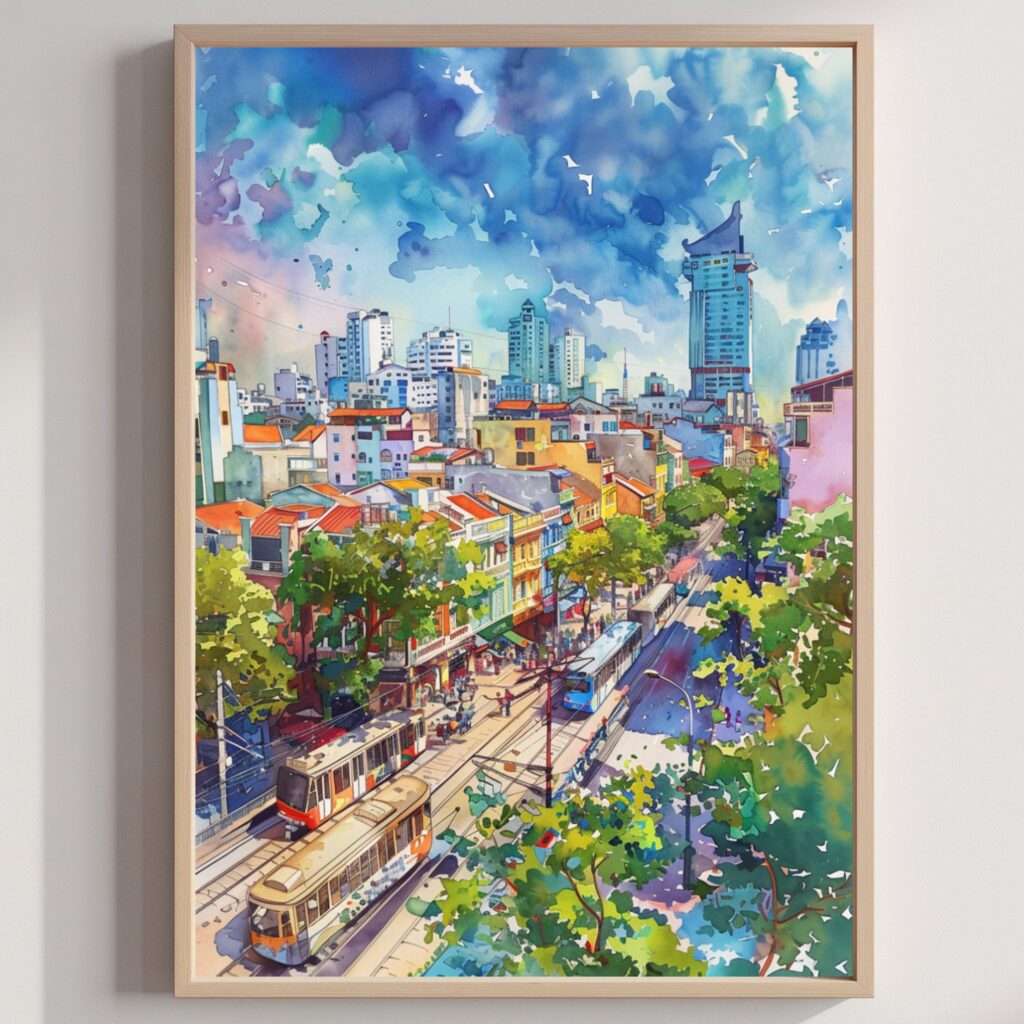
Ho Chi Minh City was officially renamed in 1976, a year after the fall of Saigon marked the end of the Vietnam War, honouring the revolutionary leader who had died in 1969 without seeing Vietnam’s eventual reunification under communist rule. Despite the official change, the older name Saigon remains in everyday use among many residents and businesses, particularly for the city’s central district, a linguistic holdout that reflects the complicated, still-evolving relationship many Vietnamese people have with this relatively recent chapter of their history.
The city’s Reunification Palace, formerly the Presidential Palace of South Vietnam, was famously breached by a North Vietnamese tank on April 30, 1975, an image that became one of the defining photographs marking the war’s end; the building has been preserved largely as it stood that day and remains open to visitors today.
A City Shaped by French Colonial Rule
Ho Chi Minh City’s Notre-Dame Cathedral, completed in 1880 during French colonial rule using materials imported directly from France, and the nearby Central Post Office, designed with input from Gustave Eiffel’s firm, remain among the city’s most photographed landmarks, striking European architectural imports that sit alongside the city’s much larger, distinctly Southeast Asian street life. This colonial layer, dating from Vietnam’s roughly eight decades under French administration, left a lasting imprint on the city’s architecture, cuisine, and street layout that persists well beyond the political changes since.
The Cu Chi Tunnels, an extensive underground network built by Viet Cong forces roughly 70 kilometres from the city centre, have become a significant historical tourist site, offering a direct, physical sense of the guerrilla tactics employed during the war.
Painting a City Layered With Colonial and Modern History
Ho Chi Minh City’s mix of French colonial facades and bustling modern streets gives a watercolourist genuinely rich architectural contrast and colour to work with. We’ve captured that character in our own Ho Chi Minh City Watercolor Print, painted first by hand and printed to order on archival paper, a small piece of Vietnam for a wall at home.
Renamed nearly fifty years ago and still called something else by many who live there, Ho Chi Minh City remains a place where the past hasn’t fully settled on what to call itself.