
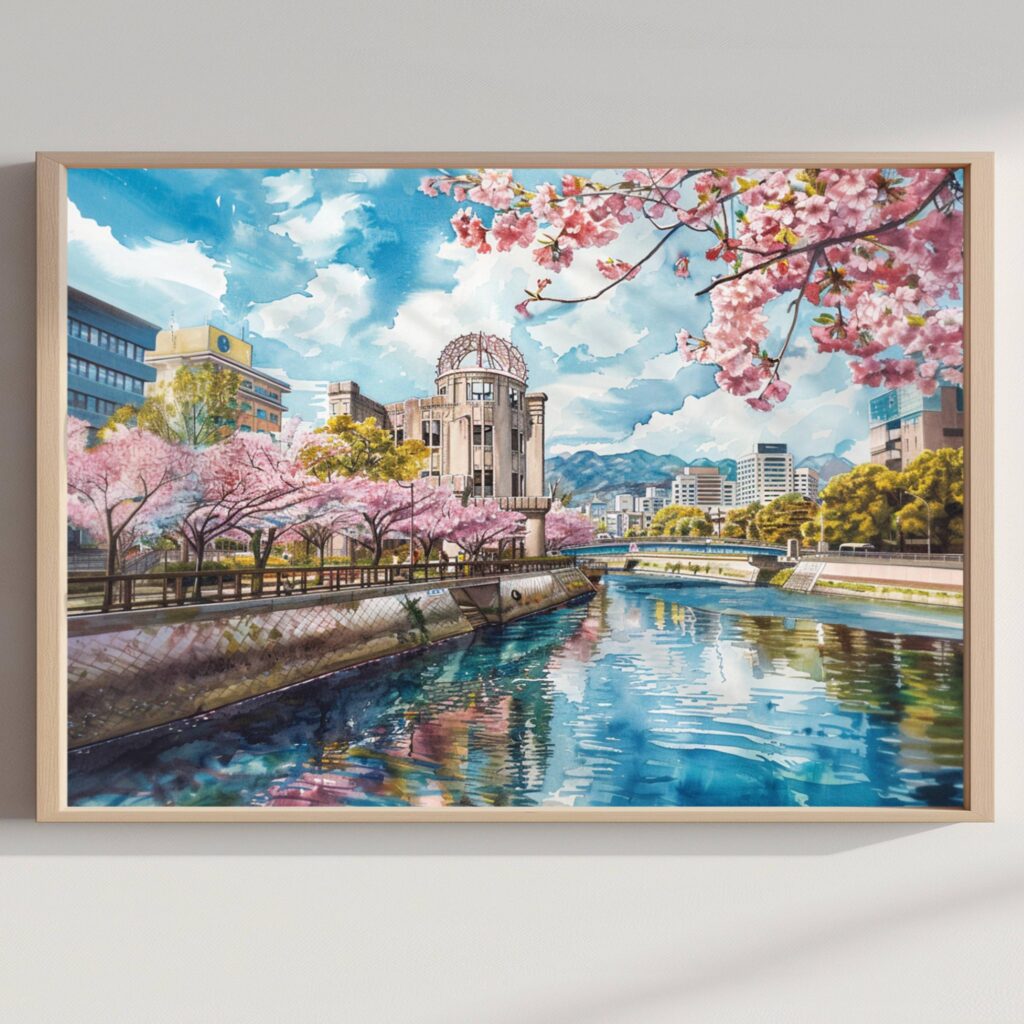
Hiroshima was almost entirely destroyed on August 6, 1945, when the United States dropped the world’s first atomic bomb used in warfare on the city, killing an estimated 70,000 people instantly, with tens of thousands more dying in the months and years that followed from injuries and radiation exposure. Rather than demolish the ruins of the Genbaku Dome, the skeletal remains of a building that stood almost directly beneath the bomb’s detonation point, the city deliberately preserved it exactly as it was left, a stark, permanent reminder rather than something to be cleared away and forgotten.
That decision wasn’t universally supported at the time, some residents wanted the ruin removed as a painful reminder of loss, but preservation advocates ultimately prevailed, and the Genbaku Dome was designated a UNESCO World Heritage Site in 1996, one of the relatively few sites honoured specifically for representing destruction rather than achievement.
A City Rebuilt Deliberately Around Peace
Hiroshima Peace Memorial Park, built directly across from the Genbaku Dome, includes the Peace Memorial Museum and the Children’s Peace Monument, inspired by Sadako Sasaki, a young girl who died of leukaemia linked to radiation exposure and became internationally known for folding paper cranes in hope of recovery, a tradition that continues today with millions of cranes sent to the monument annually from around the world. Hiroshima has since positioned itself deliberately as a global centre for peace advocacy and nuclear disarmament, hosting international conferences and maintaining sister-city relationships built specifically around that shared message.
Despite its history, modern Hiroshima is a genuinely thriving, rebuilt city of over a million people, its streets, streetcars, and daily life functioning much like any other major Japanese city, the memorial park existing alongside, rather than instead of, ordinary contemporary urban life.
Painting a City That Chose Remembrance
Hiroshima’s Peace Memorial Park and its preserved ruins against the rebuilt city around them give a watercolourist a genuinely rare subject, memory and renewal held in a single frame. We’ve painted that quiet resilience in our own Hiroshima Watercolor Print, printed to order on archival paper, a small piece of Japan for a wall at home.
Rebuilt deliberately around its own preserved wound rather than away from it, Hiroshima remains one of the clearest examples anywhere of a city choosing to remember rather than simply move on.