
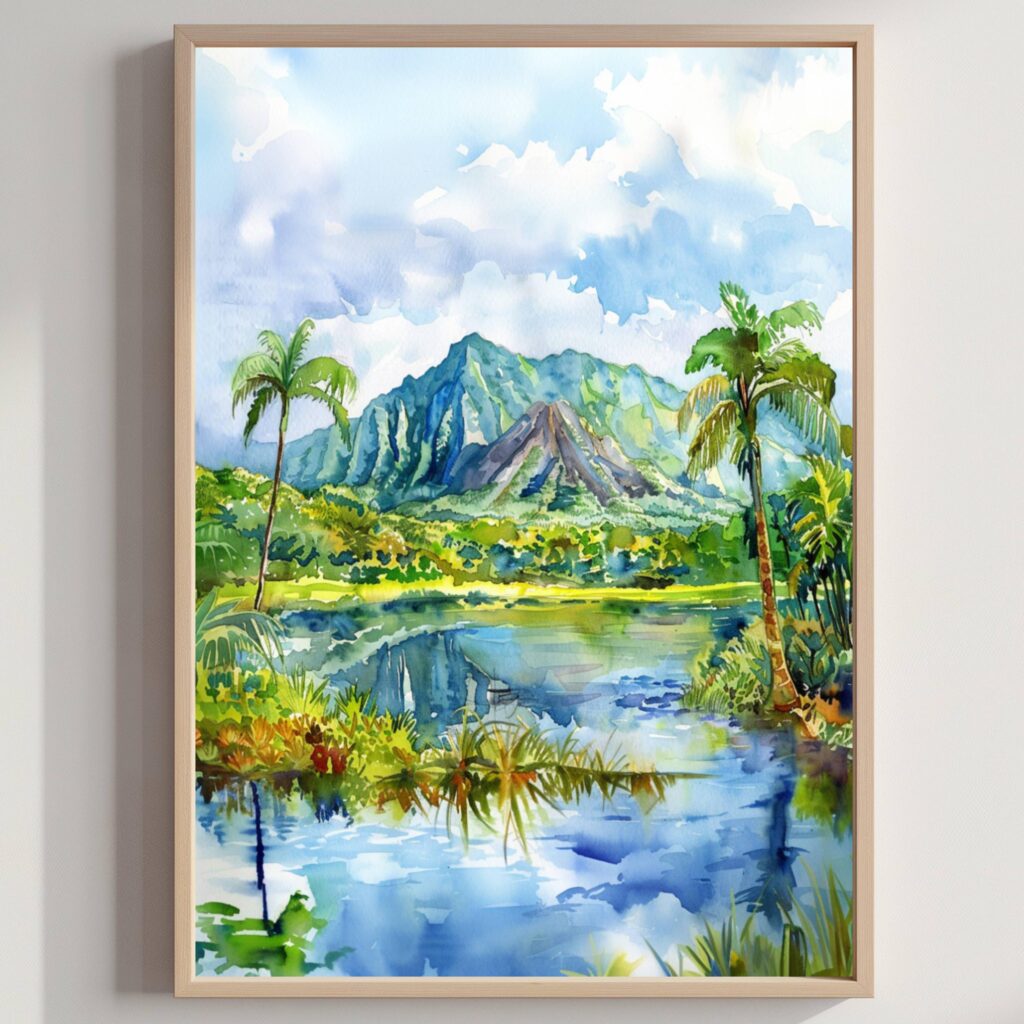
Hawai’i Volcanoes National Park, established in 1916 as one of the earliest national parks in the United States, protects two of the world’s most active volcanoes, Kilauea and Mauna Loa, the latter the largest volcano on Earth by volume, rising over 4,000 metres above sea level and extending a further 5,000 metres below the ocean’s surface to the seafloor. Kilauea has erupted with particular frequency in recent decades, its lava flows periodically adding new land to Hawai’i’s Big Island in real time, a rare, ongoing demonstration of the same volcanic process that originally built the entire Hawaiian island chain over millions of years.
The park holds deep spiritual significance in Native Hawaiian tradition, believed to be the home of Pele, the goddess of volcanoes and fire, and offerings are still left at the crater’s edge today by practitioners continuing traditions that long predate the park’s establishment.
A Landscape That Rebuilds Itself in Real Time
The park’s varied terrain moves from stark, recent lava fields, some barely a few decades old, to lush rainforest in areas untouched by eruption for centuries, offering visitors a rare chance to observe multiple stages of ecological recovery within a single, compact area. The Thurston Lava Tube, a large cave formed by flowing lava that drained away leaving a hollow tunnel behind, allows visitors to walk directly through a formation created by the same volcanic forces still active nearby.
Kilauea’s Halema’uma’u crater has undergone dramatic visible changes in recent eruption cycles, its lava lake rising and falling substantially over just the past decade, making the park one of the few places where the landscape itself can visibly change between one visit and the next.
Painting Fire and Rock in Volcanic Light
Kilauea’s glowing lava against dark volcanic rock gives a watercolourist dramatic colour and genuine natural drama to work with. We’ve captured that character in our own Hawai’i Volcanoes Watercolor Print, painted first by hand and printed to order on archival paper, a small piece of Hawai’i for a wall at home.
Built by the very process still shaping it today, Hawai’i Volcanoes remains a park whose landscape has never really finished being made.