
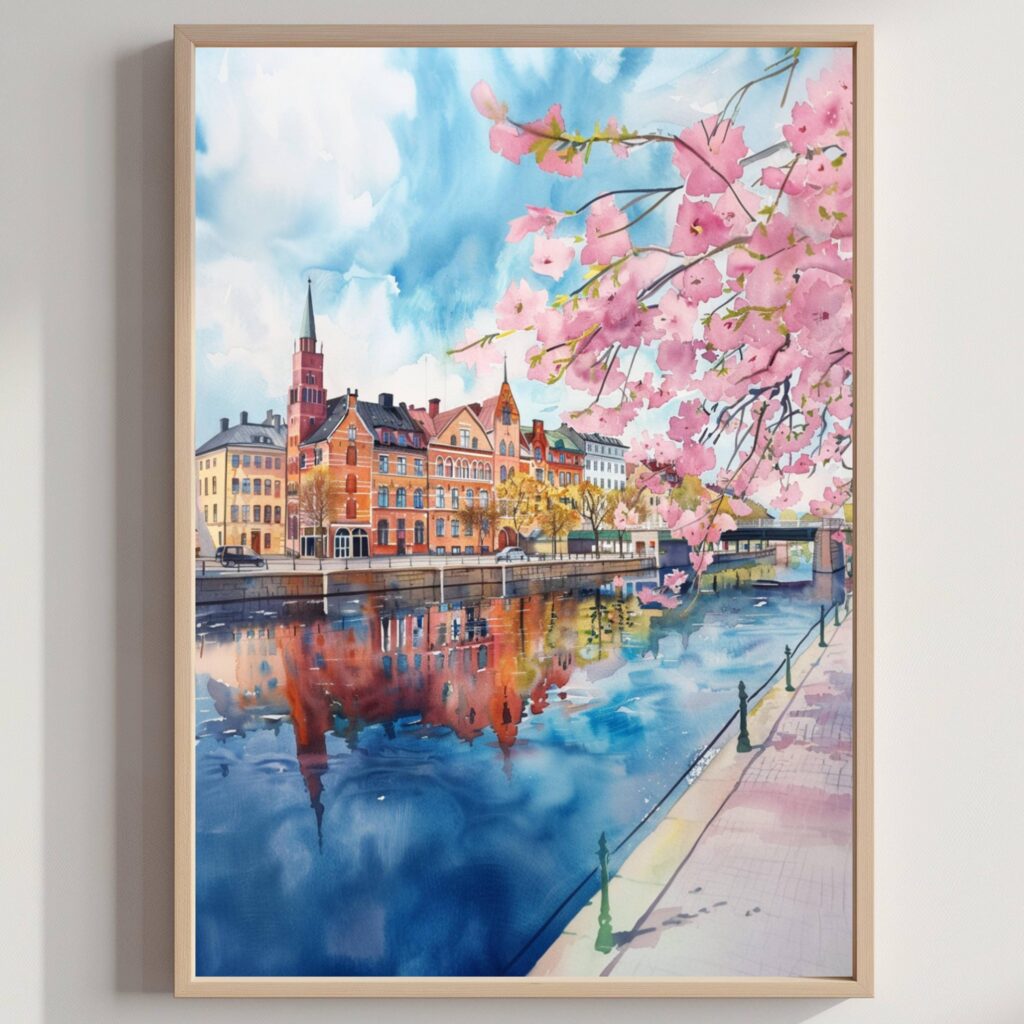
Gothenburg was founded in 1621 by Swedish King Gustav II Adolf, who deliberately brought in Dutch engineers and city planners to design its layout, modelling the new port city on Dutch canal towns, complete with a central canal system that still runs through parts of the city today, a somewhat unusual choice reflecting Sweden’s desire at the time to establish a genuinely competitive Baltic and North Sea trading port using proven Dutch expertise rather than domestic planning alone.
That trading ambition paid off substantially, Gothenburg grew into Scandinavia’s largest port, and by the 20th century had become the industrial heart of Sweden, home to major shipbuilding yards and, from 1927 onward, to Volvo, the automaker founded in the city and still headquartered there today, industrial identity that shaped Gothenburg distinctly from the more administrative, royal character of Stockholm.
A City That Reinvented Itself After Its Shipyards Closed
Gothenburg’s major shipbuilding industry collapsed substantially through the 1970s and 1980s amid broader global shifts in shipbuilding toward Asian shipyards, leaving significant unemployment and large disused industrial waterfront sites that the city subsequently redeveloped over following decades into cultural and residential districts, a transition mirroring similar post-industrial reinventions in cities like Hamburg and Rotterdam. Gothenburg has since built a strong cultural reputation of its own, hosting one of the largest annual film festivals in Scandinavia and maintaining Liseberg, one of the most visited amusement parks in Northern Europe, originally opened in 1923.
The city’s Haga district, one of Gothenburg’s oldest neighbourhoods, retains rows of wooden houses dating from the 17th and 18th centuries, structures that survived a series of city fires specifically because building regulations eventually required wooden houses to be clad in more fire-resistant materials, preserving much of the original wooden framework beneath.
Painting a Port City Built on Borrowed Dutch Design
Gothenburg’s canal-lined streets and preserved wooden Haga houses give a watercolourist warm, historic colour and quiet architectural charm to work with. We’ve captured that character in our own Gothenburg Watercolor Print, painted first by hand and printed to order on archival paper, a small piece of Sweden for a wall at home.
Designed by Dutch planners and rebuilt by its own industrial reinvention, Gothenburg remains a city whose practical, working character has never quite given way to Stockholm’s more polished royal reputation.