
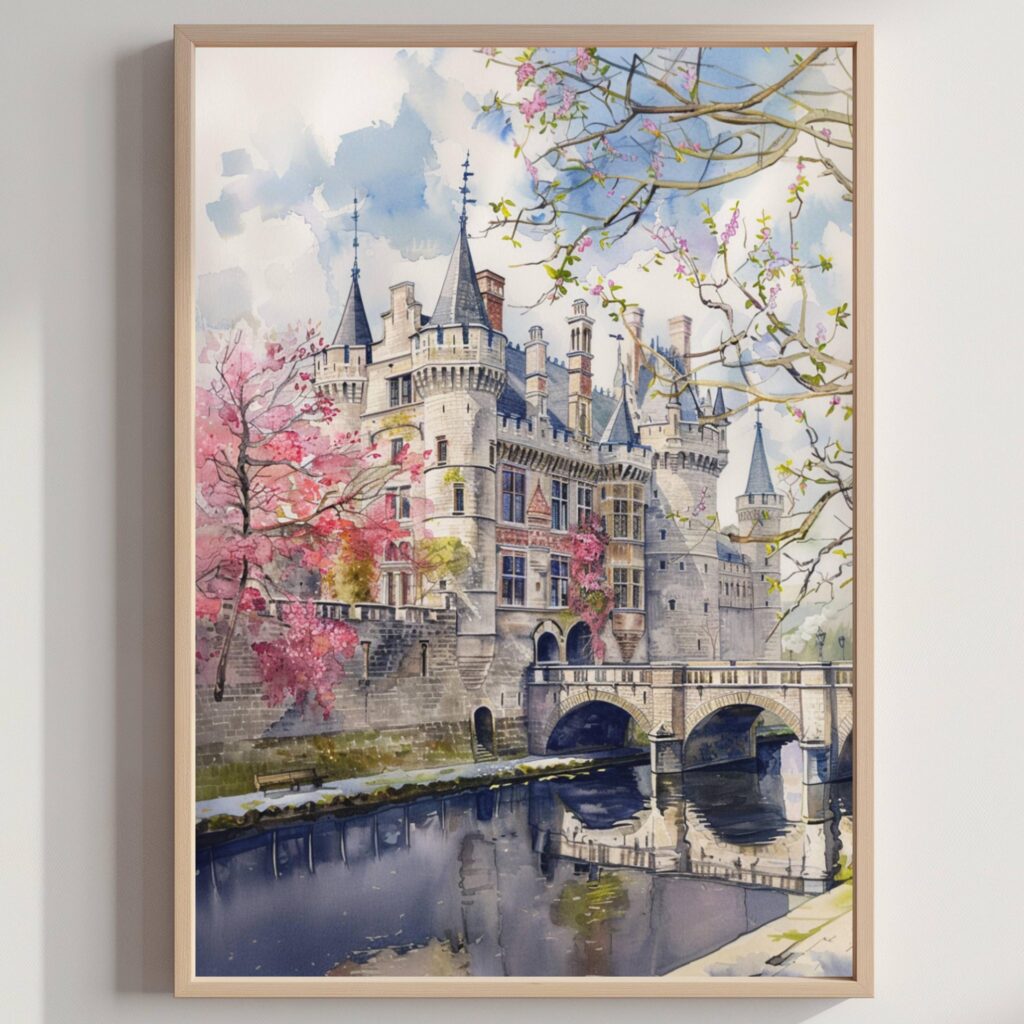
Gravensteen, “Castle of the Counts,” was built in 1180 by Count Philip of Alsace, and its imposing, deliberately fortress-like design wasn’t primarily meant to defend against foreign invaders, it was built largely to remind Ghent’s own increasingly wealthy and independent-minded merchant citizens exactly who held power over them. Modelled on Crusader castles Philip had seen in the Holy Land, its stark stone towers and battlements stood in deliberate contrast to the more commercial architecture rising around it in the medieval city.
Over the centuries, the castle’s role shifted considerably, serving at various points as a mint, a prison, and a cotton mill during the industrial era, each new use leaving physical traces still visible in the structure today, a building whose interior tells a far messier, more practical history than its imposing exterior suggests.
Restored After Nearly Being Demolished
By the 19th century, Gravensteen had fallen into such disrepair that city authorities seriously considered demolishing it entirely to make way for new development, a fate it narrowly avoided when the city instead purchased and began restoring it in 1885. That restoration, while preserving the castle’s medieval character, has since drawn some criticism from historians for taking creative liberties with its exact original appearance, a reminder that even “authentic” medieval structures often carry the fingerprints of later eras.
The castle’s medieval torture chamber and collection of period weaponry and instruments remain a popular, if grim, draw for visitors, a direct physical reminder of the harsher realities behind its role as a genuine seat of feudal power.
Painting Stone Built to Command Attention
The castle’s stark grey towers reflected in Ghent’s surrounding canals give a watercolourist a striking, moody subject to work with. We’ve captured that imposing presence in our own Gravensteen Castle Watercolor Print, painted first by hand and printed to order on archival paper, a small piece of Belgium for a wall at home.
Built to remind a city who was in charge, Gravensteen has spent the centuries since being saved, repeatedly, by the very citizens it was designed to intimidate.