
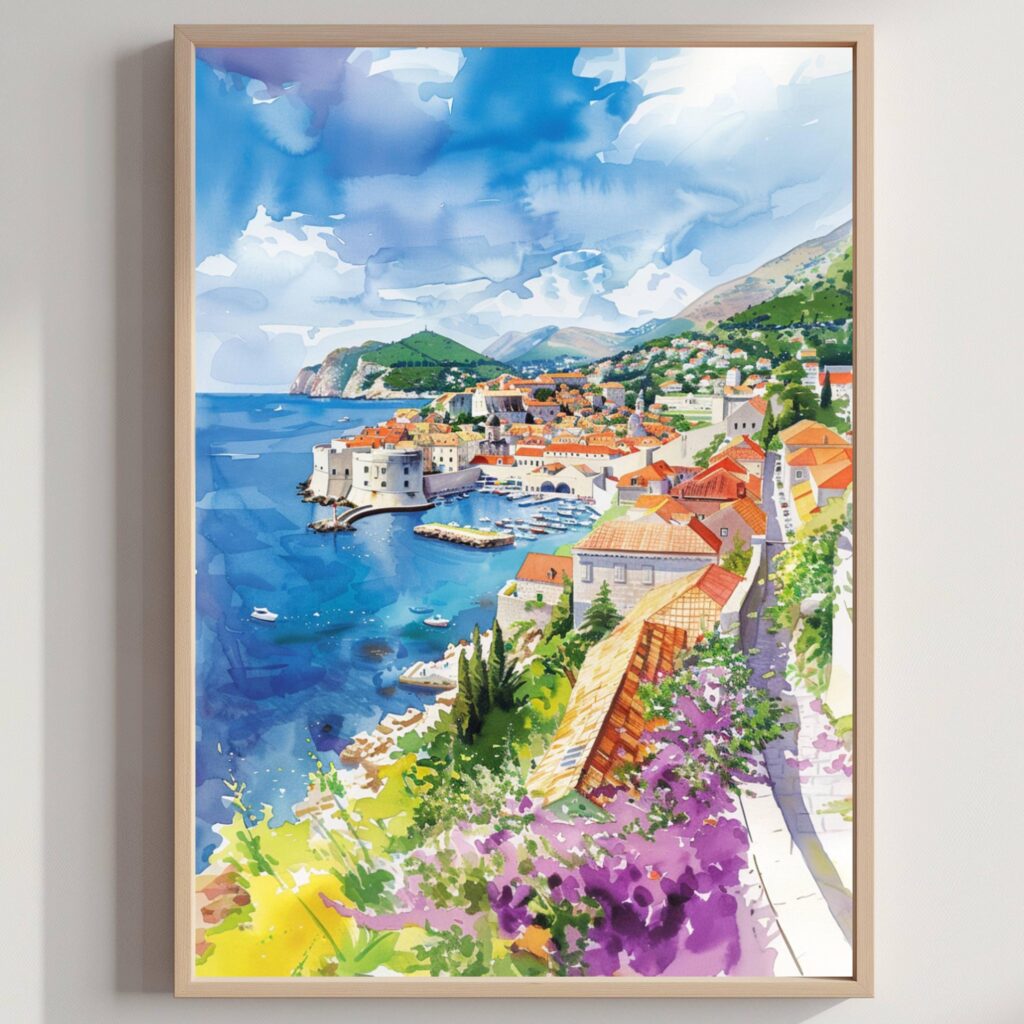
Dubrovnik operated for centuries as an independent maritime republic, the Republic of Ragusa, maintaining its autonomy from the 14th century until Napoleon’s forces dissolved it in 1808 not primarily through military strength, its standing army was always modest, but through careful, sustained diplomacy, paying tribute to larger regional powers, including the Ottoman Empire, in exchange for continued self-governance, a strategy that allowed the small city-state to preserve genuine independence for far longer than its size would typically have permitted.
That commercial diplomacy funded the extensive stone walls still encircling Dubrovnik’s old town today, fortifications begun in the medieval period and expanded over centuries, reaching up to six metres thick in places, defences substantial enough that the city was never successfully conquered by force during its centuries as an independent republic.
A City That Rebuilt After Both an Earthquake and a Modern War
A devastating earthquake in 1667 destroyed much of Dubrovnik, killing a significant portion of the population and levelling many of the Republic’s grandest buildings, a disaster from which the city rebuilt in a notably more restrained Baroque style, replacing much of what had been lost. Dubrovnik suffered again far more recently, during the 1991 to 1992 siege of the city amid the Croatian War of Independence, when Yugoslav forces shelled the historic old town directly, damaging a significant proportion of its buildings, an attack on a UNESCO World Heritage Site that drew international condemnation and was followed by a substantial, carefully documented restoration effort.
The city’s Stradun, the main limestone-paved street running through the old town, has been polished to a distinctive shine by centuries of foot traffic, its smooth surface now one of Dubrovnik’s most immediately recognisable features.
Painting Stone Walls Against the Adriatic
Dubrovnik’s massive stone fortifications rising directly from the Adriatic give a watercolourist dramatic scale and warm limestone colour to work with. We’ve captured that setting in our own Dubrovnik Watercolor Print, painted first by hand and printed to order on archival paper, a small piece of Croatia for a wall at home.
Defended for centuries by diplomacy as much as by stone, Dubrovnik remains a city whose walls have twice had to outlast disasters no negotiation could prevent.