
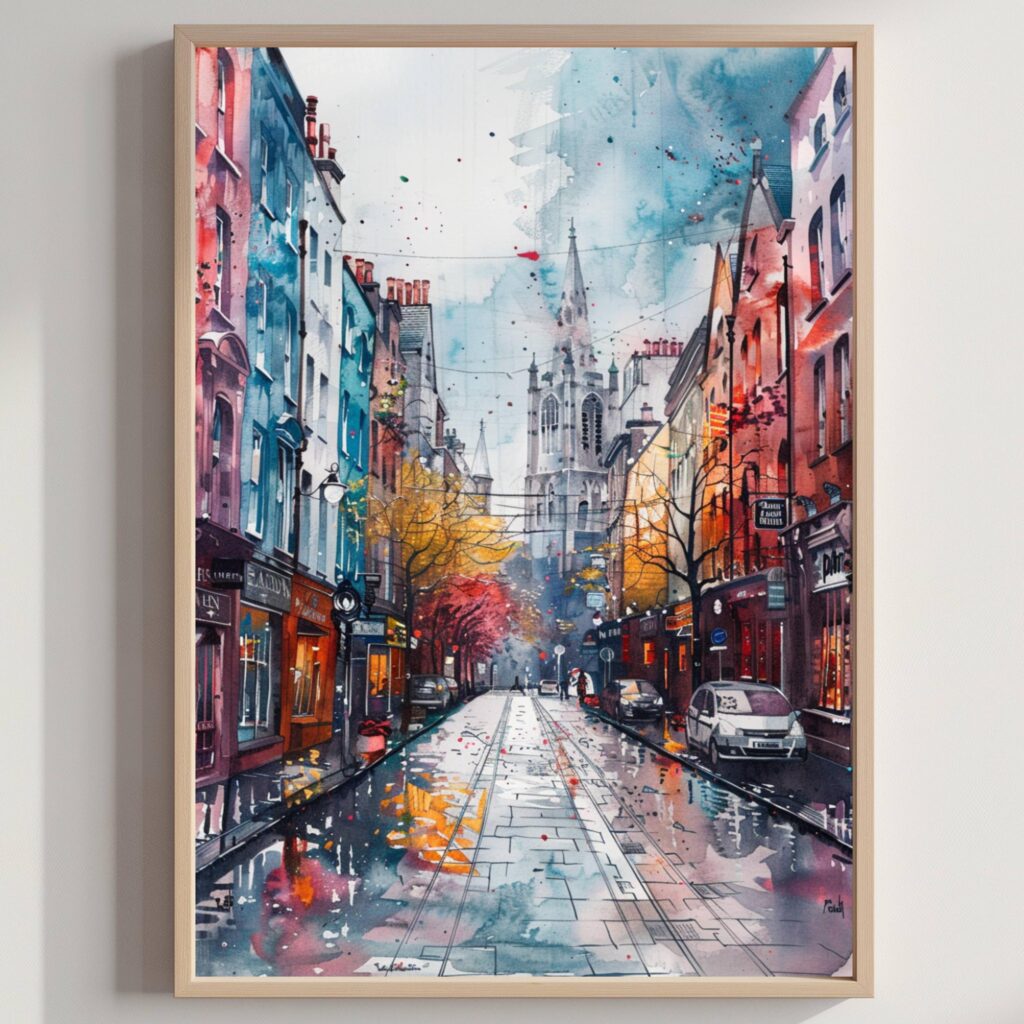
Dublin’s name comes from the Irish “Dubh Linn,” meaning “black pool,” a reference to a dark tidal pool where the River Poddle once met the Liffey, close to where Dublin Castle now stands. The city’s origins trace to a Viking settlement founded around 841 CE, and Dublin remained under significant Norse influence for centuries, a history still visible in street names and archaeological finds across the old city centre.
Trinity College Dublin, founded in 1592, houses the Book of Kells, an elaborately illustrated 9th-century manuscript of the four Gospels, widely considered one of the finest surviving examples of medieval illuminated manuscript art anywhere in the world, drawing visitors to its Old Library reading room, the Long Room, lined with 200,000 of the library’s oldest books.
A Small City With an Outsized Literary Legacy
Dublin has produced four Nobel laureates in Literature, William Butler Yeats, George Bernard Shaw, Samuel Beckett, and Seamus Heaney, an extraordinary concentration for a city of its size, and was designated a UNESCO City of Literature in 2010 in recognition of that legacy. James Joyce’s Ulysses, one of the most influential novels of the 20th century, is set entirely within a single Dublin day, June 16th, now celebrated annually across the city as Bloomsday.
Temple Bar, now Dublin’s best-known nightlife district, was originally slated for demolition in the 1980s to build a central bus depot, saved largely by a public campaign that transformed the area into a protected cultural quarter instead.
Painting a City of Grey Stone and Green Doors
Dublin’s Georgian architecture, with its famously colourful front doors against grey stone terraces, gives a watercolourist a distinctive, instantly recognisable palette to work with. We’ve captured that character in our own Dublin Watercolor Print, painted first by hand and printed to order on archival paper, a small piece of Ireland for a wall at home.
Founded by Vikings and later claimed by some of literature’s most towering names, Dublin has spent over a thousand years being rewritten by whoever arrived next.