
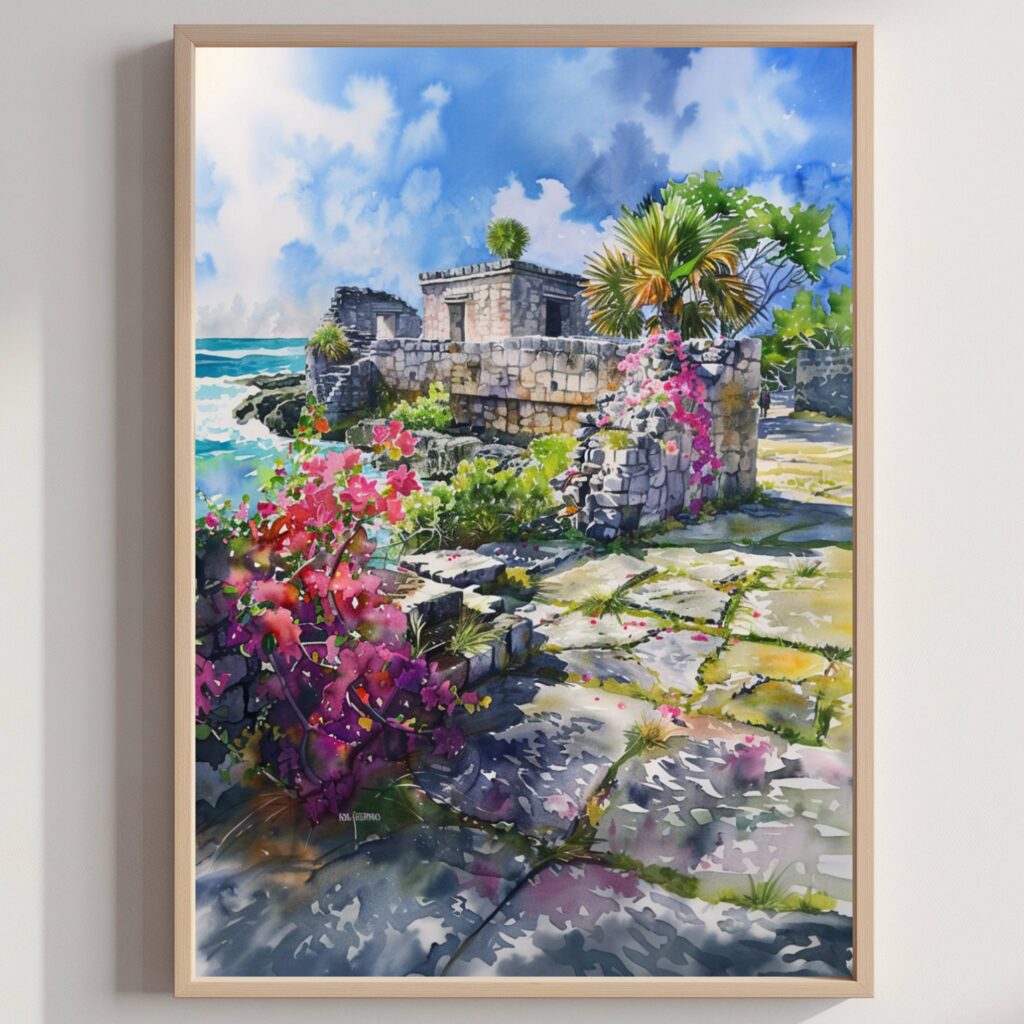
Cozumel held deep religious significance for the ancient Maya, who considered it sacred to Ixchel, the goddess of fertility, the moon, and childbirth, and Maya women were expected to make at least one pilgrimage to the island during their lifetime, travelling by canoe across the channel separating it from the Yucatan mainland specifically to visit shrines dedicated to her. San Gervasio, the largest surviving Maya site on the island, served as a significant ceremonial centre for that pilgrimage tradition, its temples and structures dating back over a thousand years, considerably predating the island’s later, very different reputation as a Caribbean diving destination.
Spanish conquistador Hernan Cortes landed on Cozumel in 1519 during his broader campaign against the Aztec Empire, and the island’s Maya population was devastated in subsequent decades by European diseases and colonial disruption, a demographic collapse severe enough that much of Cozumel remained sparsely populated for centuries afterward.
An Island Rediscovered Through Its Reef, Not Its Ruins
Cozumel’s modern identity was substantially reshaped in the 1960s when French oceanographer Jacques Cousteau explored and publicised the island’s surrounding coral reef system, part of the larger Mesoamerican Barrier Reef, the second-largest barrier reef system in the world, praising its exceptional visibility and biodiversity in ways that helped establish Cozumel as one of the premier scuba diving destinations globally. That reef-driven tourism boom transformed the island considerably, cruise ship visits and dive tourism now forming the backbone of Cozumel’s economy, a modern layer built directly atop, and occasionally in tension with, the same ancient ceremonial landscape pilgrims once crossed the channel to reach.
San Gervasio remains an active archaeological site today, ongoing excavation and preservation work continuing to reveal more about the scale and organisation of Maya religious practice on what was, for centuries, considered genuinely sacred ground.
Painting Ancient Stone Beneath Tropical Canopy
San Gervasio’s weathered Maya stonework beneath Cozumel’s dense tropical vegetation gives a watercolourist rich texture and ancient atmosphere to work with. We’ve captured that setting in our own Cozumel Watercolor Print, painted first by hand and printed to order on archival paper, a small piece of Mexico for a wall at home.
Once crossed by pilgrims honouring a goddess and rediscovered centuries later by divers chasing a reef, Cozumel remains an island whose two very different reputations somehow both still hold true.