
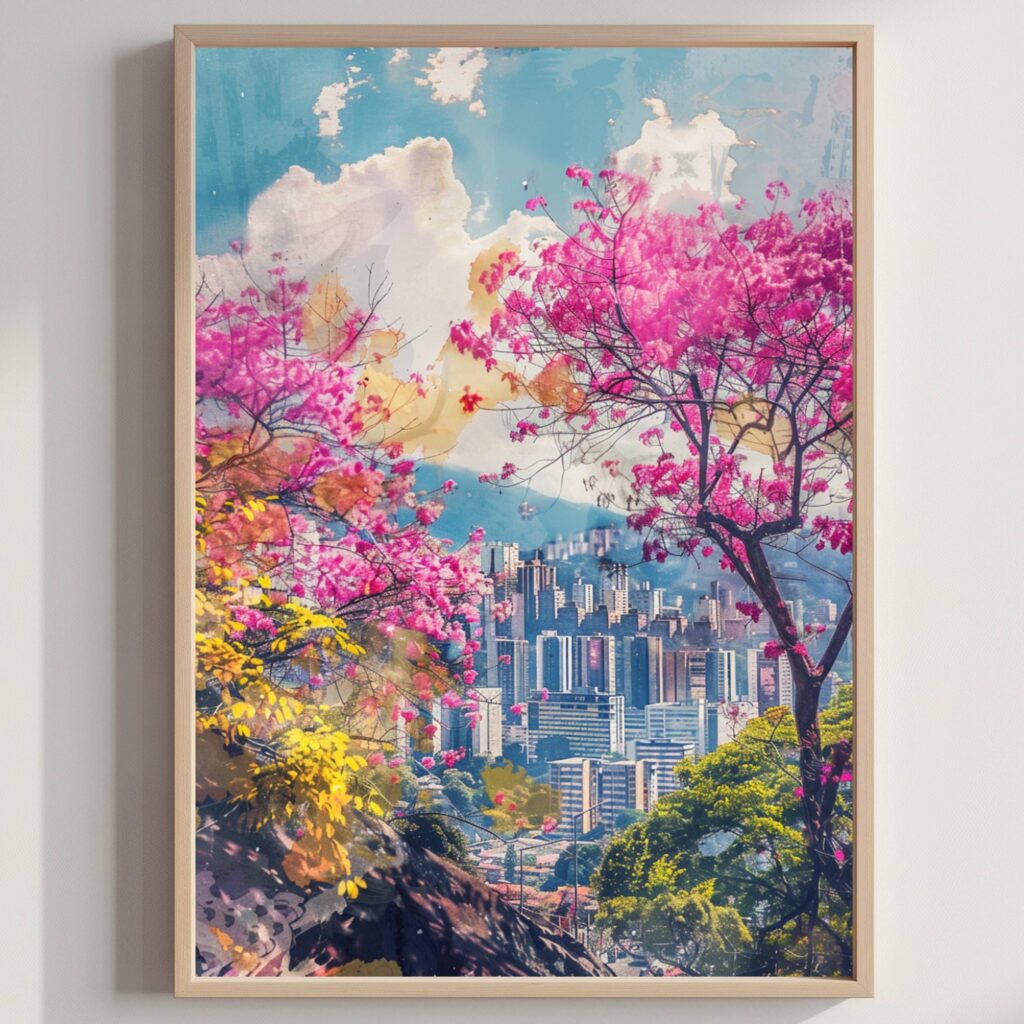
Caracas sits in a narrow valley in northern Venezuela, separated from the Caribbean coast by the Avila mountain range, a geography that gives the city a notably mild climate despite its tropical latitude, cool mountain air moderating temperatures that would otherwise be considerably more oppressive at sea level nearby. That same enclosing geography has also constrained the city’s growth for centuries, Caracas’s urban sprawl has had to climb steadily up the surrounding hillsides rather than expand outward, resulting in informal barrios built on increasingly steep terrain as the valley floor filled with development.
Founded by Spanish colonists in 1567, Caracas is the birthplace of Simon Bolivar, the revolutionary leader whose military campaigns liberated much of northern South America from Spanish colonial rule in the early 19th century, a legacy so central to Venezuelan and broader regional identity that Bolivar’s name and image appear throughout the city, from its central plaza to its currency.
A City Shaped by Oil Wealth and Prolonged Political Crisis
Venezuela holds some of the largest proven oil reserves in the world, and Caracas experienced substantial modernisation and infrastructure development through much of the 20th century funded by that petroleum wealth, including the Caracas Metro, one of the more extensive urban rail systems in Latin America when it opened in the 1980s. In more recent decades, the city has faced severe economic and political instability, hyperinflation, shortages, and significant emigration reshaping daily life for many Caraquenos in ways that stand in sharp contrast to the city’s mid-20th-century architectural optimism.
The Avila mountain, protected as a national park directly adjacent to the city, remains a significant recreational escape for residents, a cable car built in the 1950s still carrying visitors up its slopes for views across the entire valley below, a rare constant amid decades of broader change.
Painting a Valley City Beneath Green Mountains
Caracas’s dense urban valley beneath the green slopes of Avila mountain gives a watercolourist dramatic natural framing to work with. We’ve captured that setting in our own Caracas Watercolor Print, painted first by hand and printed to order on archival paper, a small piece of Venezuela for a wall at home.
Sheltered and constrained by the same mountains in equal measure, Caracas remains a capital whose geography has always shaped both its comfort and its considerable challenges.