
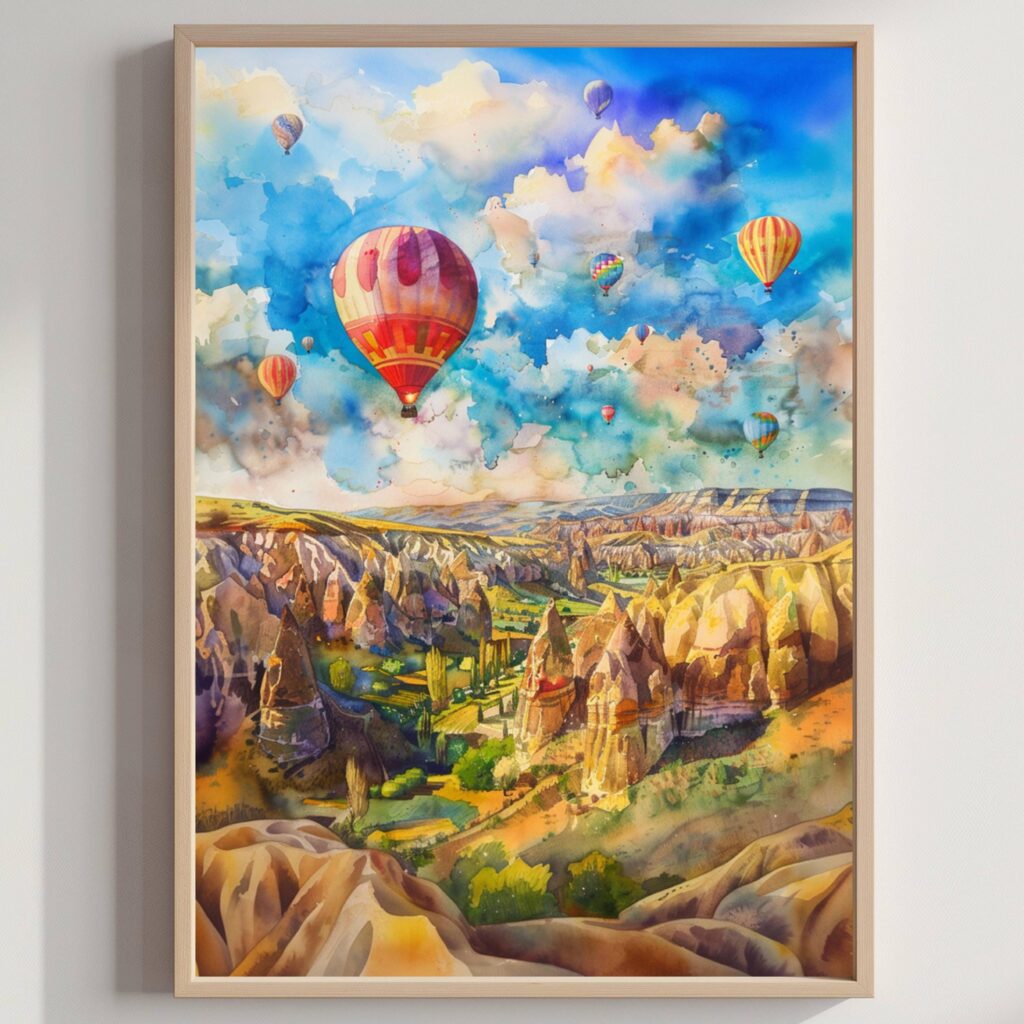
Cappadocia’s distinctive fairy chimney rock formations were formed over millions of years as volcanic ash from ancient eruptions hardened into a soft, easily eroded rock called tuff, which wind and water gradually sculpted into the tall, conical spires that define the region’s landscape today. That same soft rock proved remarkably easy to carve, and communities in Cappadocia have hollowed out homes, churches, and entire underground cities directly into the stone for well over a thousand years, creating a genuinely inhabited landscape rather than simply a striking natural one.
The underground city of Derinkuyu, one of dozens carved beneath the Cappadocian plain, extends roughly 60 metres deep and could reportedly shelter as many as 20,000 people along with their livestock and food stores, likely built in stages beginning as early as the Byzantine period as a refuge from raiding armies passing through the region.
A Refuge for Early Christian Communities
Cappadocia became a significant early centre of Christian monasticism, and the region’s soft rock allowed entire complexes of churches and monasteries to be carved directly into the cliffs and rock formations of the Goreme valley, many still preserved with vivid Byzantine-era frescoes, a UNESCO World Heritage Site since 1985. Early Christian communities used the region’s extensive cave networks partly for genuine religious retreat and partly as a practical hiding place during periods of persecution and later Arab raids in the 7th to 9th centuries.
Cappadocia has become one of the world’s most popular hot air ballooning destinations in recent decades, hundreds of balloons rising each morning over the valley’s rock formations, a modern tourist tradition offering an aerial view of a landscape that took millions of years, and a thousand more of human effort, to reach its current form.
Painting Rock Spires in Warm Desert Light
Cappadocia’s carved rock spires glowing in early morning light give a watercolourist genuinely unusual texture and warm, earthy colour to work with. We’ve captured that character in our own Cappadocia Watercolor Print, painted first by hand and printed to order on archival paper, a small piece of Turkey for a wall at home.
Shaped first by volcanic ash and carved since by a thousand years of human hands, Cappadocia remains a landscape where geology and history are genuinely difficult to tell apart.