
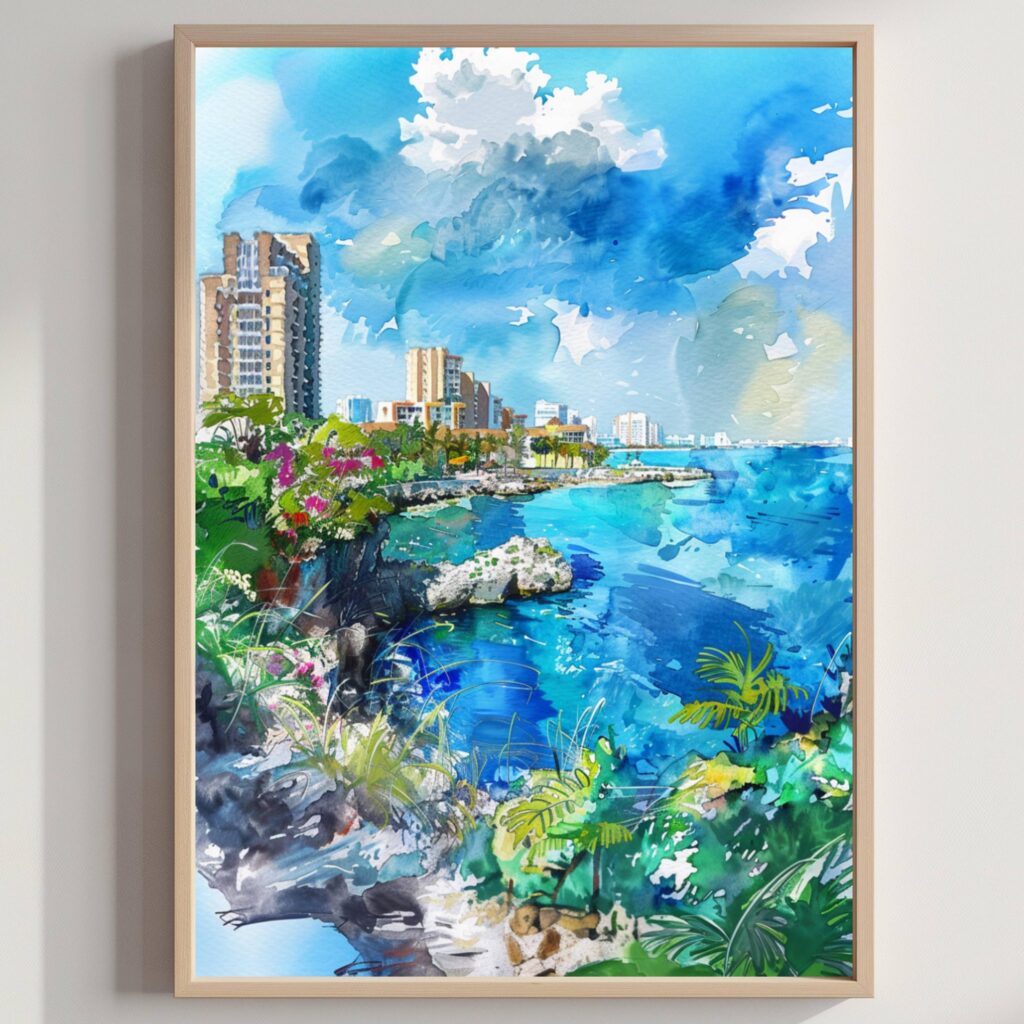
Cancun did not meaningfully exist as a settlement before the early 1970s, the Mexican government, using computer modelling to identify the ideal location for a purpose-built tourism destination, selected a largely uninhabited sandbar and coastal strip specifically because of its white sand, turquoise water, and proximity to the Yucatan’s Maya ruins, then built an entire resort city there essentially from scratch as a deliberate economic development project. What began as a government planning exercise transformed within roughly a decade into one of the most visited resort destinations in the Western Hemisphere.
That planned origin explains Cancun’s distinctive layout, a clearly divided “Hotel Zone,” a narrow strip of coastline lined almost entirely with resorts, sits apart from “El Centro,” the more authentically Mexican downtown area where most local residents actually live and work, a deliberate separation baked into the city’s original design.
A Gateway Built Beside Ancient Ruins
Cancun’s location was chosen partly for its proximity to significant Maya archaeological sites, Chichen Itza, Tulum, and Coba all sit within a few hours’ drive, meaning the resort city, despite being barely 50 years old, functions as a gateway to some of the oldest and most significant historical sites in Mesoamerica. Tulum in particular, a walled Maya city built directly on clifftops overlooking the Caribbean, offers a striking contrast to Cancun’s modern resort architecture just down the coast, ancient stone ruins overlooking the same turquoise water that made the entire region so attractive to modern developers in the first place.
Despite its resort reputation, Cancun’s underlying ecosystem, including the second-largest barrier reef system in the world just offshore, has faced significant environmental pressure from rapid tourism development, prompting increased conservation efforts in recent decades to protect the very natural features that made the destination valuable to begin with.
Painting Turquoise Water and White Sand
Cancun’s brilliant turquoise water against brilliant white sand gives a watercolourist a bold, saturated tropical palette to work with. We’ve captured that colour in our own Cancun Watercolor Print, painted first by hand and printed to order on archival paper, a small piece of Mexico for a wall at home.
Built almost entirely from a government plan rather than any organic history, Cancun remains one of the rare major destinations that essentially chose itself into existence through deliberate design.