
Bordeaux’s wine trade dates back roughly 2,000 years to Roman settlement, but it was medieval trade with England, following the marriage of Eleanor of Aquitaine to the future King Henry II in 1152, that truly transformed the region’s fortunes, Bordeaux wine, then known in England as “claret,” became so central to the relationship between the two regions that it shaped centuries of trade policy and taxation. That wine wealth built much of Bordeaux’s elegant 18th-century architecture, the Place de la Bourse and the city’s long, harmonious riverside facade along the Garonne River remain considered among the finest examples of Neoclassical urban planning in France.
UNESCO designated the entirety of central Bordeaux a World Heritage Site in 2007, recognising roughly 350 hectares of continuous historic architecture, an unusually large urban area to receive such protection, reflecting how thoroughly wine wealth shaped the city as a coherent whole rather than in isolated landmark buildings.
A City That Cleaned Itself Up on Purpose
For much of the 20th century, Bordeaux’s stone buildings had darkened considerably from pollution and grime, and the city undertook a major, deliberate cleaning and restoration campaign beginning in the 1990s under mayor Alain Juppe, stripping back decades of accumulated soot to reveal the pale limestone beneath, a transformation so significant it’s often credited with reviving the city’s international reputation as a genuine destination rather than simply a wine-industry town.
The Cite du Vin, a striking modern museum dedicated entirely to wine culture and history, opened in 2016 along the riverfront, its swirling, wine-glass-inspired architecture standing in deliberate contrast to the classical stone facades surrounding it, a modern landmark built specifically to honour the industry that built the city around it centuries earlier.
Painting Pale Stone Along the Garonne
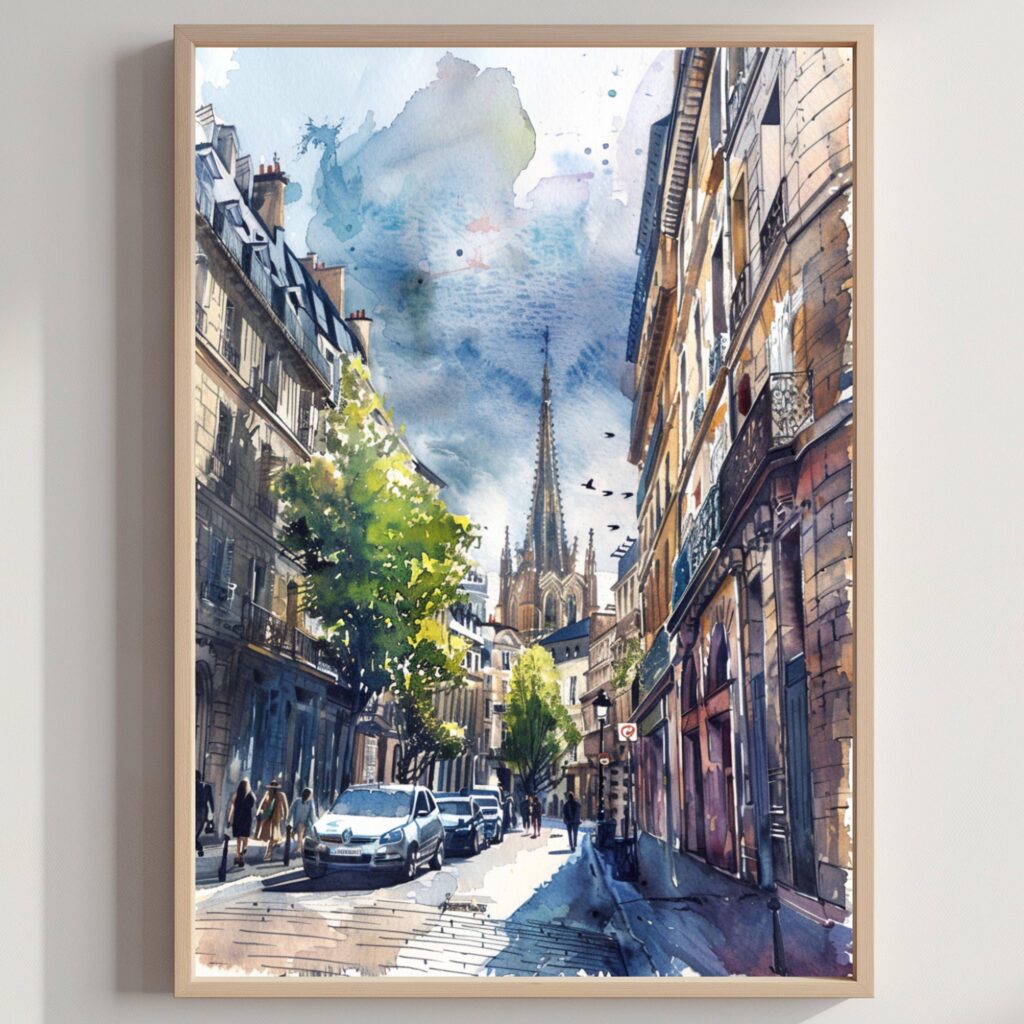
Bordeaux’s elegant limestone facades reflected in the Garonne River give a watercolourist refined architectural symmetry and soft riverside light to work with. We’ve captured that elegance in our own Bordeaux Watercolor Print, painted first by hand and printed to order on archival paper, a small piece of France for a wall at home.
Built almost entirely on the strength of what could be grown and bottled nearby, Bordeaux remains one of the clearest examples anywhere of a single industry shaping an entire city’s architecture and identity.