
Bilbao was, for most of the 20th century, an industrial city built on steel and shipbuilding, and by the 1980s, as those industries declined sharply, the city faced serious economic distress and a genuine identity crisis. Its transformation began, somewhat improbably, with a single building: the Guggenheim Museum Bilbao, designed by architect Frank Gehry and opened in 1997, its titanium-clad, sculptural curves so unlike anything the city had seen that the museum single-handedly triggered a wave of tourism and investment now widely referred to across urban planning circles as the “Bilbao Effect.”
That effect wasn’t purely architectural, the museum was part of a much broader, deliberate urban renewal strategy that included cleaning up the heavily polluted Nervion River, expanding the metro system, and redeveloping former industrial waterfront into public space, the museum simply became the most visible symbol of a wider transformation.
A City That Kept Its Working-Class Character
Despite its new architectural fame, Bilbao has largely avoided becoming purely a tourist spectacle, its Casco Viejo, the old town, retains genuine working Basque neighbourhood life, pintxo bars, and markets that function for residents first rather than visitors. The city remains the economic centre of the Basque Country, a region with its own distinct language and strong regional identity, Bilbao’s transformation was undertaken specifically to secure its economic future as a Basque city rather than to erase that identity in favour of generic global tourism appeal.
Puppy, Jeff Koons’s enormous flower-covered West Highland terrier sculpture standing outside the Guggenheim, has become nearly as photographed as the museum itself, an unlikely, oversized mascot for a city’s entire reinvention.
Painting Titanium Against an Industrial River
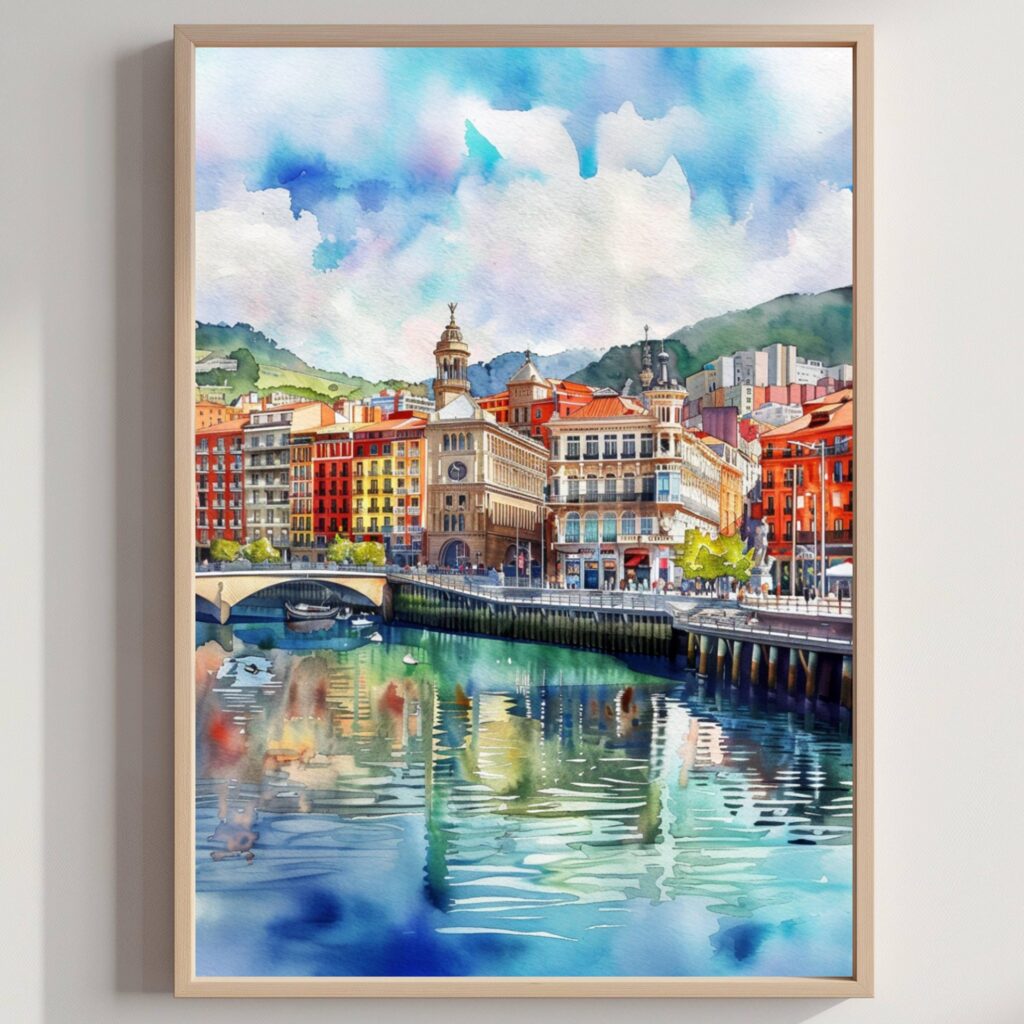
The Guggenheim’s curved titanium panels against the Nervion River give a watercolourist striking, unconventional geometry to work with. We’ve captured that architectural boldness in our own Bilbao Watercolor Print, painted first by hand and printed to order on archival paper, a small piece of the Basque Country for a wall at home.
Rebuilt around a single museum after its steel industry declined, Bilbao remains one of the clearest examples anywhere of a city choosing architecture as its path back to relevance.