
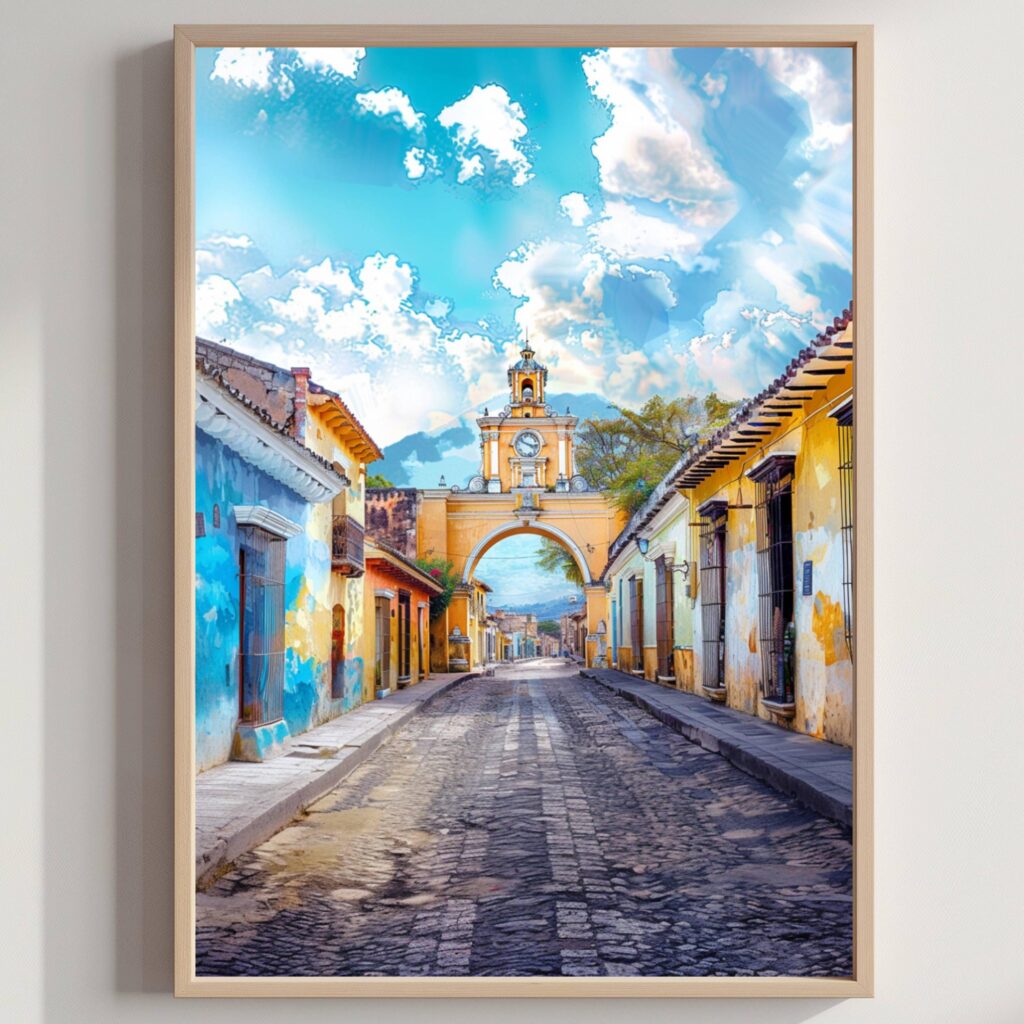
Antigua Guatemala served as the capital of Spanish Colonial Central America for over 200 years, growing into one of the most important cities in the Americas before a series of devastating earthquakes, most severely in 1773, convinced Spanish authorities to abandon it entirely and relocate the capital to what is now Guatemala City. Rather than being fully rebuilt, much of Antigua was simply left in ruins, its collapsed colonial churches and convents still standing today as deliberately preserved, roofless shells rather than restored buildings.
That earthquake vulnerability comes from the city’s setting, ringed by three volcanoes, Agua, Fuego, and Acatenango, with Fuego remaining one of the most consistently active volcanoes in Central America, occasional ash plumes still visible from the city’s cobblestone streets on clear days.
A Ruin Preserved as Deliberately as Any Restoration
UNESCO designated Antigua a World Heritage Site in 1979, recognising its well-preserved Spanish Baroque architecture and its unusual grid layout, based on Renaissance urban planning principles rarely applied so completely elsewhere in the colonial Americas. Strict building codes today prevent modern construction from disrupting the historic centre’s low-rise, colonial character, keeping the city looking remarkably close to how it appeared before the earthquakes that ended its reign as capital.
Despite losing its political status centuries ago, Antigua remains one of Guatemala’s most important cultural centres, particularly renowned for its elaborate Holy Week processions, among the most significant Easter celebrations anywhere in Latin America.
Painting Colonial Stone Beneath a Volcano
Antigua’s colourful colonial facades set against the looming silhouette of Volcan de Agua give a watercolourist a striking sense of history and scale together. We’ve captured that setting in our own Antigua Guatemala Watercolor Print, painted first by hand and printed to order on archival paper, a small piece of Central America for a wall at home.
Abandoned as a capital and preserved as a ruin, Antigua Guatemala remains proof that losing political power can sometimes be exactly what protects a city’s character.