
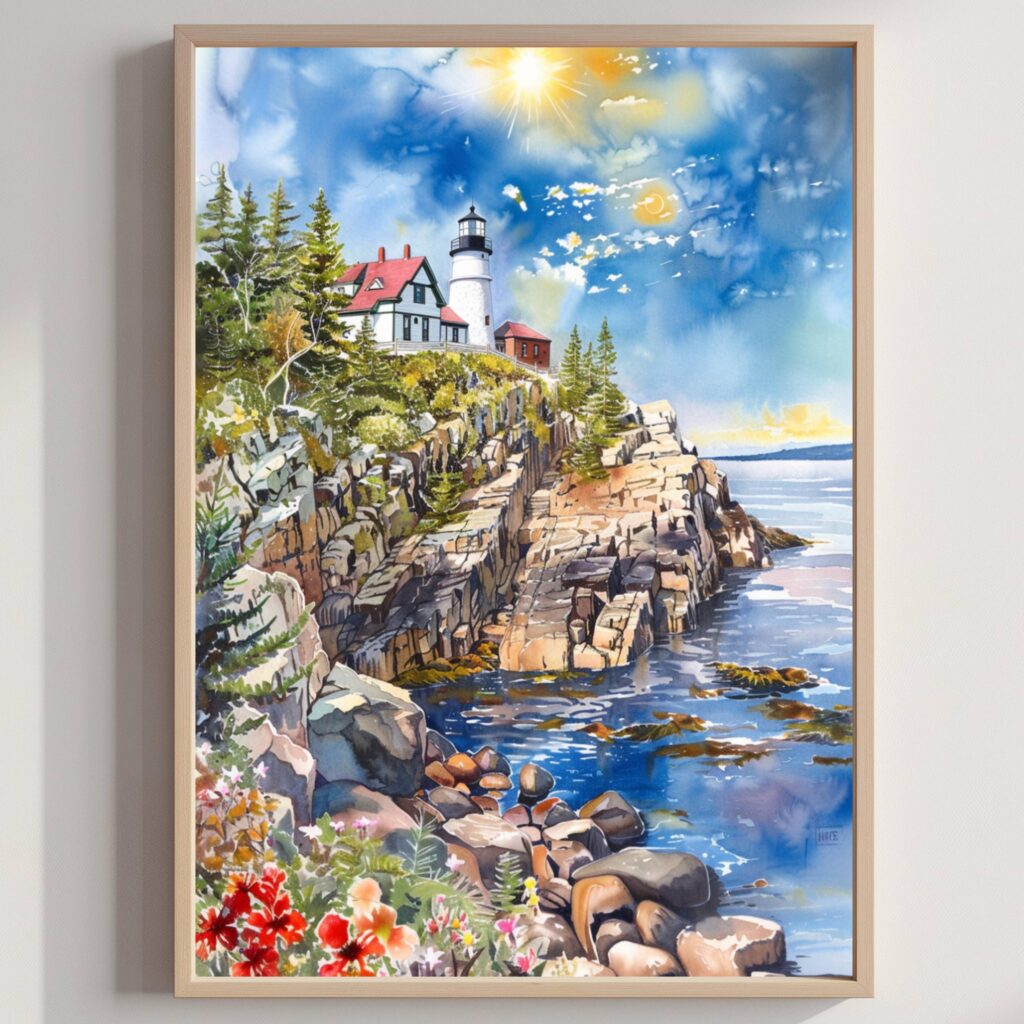
Acadia National Park, on Maine’s rugged Atlantic coast, was established in 1919 as the first national park created east of the Mississippi River, its formation driven substantially by wealthy summer residents of nearby Bar Harbor, including John D. Rockefeller Jr., who donated land and personally funded much of the park’s early infrastructure. Rockefeller, notably wary of the automobile’s growing presence in the area, personally financed and helped design 45 miles of carriage roads through the park specifically to be closed to motor vehicles, a network of gravel paths still used today by cyclists, horse riders, and walkers rather than cars.
Cadillac Mountain, within the park, rises to 466 metres and was, for much of the year until recently, recognised as the first place to see sunrise in the continental United States, a claim that shifts seasonally and has more recently been disputed by other East Coast high points, though Cadillac remains a popular spot for the tradition regardless.
A Coastline Shaped by Retreating Glaciers
Acadia’s dramatic granite coastline, including the distinctive pink-tinged rock visible throughout the park, was substantially shaped by glacial activity during the last ice age, the retreating ice carving the fjord-like inlet of Somes Sound, often described as the only true fjord on the eastern seaboard of the United States. This glacially carved landscape gives Acadia a genuinely dramatic meeting of mountain and sea rarely found together so closely elsewhere on the Atlantic coast.
The park’s Jordan Pond House, a historic teahouse dating back to the 19th century, has served popovers to visitors for well over a hundred years, a small but genuinely enduring tradition that predates the park’s own official establishment.
Painting Pink Granite Against the Atlantic
Acadia’s pink granite coastline meeting the cold Atlantic gives a watercolourist striking colour and dramatic natural texture to work with. We’ve captured that character in our own Acadia Watercolor Print, painted first by hand and printed to order on archival paper, a small piece of Maine for a wall at home.
Built partly out of one donor’s dislike of cars, Acadia remains a park whose quiet carriage roads still carry a very particular kind of 20th-century foresight.