
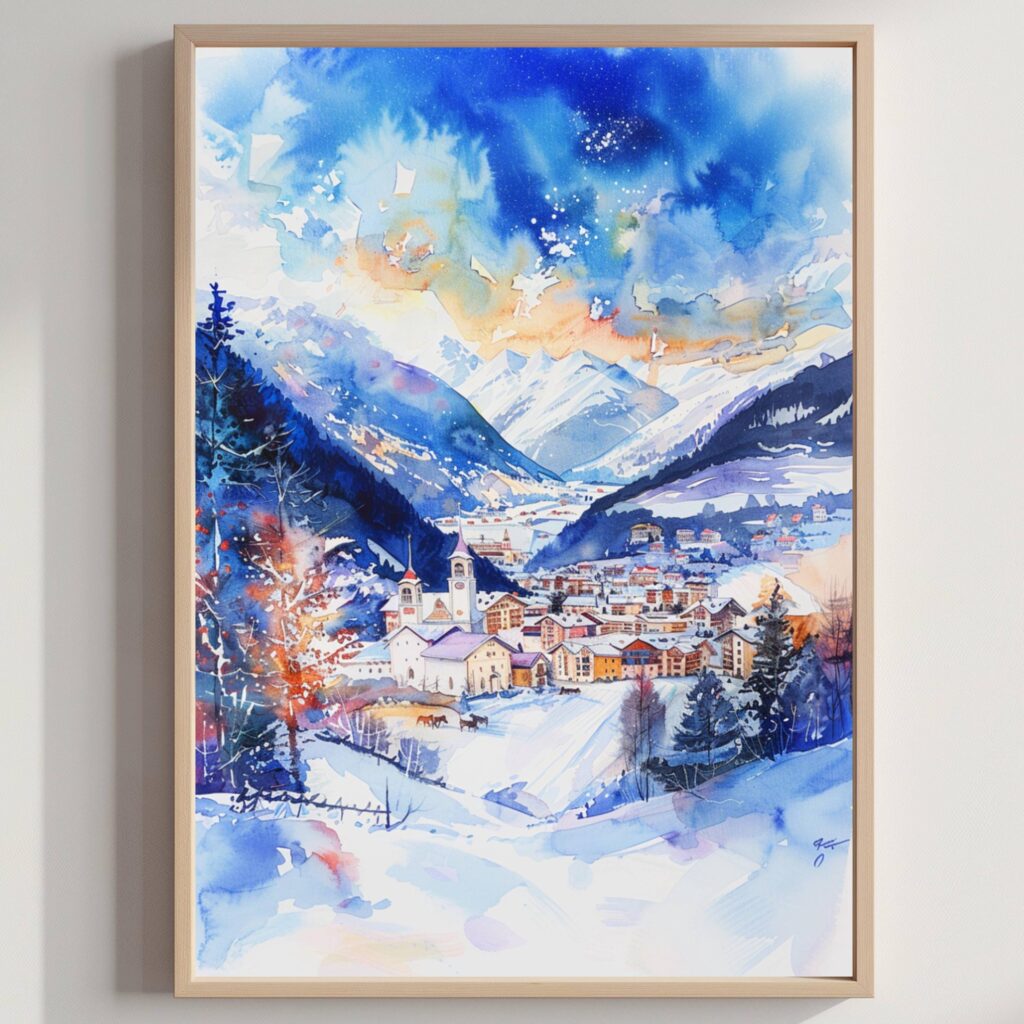
Bormio’s natural thermal springs have drawn visitors since Roman times, ancient bathers making use of the same geothermally heated waters that still supply the town’s spa facilities today, giving Bormio one of the longest continuously used thermal bathing traditions in the Alps. The town sits at a historically significant crossroads in northern Italy’s Valtellina region, near the base of the Stelvio Pass, one of the highest and most famous paved mountain roads in the Alps, a position that made Bormio an important stop for travellers and traders moving between Italy and Switzerland for centuries.
Bormio’s historic centre retains a genuinely medieval street layout, its narrow lanes and stone buildings largely predating the town’s development as a modern ski resort, giving it a notably different character from many purpose-built alpine ski towns constructed primarily in the 20th century.
A Resort Proven on the World Cup Circuit
Bormio’s Stelvio downhill course has hosted World Cup alpine skiing races since 1985 and is widely regarded among racers as one of the most demanding and prestigious downhill courses on the international circuit, its steep, technical terrain a serious test even for elite competitors. The resort hosted the World Alpine Ski Championships in 1985 and again in 2005, cementing its reputation within competitive skiing circles well beyond its smaller profile among general Alpine tourists.
The nearby Stelvio Pass, reaching 2,758 metres and famous for its 48 hairpin turns on the eastern ascent, remains closed by snow for much of the year and has become a celebrated challenge for cyclists once it reopens each summer, drawing riders specifically to test themselves against its relentless switchbacks.
Painting a Spa Town Beneath High Alpine Peaks
Bormio’s historic stone buildings set against the surrounding high Alps give a watercolourist warm architectural texture and dramatic mountain scale to work with. We’ve captured that character in our own Bormio Watercolor Print, painted first by hand and printed to order on archival paper, a small piece of Italy for a wall at home.
Soaked in by Romans and raced down by World Cup skiers many centuries later, Bormio remains a town whose relationship with its own mountains has always run in more than one direction.