
Winnipeg grew up at the confluence of the Red and Assiniboine Rivers, a meeting point known to Indigenous peoples and later fur traders for thousands of years before formal settlement, its location making it a natural gathering and trading point long before Winnipeg was incorporated as a city in 1873. The Hudson’s Bay Company established Upper Fort Garry near this same river junction in the 19th century, cementing the site’s role as a hub for the fur trade that shaped much of early Canadian commerce.
The Forks, as this river junction is now known, remains Winnipeg’s most significant public gathering space today, redeveloped from former rail yards into markets, parks, and cultural venues, a modern civic use built directly atop thousands of years of continuous human activity at the same spot.
A City Whose Growth Was Built on the Railway
Winnipeg’s population and economy expanded dramatically in the late 19th and early 20th centuries after the Canadian Pacific Railway routed its transcontinental line through the city, making Winnipeg the primary gateway for goods and immigrants moving into Canada’s prairie provinces, a boom period that left the city with a legacy of grand early 20th-century architecture in its Exchange District, now a National Historic Site. Winnipeg’s growth slowed considerably after the Panama Canal opened in 1914, diverting much shipping trade away from the prairie rail routes that had built the city’s early prosperity.
Winnipeg experiences some of the most extreme temperature swings of any major Canadian city, with brutally cold winters regularly dropping well below minus 30 degrees Celsius, a climate residents have met with a genuinely active winter culture rather than simple endurance.
Painting a City at the Meeting of Two Rivers
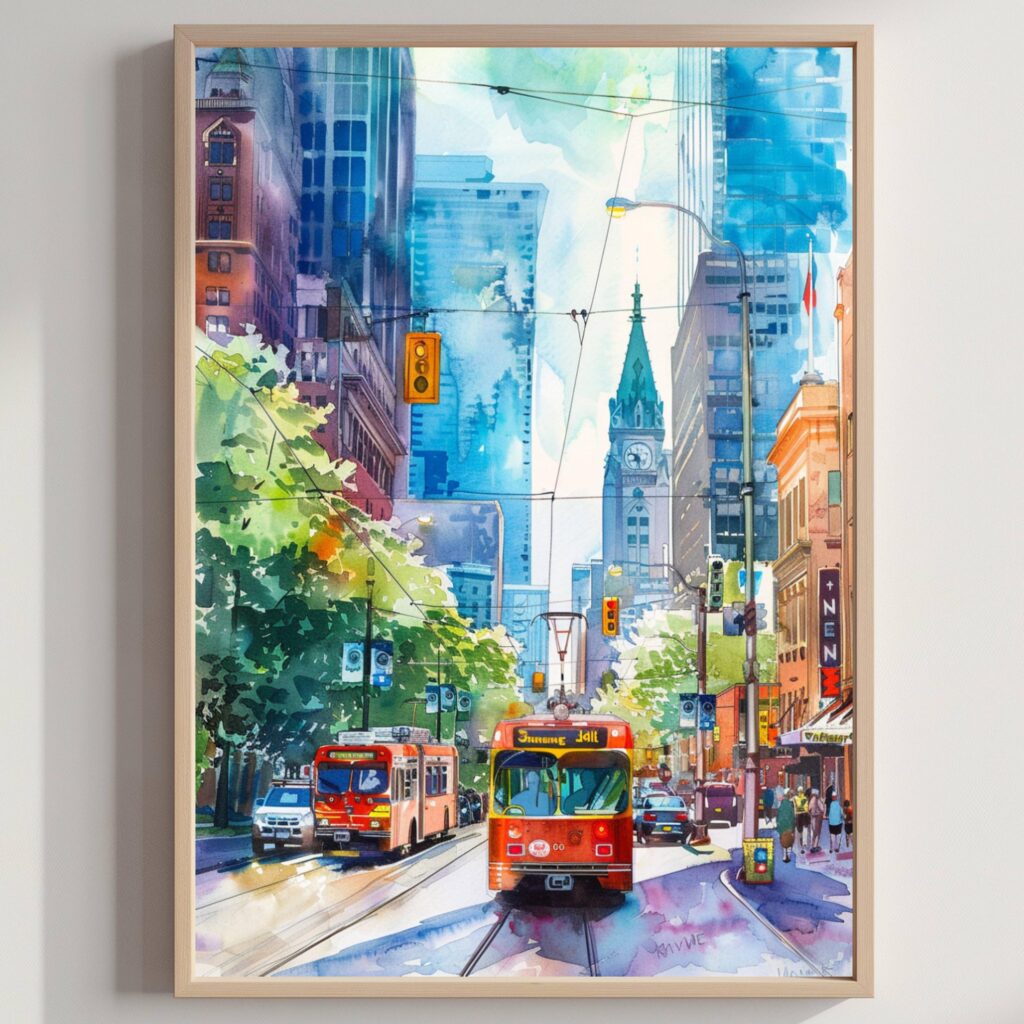
Winnipeg’s riverside skyline at the junction of the Red and Assiniboine gives a watercolourist open prairie light and reflective water to work with. We’ve captured that setting in our own Winnipeg Watercolor Print, painted first by hand and printed to order on archival paper, a small piece of Canada for a wall at home.
Built on a meeting point used for thousands of years before it had a name, Winnipeg remains a city whose location was chosen by geography long before any city planner had a say.