
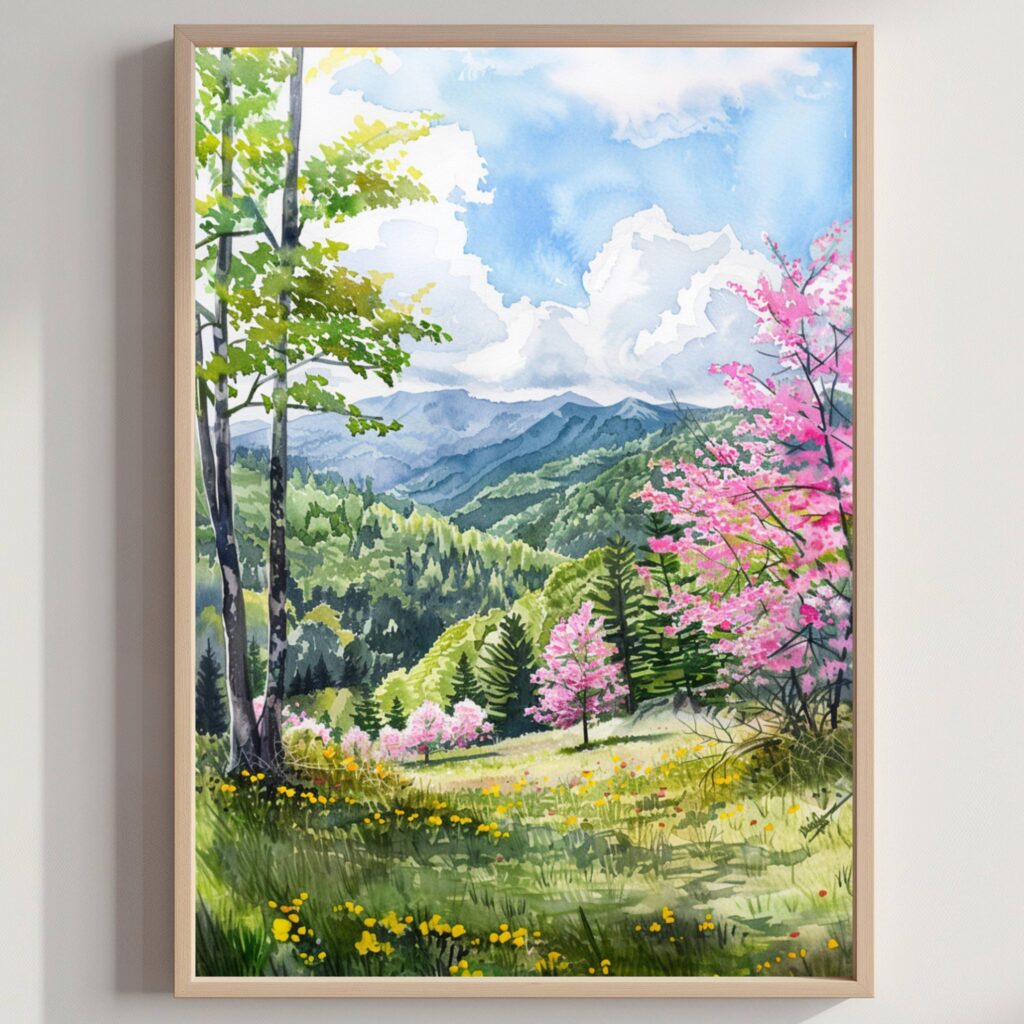
Great Smoky Mountains National Park, straddling the border between Tennessee and North Carolina, is the most visited national park in the United States by a considerable margin, drawing well over twelve million visitors annually, more than double the next most popular park, a figure helped substantially by its free admission, a condition attached to the land donations that formed the park when it was established in 1934. The park’s name comes from the persistent blue-tinged haze that hangs over the mountains, produced by natural hydrocarbons released from the region’s dense forest vegetation rather than any actual smoke.
The Great Smoky Mountains are also recognised as one of the most biodiverse areas in the temperate world, home to over 19,000 documented species and likely thousands more yet to be catalogued, a richness owed partly to the region having remained unglaciated during the last ice age, allowing plant and animal life to persist there that was wiped out elsewhere in North America.
A Landscape Once Home to the Cherokee Nation
The Great Smoky Mountains were long inhabited by the Cherokee people before the forced removals of the 1830s, known as the Trail of Tears, displaced the majority of the Cherokee Nation to present-day Oklahoma; a portion of the Eastern Band of Cherokee Indians remained in the region, and their descendants still live on the adjacent Qualla Boundary today. The park’s Cades Cove valley preserves a different, later layer of history, a well-preserved collection of 19th-century Appalachian settler homesteads, churches, and mills, now one of the park’s most visited areas.
Unlike many national parks, entire communities were relocated to create the Smokies, and abandoned home sites, cemeteries, and chimney stacks can still be found scattered through the now-forested park, quiet traces of the mountain life that existed there before.
Painting Mountains Wrapped in Their Own Blue Haze
The Smokies’ layered ridgelines fading into blue mist give a watercolourist naturally soft, atmospheric colour to work with. We’ve captured that character in our own Great Smoky Mountains Watercolor Print, painted first by hand and printed to order on archival paper, a small piece of the USA for a wall at home.
Named for a haze made by the forest itself and shaped by communities long since moved on, the Smokies remain a park where the most visited trails still pass quietly through someone else’s former home.