
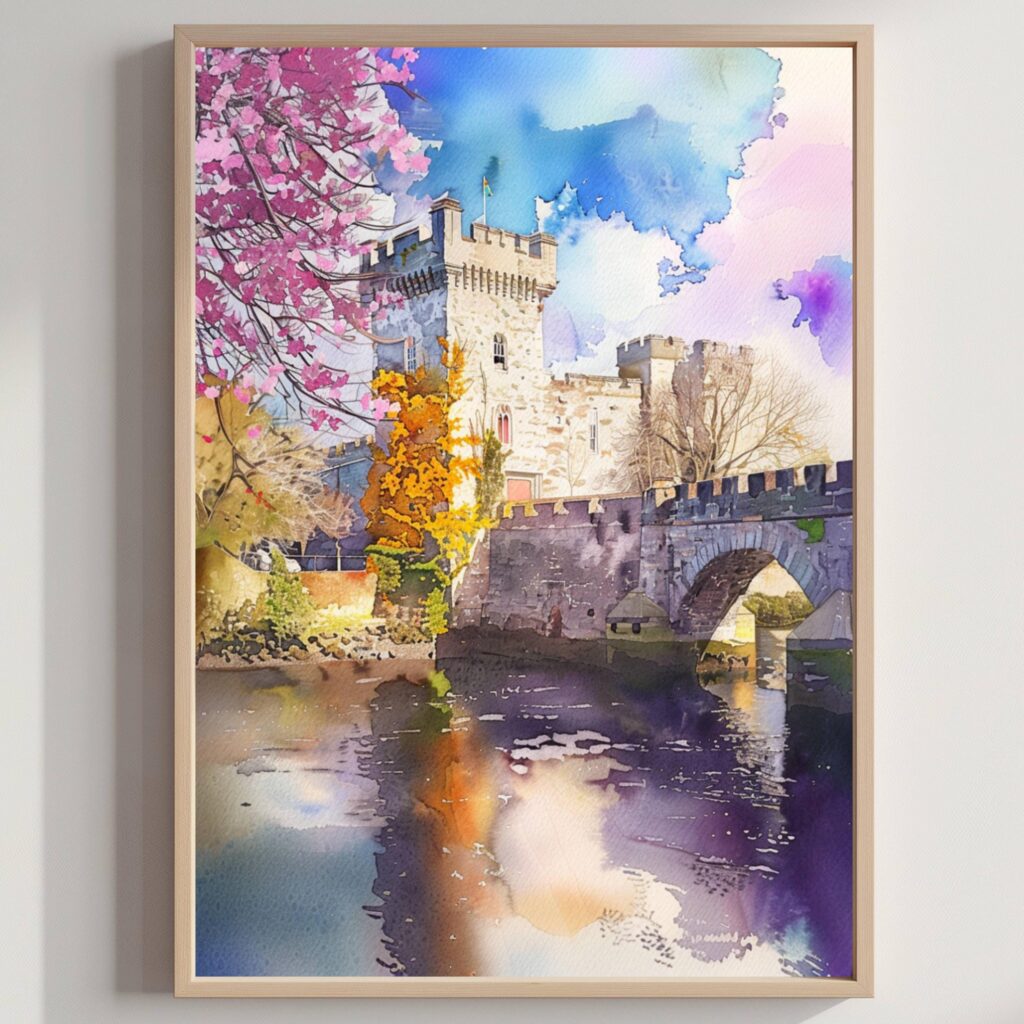
Limerick sits at the mouth of the River Shannon, Ireland’s longest river, a position that made it a strategic prize fought over repeatedly through history, most notably during the Williamite War in 1691, when the city withstood two sieges before finally surrendering under the Treaty of Limerick, an agreement whose broken promises to Irish Catholics remained a source of bitterness for generations afterward. King John’s Castle, built on the riverbank around 1200, still stands as one of the best-preserved Norman castles in Ireland, its walls having witnessed much of that turbulent history firsthand.
For much of the late 20th century, Limerick struggled with a reputation for urban decline and crime, a period the city has worked deliberately and substantially to move beyond in the decades since, including major regeneration of its historic Georgian quarter and riverside areas.
A City Whose Name Became a Poem, By Accident
The comic five-line poetic form known as a limerick is widely, though not entirely definitively, believed to take its name from the city, possibly linked to an 18th-century tradition of improvised verse sung at gatherings with a chorus referencing “coming up to Limerick,” though the precise origin remains genuinely disputed among historians of the form. Whatever the exact source, the association has stuck firmly enough that the city itself has occasionally leaned into it for tourism and cultural events.
Limerick was named Ireland’s first National City of Culture in 2014, a designation that helped fund a wave of arts investment and public realm improvements still visible in the city today, part of a broader civic effort to reshape its national image.
Painting a City Along a Wide, Working River
Limerick’s Georgian terraces and King John’s Castle along the broad Shannon give a watercolourist strong architectural lines and reflective river light to work with. We’ve captured that character in our own Limerick Watercolor Print, painted first by hand and printed to order on archival paper, a small piece of Ireland for a wall at home.
Fought over for centuries and stereotyped more recently, Limerick remains a city that has consistently had to work harder than most to be seen for more than its reputation.