
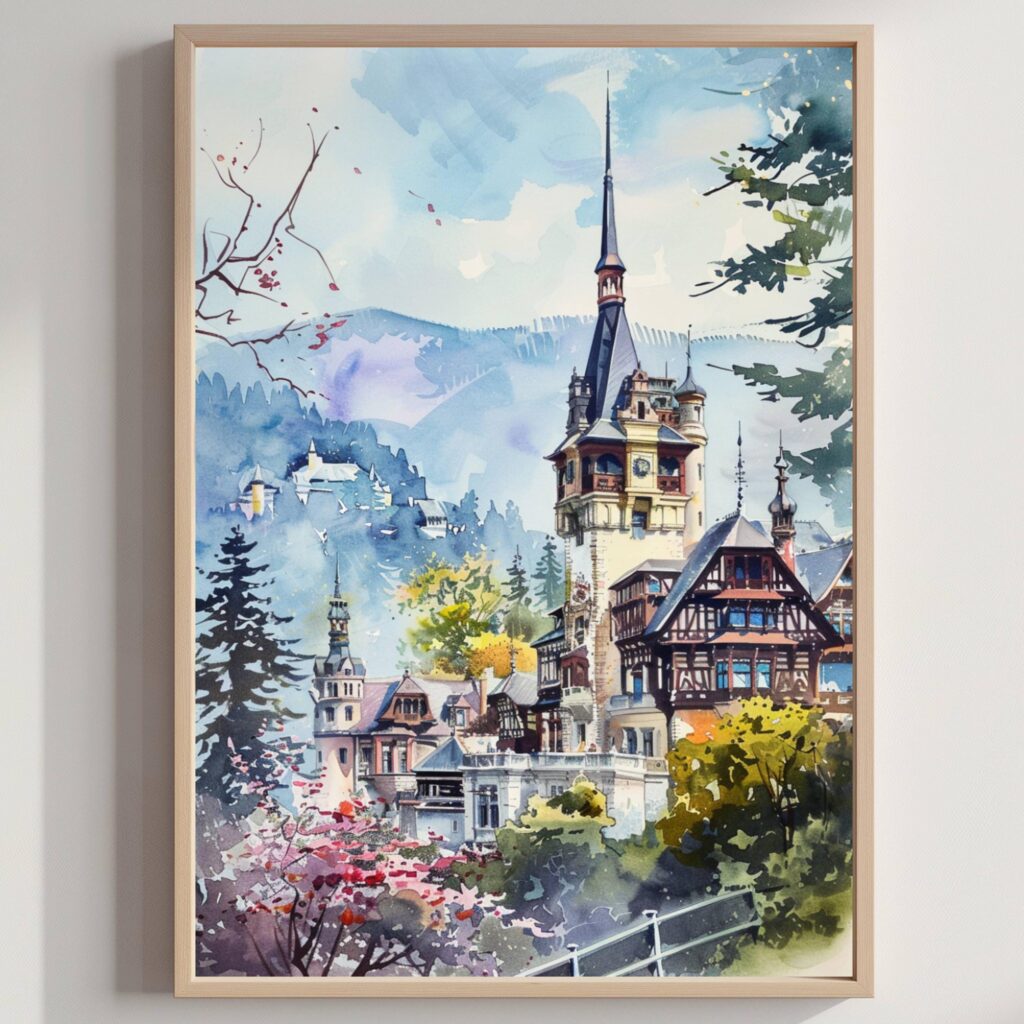
Peles Castle was built between 1873 and 1914 as the summer residence of King Carol I, Romania’s first monarch of the modern era, on a site the German-born king personally selected in the Carpathian Mountains near Sinaia for its resemblance to the Alpine landscapes of his homeland. Despite its fairy-tale exterior, Peles was remarkably advanced for its time, becoming one of the first castles in Europe to have central heating, electricity generated by its own power plant, and an internal telephone system, all installed while the building was still under construction.
Carol I died in 1914, only months after the castle’s formal completion, and Peles subsequently served as a royal residence for his successors until Romania’s monarchy was abolished under communist rule in 1947, after which the castle was nationalised and eventually opened to the public as a museum.
A Palace Built From 160 Rooms of Deliberate Excess
Peles contains around 160 rooms, many decorated in a different national or historical style, Moorish, French Rococo, German Renaissance, and Turkish rooms sitting within the same building, reflecting King Carol I’s personal taste and the fashionable European practice of using interior design to display cultivation and wealth. The castle’s armoury holds one of Europe’s more significant collections of medieval and Renaissance weaponry, assembled largely through the king’s own personal acquisitions.
During the communist period, Peles briefly served as a rest home for workers before being closed entirely in 1975, reportedly at the personal order of dictator Nicolae Ceausescu, who was said to dislike the building; it did not reopen to the public until 1990, after the fall of communism.
Painting a Fairy Tale Set Against Mountain Forest
Peles Castle’s turrets and dark timber framing against the green slopes of the Carpathians give a watercolourist dramatic architectural detail and rich forest colour to work with. We’ve captured that setting in our own Peles Castle Watercolor Print, painted first by hand and printed to order on archival paper, a small piece of Romania for a wall at home.
Built for a king who wanted comfort as much as grandeur and nearly lost to a dictator’s dislike decades later, Peles Castle remains a palace whose survival has always depended on who happened to be in charge.