
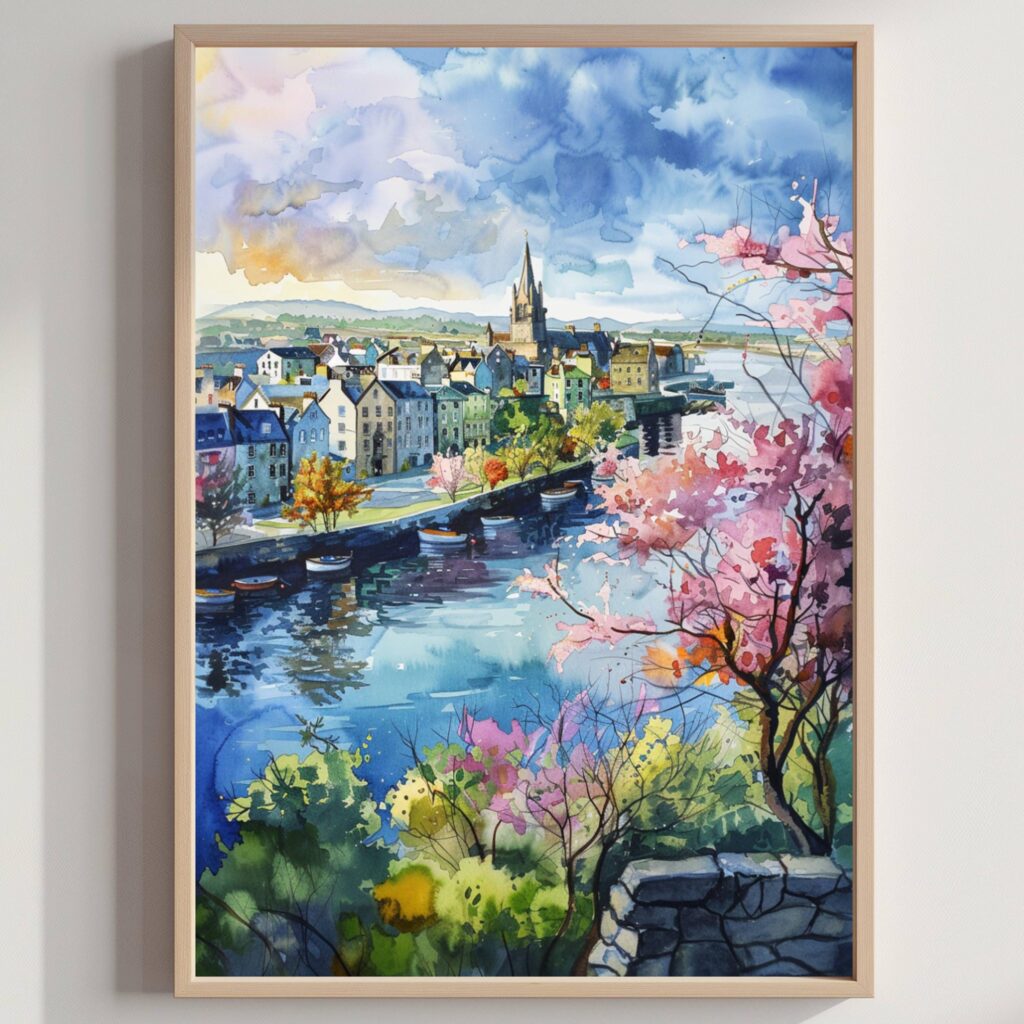
Galway takes its historic nickname, the City of the Tribes, from fourteen merchant families who dominated the city’s trade and governance from the medieval period into the 17th century, their surnames, including Lynch, Blake, and Athy, still visible on buildings and street names throughout the city today. These merchant families grew wealthy on trade with Spain and France, and for a time Galway operated with a degree of independence from the rest of Ireland unusual for a city of its size.
That independence was decisively ended by Oliver Cromwell’s forces in 1652, following a nine-month siege during the Cromwellian conquest of Ireland, after which many of the city’s Catholic merchant families were dispossessed of their property, a turning point from which Galway’s medieval trading prominence never fully recovered.
A City Built Facing the Atlantic, Then Away From It
The Spanish Arch, a surviving fragment of Galway’s medieval city walls near the mouth of the River Corrib, is popularly said to have been built to protect Spanish trading ships unloading their cargo, a name reflecting the centuries of close trade ties between Galway and Spain that shaped the city’s early wealth. Galway’s fishing and maritime trade declined substantially through the 18th and 19th centuries, and much of the city’s more recent identity has instead grown around its university, founded in 1845, and a lively arts and festival culture.
The Galway International Arts Festival and the Galway Races, both established traditions dating back decades, now draw visitors in numbers the city’s old merchant families would likely find astonishing, a very different kind of prosperity than the trade that first built it.
Painting a City Between River and Ocean Light
Galway’s colourful shopfronts along the River Corrib, with the Atlantic never far away, give a watercolourist lively colour and soft coastal light to work with. We’ve captured that character in our own Galway Watercolor Print, painted first by hand and printed to order on archival paper, a small piece of Ireland for a wall at home.
Built by tribes of merchants and later humbled by a siege, Galway remains a city whose current, more easygoing character grew directly out of the trading prominence it eventually lost.